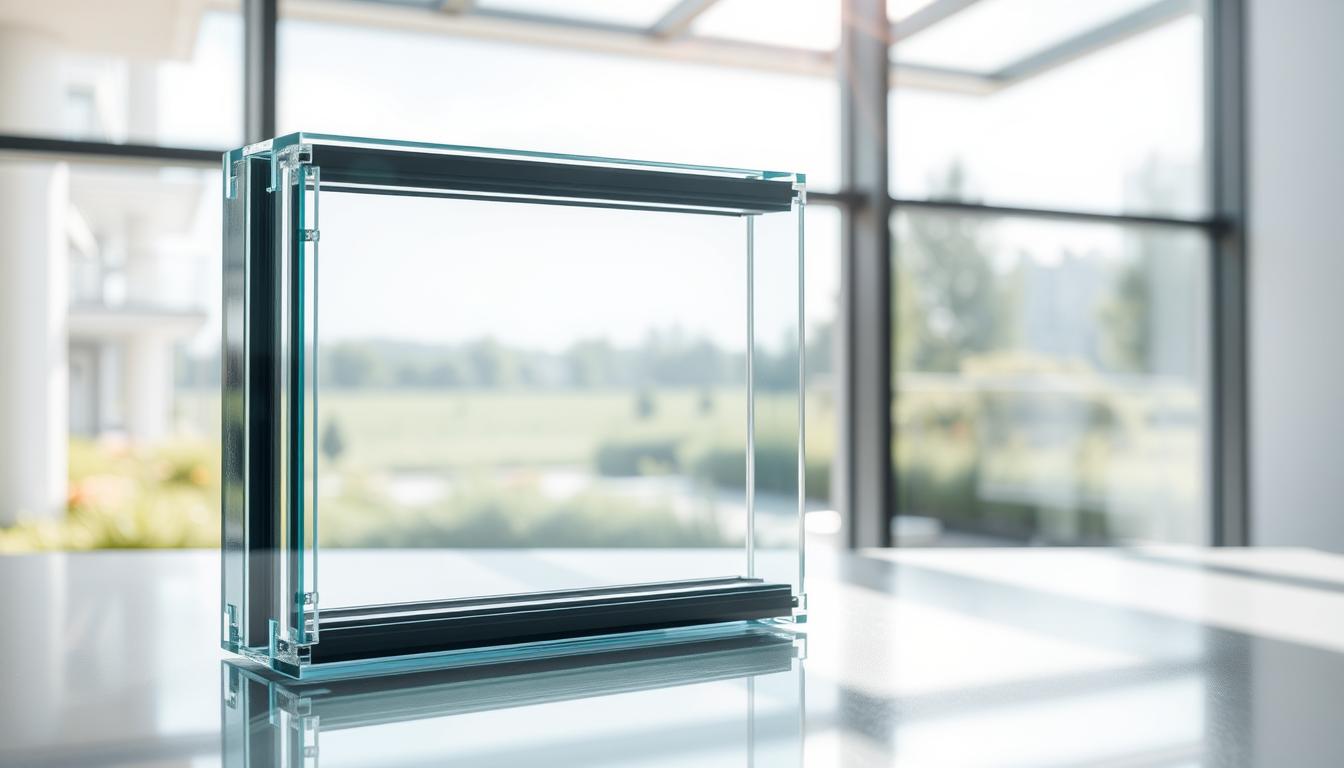
Did you know buildings use nearly 40% of global energy? As a GTA-based vinyl windows and doors maker, we’ve seen energy-efficient solutions cut this number. The Insulated Glass Unit (IGU) is key to this.
IGUs have two or three panes with a spacer in between. They’re sealed, making a space filled with air or gas. This setup cuts down on heat transfer, saving energy and boosting efficiency.
We’re experts in IGUs and their role in saving energy. In this piece, we’ll look at what IGUs are and why they matter. We’ll see how they help make our buildings more eco-friendly.
Key Takeaways
- IGUs are vital in cutting down energy use in buildings.
- IGUs’ design reduces heat transfer, boosting energy efficiency.
- Knowing what an IGU is helps us see their value.
- IGUs play a big part in making our buildings greener.
- Using energy-saving tools like IGUs can greatly lower global energy use.
Window and Doors Replacement Near Me
What Is the IGU Meaning in Window Technology?
The acronym IGU stands for Insulated Glass Unit, a key part of modern windows. It’s also called “double glazing” or “double-pane” glass. IGUs have two or more glass panes with spacers in between. The edges are sealed to keep moisture and gas out.
Knowing what makes up IGUs helps us see how they work.
Understanding the Components of IGUs
The main parts are the glass panes, spacers, and the gas between them. The glass makes the window clear and strong. The spacers keep the gap between the panes steady.
The spacers are made of materials that don’t let heat pass through easily. The space between the glass is filled with gas like argon or krypton. This gas helps keep the heat in, making the IGU more energy-efficient.
| Component | Function |
|---|---|
| Glass Panes | Provide transparency and durability |
| Spacers | Maintain the gap between the glass panes |
| Gas Fill | Reduces heat transfer between the panes |
In short, IGUs are a big step forward in window tech. They save energy and keep heat in. By knowing what IGUs are and how they’re made, we can see their importance in today’s buildings.
Find related services
The Components and Structure of Insulated Glass Units
It’s important to know how Insulated Glass Units (IGUs) work. They are key in making buildings more energy-efficient. IGUs are advanced window systems that help keep heat in and cold out.
An IGU has two or more glass panes with a spacer in between. The spacer keeps the glass apart. It’s filled with gas like argon or krypton, which helps keep the unit warm or cool.
The spacer also has a special material that stops moisture. This keeps the IGU clear and working well for a long time.
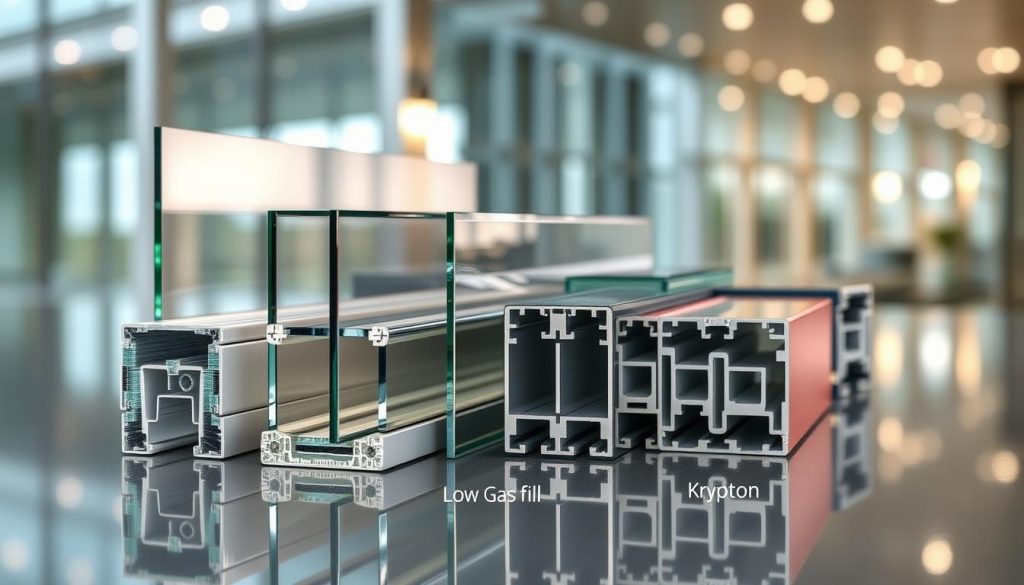
| Component | Function |
|---|---|
| Glass Panes | Provide the primary barrier against external elements |
| Spacer | Separates the glass panes and maintains the gap |
| Desiccant | Absorbs moisture within the spacer to prevent condensation |
| Gas Fill | Reduces heat transfer between the glass panes |
| Sealant | Seals the edges of the IGU to prevent gas leakage and moisture ingress |
Knowing about these parts helps us see how IGUs make buildings more energy-efficient. They are complex but very effective.
Explore energy-efficient options
How IGUs Contribute to Energy Efficiency
Insulated Glass Units (IGUs) are key to making buildings more energy-efficient. They cut down on the need for heating and cooling by stopping heat from moving around. This is thanks to advanced materials and tech.
An IGU has two or more glass panes with a spacer in between. This spacer is filled with gases like argon or krypton. These gases are better at keeping heat in than air, making the window more insulating.
The Impact of Gas Fill on IGU Performance
The type of gas used in IGUs greatly affects their energy-saving abilities. Argon and krypton are top choices because they conduct heat poorly. Argon is popular because it’s cheap and works well.

| Gas Fill | Thermal Conductivity (W/mK) | U-Value (W/m²K) |
|---|---|---|
| Air | 0.024 | 2.7 |
| Argon | 0.016 | 2.0 |
| Krypton | 0.009 | 1.4 |
The table shows krypton is the best at keeping heat in, with the lowest U-value. But krypton is pricier than argon. So, argon is often the better choice for saving money.
In summary, IGUs help a lot with energy savings by using gases to block heat. Knowing how different gases affect IGUs helps pick the best one for a building.
Find the Best Window Styles for your Home
Types of IGUs Available for Canadian Climate Conditions
The right IGU for your home in Canada depends on your local climate. Different options are available for cold and warm areas. Canada’s varied climate means IGUs must handle both harsh winters and changing summer temperatures.
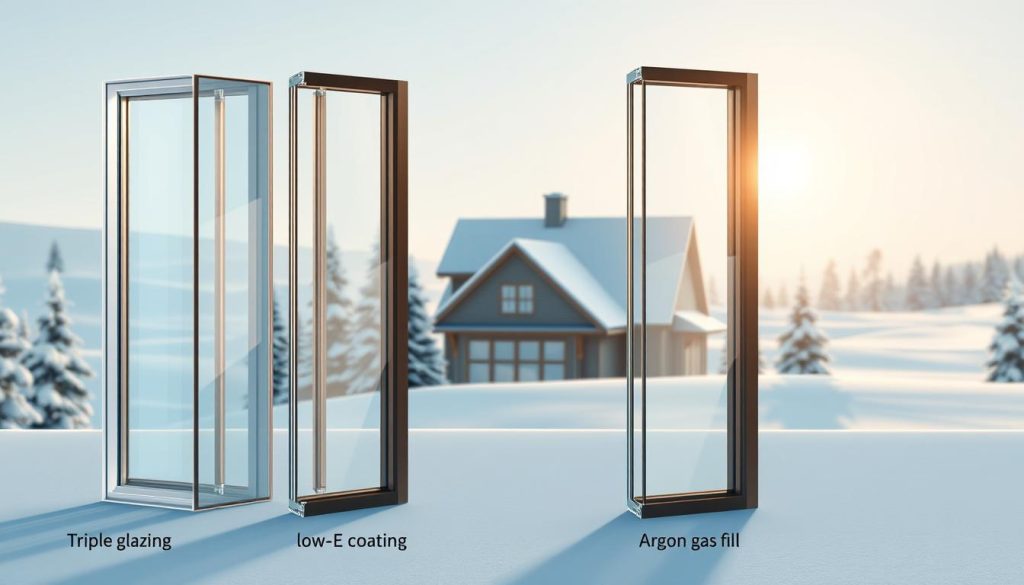
In colder areas, IGUs with low-E coatings work well. These coatings keep warmth inside by reflecting infrared radiation. This boosts energy efficiency and cuts heating costs in winter.
In warmer spots or summer, IGUs with tinted glass are helpful. Tinted glass absorbs or reflects a lot of sun’s radiation. This keeps homes cooler and lowers air conditioning needs.
Here are some common IGUs for Canada’s climate:
- Double-glazed IGUs for standard insulation.
- Triple-glazed IGUs for better energy efficiency in very cold areas.
- IGUs with low-E coatings to reduce heat loss.
- IGUs with tinted or reflective glass to block solar heat.
- Gas-filled IGUs, filled with gases like argon or krypton for better insulation.
It’s wise to talk to a professional to find the best IGU for your climate and energy needs. The right IGU can greatly improve your home’s energy use and comfort all year.
The Impact of Quality IGUs on Home Energy Bills
Quality IGUs help lower energy bills by reducing heat transfer. They keep the indoor temperature steady, cutting down on heating and cooling needs.
Homes with quality IGUs use less energy. This is because IGUs offer better insulation than single-pane windows. Homeowners save money on their energy bills over time.

To grasp the igu meaning in energy efficiency, IGUs are more than regular windows. They are made to block energy transfer. This keeps homes warm in winter and cool in summer. It also means less work for heating and cooling systems, saving energy.
Thinking about what does igu mean in terms of cost savings? The upfront cost of quality IGUs pays off in the long run. Lower energy use means lower bills, saving hundreds of dollars a year.
In summary, getting quality IGUs is a smart move for energy savings and lower bills. Knowing the igu meaning in energy efficiency helps homeowners choose wisely. This leads to a more energy-efficient home.
Our Expertise with IGU Technology
For over 15 years, we’ve been making Insulated Glass Units (IGUs). We know how important they are for saving energy. We design, produce, and install high-quality IGUs for Canada’s climate.
Knowing what the igu acronym means helps us understand these units better. IGUs keep your home warm in winter and cool in summer. This means you use less energy and save money.
We’ve been making IGUs in Canada for 15 years. Our team knows how to make units that work well in Canada’s weather. This means you get to enjoy a more comfortable home and lower energy bills.
FAQ
What does IGU stand for?
IGU stands for Insulated Glass Unit. It’s a window glazing made of multiple glass panes. These panes are separated by a gap filled with gas to reduce heat transfer.
What is the meaning of IGU in window technology?
In window tech, IGU means a glazing that saves energy. It does this by keeping heat in or out, lowering energy use.
How do IGUs work?
IGUs use glass panes, spacers, and desiccants to block heat and moisture. This makes windows energy-efficient, saving money on bills.
What are the components of an IGU?
An IGU has glass panes, spacers, desiccants, and a gas fill. These parts work together to reduce heat transfer and prevent moisture.
What types of IGUs are available for Canadian climate conditions?
We have many IGUs for Canada’s weather. They include special gas fills and coatings for better energy use in all weather.
How do IGUs contribute to energy efficiency?
IGUs help save energy by blocking heat flow. This means less need for heating and cooling, saving money for homeowners.
Can IGUs save homeowners money on energy bills?
Yes, IGUs can cut energy costs. They use less energy, leading to big savings, even in Canada’s harsh weather.
What is the role of gas fill in IGUs?
The gas fill, like argon or krypton, is key. It lowers heat transfer, making IGUs more energy-efficient than air.
How do I choose the right IGU for my climate and needs?
Pick an IGU based on your climate, window direction, and energy goals. Our experts can help find the best fit for you.