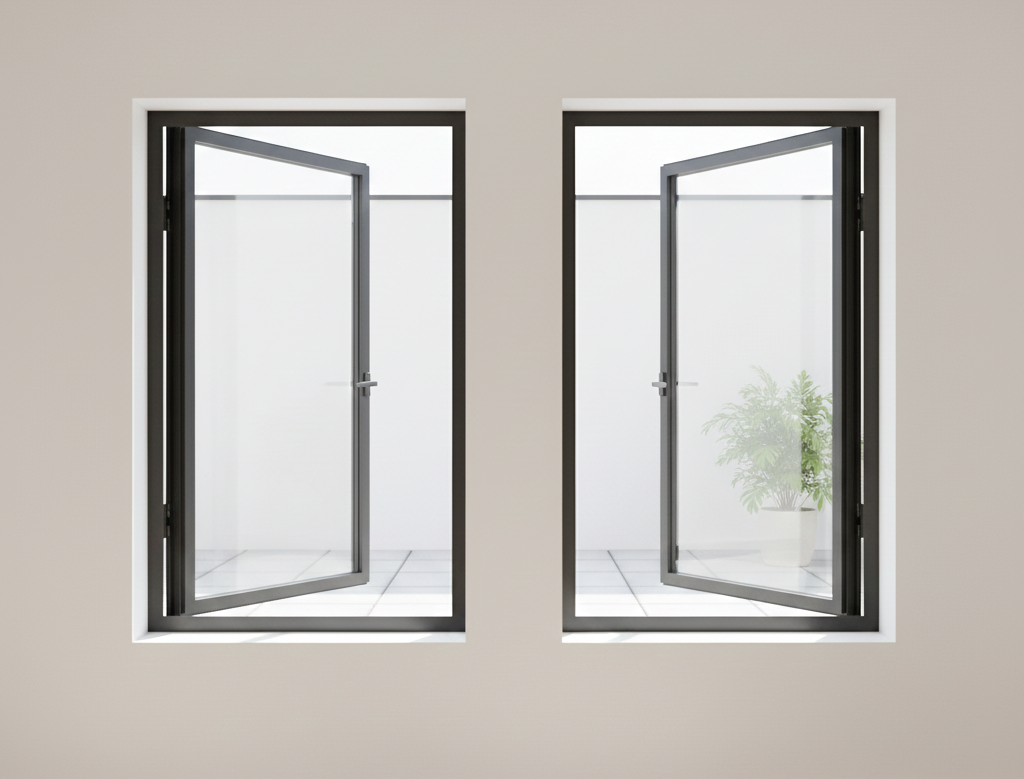
Getting the wrong window handing can cost a lot and delay projects. In Ontario, mistakes like this are a big problem. It’s important for homeowners and contractors to understand the difference.
We make explaining casement window orientation easy. Think of it like a door. Stand with your back to the hinge jamb and watch the sash swing. If it swings right, it’s right hand. If it swings left, it’s left hand.
Knowing if a casement opens in or out is also key. This choice affects how it fits and meets local codes. In Canada, outswing casements are common. But, always check local rules before ordering.
Ordering the wrong window can lead to extra costs and delays. Always check in person or use clear diagrams. This advice is from experts in door handling.
Key Takeaways
- Handing is determined by standing with your back to the hinge jamb and noting sash swing.
- Right hand casement and left hand casement follow the same door-based convention used by major suppliers.
- Casement window orientation includes inswing and outswing options that affect installation and clearance.
- Ordering the wrong casement window direction can cause cost overruns and project delays.
- Total Home Windows & Doors (GTA) is a regional resource we reference for Canadian selection and manufacturing tips.
A right hand casement window has hinges on the right side when you look at it from the outside. If you stand with your back to the hinge and the window swings to your right, it’s a right hand unit.
Window and Doors Replacement Near Me
What is a Right Hand Casement Window?
When planning, knowing the casement window’s orientation is key. Deciding on the window’s hand early helps avoid mistakes. A clear diagram or a check in person can help ensure the right-handed delivery.
Right hand casements are good for natural flow when people move to the left. They also swing away from walkways or obstructions, giving more space. Right-handed people find the handle and crank easier to use in most setups.
But, there are downsides. A right hand sash might block the way when next to a wall or stair on the wrong side. Changing the hand in the field can mean moving hardware or getting a new unit if changes are hard. Suppliers and installers often suggest ordering the correct hand to avoid complex changes.
Choose right hand casements where the hinge side keeps the sash out of the way. They’re best for places where right-handed people will use them. Local makers like Total Home Windows & Doors in the Greater Toronto Area can help pick the right hand for vinyl casements.
Find related services
What is a Left Hand Casement Window?
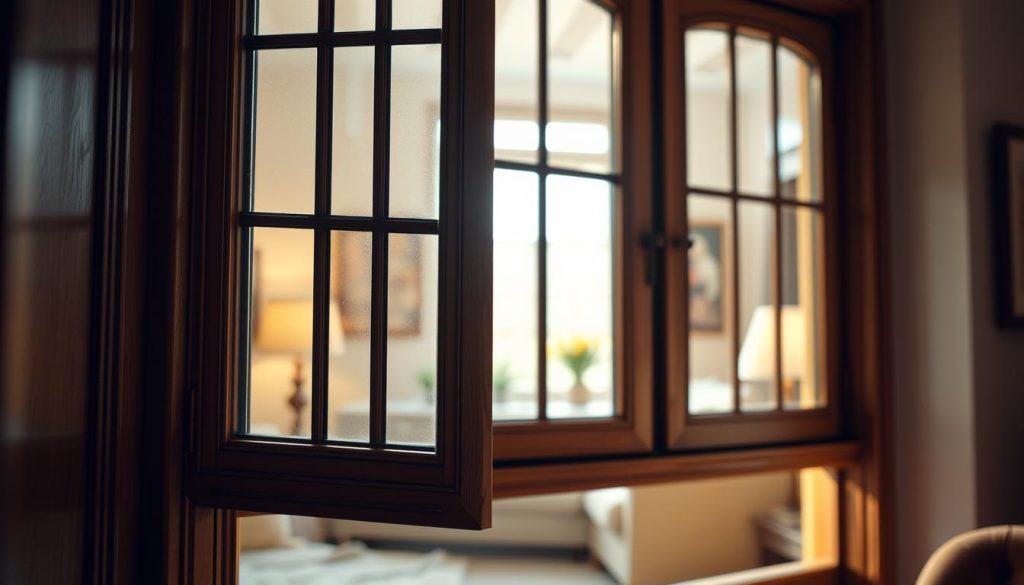
A left hand casement has hinges on the left side when you look at it from the front. To check, stand with your back to the hinge jamb. If the sash swings to your left, it’s a left hand casement. This method is also used by Total Home Windows & Doors.
Left hand casements are best where the sash needs to clear stairs or tight spaces. They give better clearance and keep sightlines open. People who are left-handed find them easier to use because of the handle’s position.
When picking a window’s hand orientation, think about the approach angle and any obstructions. It’s easy to get the handing wrong. Suppliers say wrong orders cause delays and extra costs, so we always check the site plan.
Changing a window’s hand can be tricky. You might need to change the hinges or get a new unit. It’s best to have experts do this to avoid damage or voiding the warranty.
For help choosing a casement window’s hand, measure from the inside and think about how it will swing. In places like the Greater Toronto Area, Total Home Windows & Doors can help with vinyl left hand casements and what’s in stock.
Explore energy-efficient options
Compare Energy Efficiency Between Right Hand and Left Hand Casement Windows: Comparison Table
We look at how casement window direction affects energy use. Things like U-factor, SHGC, and air leakage depend on the frame, glass, seals, and how it’s installed. The direction of the window doesn’t change its energy rating if it’s made and installed right.
Homeowners in Canada should know what matters. The type of frame, weatherstripping, glass, and how well it’s installed all affect energy use. It’s important to make sure the window is the right way before installing it to keep everything working well.
| Performance Factor | Right Hand vs Left Hand Casement Window | What to Check |
|---|---|---|
| U-factor | Same rated values for right hand vs left hand casement window when units are identical | Compare NFRC or CSA A440-rated U-factor by frame and glazing |
| SHGC (Solar Heat Gain Coefficient) | Unaffected by handing; influenced by Low-E coatings and glass fills | Choose Low-E and gas fills suited to province and solar exposure |
| Air leakage | Equal for left or right when seals and multi-point locks match | Inspect compression seals, multi-point hardware and factory glazing stops |
| Frame type | Vinyl often offers strong thermal break; wood and aluminium vary with thermal breaks | Review options from local suppliers such as Total Home Windows & Doors |
| Glazing package | Double/triple glazing with argon/krypton fill changes performance far more than casement window direction | Request sample performance data for comparable glazing packages |
| Installation quality | Pivotal for energy efficiency; poor flashing or incorrect orientation can create thermal bridging | Confirm correct handing, flashing details and installer credentials before work |
| Climate considerations | Orientation of the opening affects solar gain; handing does not alter climatic ratings | Prioritise U-factor and condensation resistance for cold Canadian provinces |
We offer advice from suppliers and installers. Make sure the window is the right way before buying. Working with trusted local makers and installers helps avoid problems that can mess up the seals or need reinstallation.
We point out that the main difference between right and left hand casement windows is practical, not about energy. Pick the one that fits your needs and the site better. Focus on the frame, glass, and how it’s installed for energy savings, not just the hinge side.
Find the Best Window Styles for your Home
Cost Analysis: Comparison Table
We explain the main cost factors so you can easily compare right and left hand casement windows. The choice of hand doesn’t usually change the price of standard windows from big brands.
Things like frame material, glass type, hardware, custom sizes, and installation cost more. Vinyl frames are often the cheapest in Canada. Total Home Windows & Doors is a local company known for their vinyl windows.
| Line Item | Standard Unit (right/left hand) | Upgraded Option | Typical Cost Impact |
|---|---|---|---|
| Base unit price | $350–$700 | Premium wood or aluminium | +$150–$400 |
| Glazing | Double low-E, argon | Triple glazing, high-performance low-E | +$200–$800 |
| Hardware & locking | Standard operator | Multi-point lock, stainless operator | +$75–$250 |
| Custom size or shape | Standard sizes available | Non-standard or egress compliant | +$100–$600 |
| Installation labour | Basic swap-in | Jamb alteration, flashing, weatherproofing | +$150–$600 |
| Cost of wrong handing | Minor if corrected pre-install | Return, shipping, reorder, extra labour | +$300–$1,200 |
Always check the handing in person or send a clear drawing when ordering. Russell Stuparyk, General Contractor says to use pictures and confirm the type to avoid problems.
When picking between right and left hand casement windows, think about the total cost. The cost to change the handing or deal with returns often goes up.
Working with local makers like Total Home Windows & Doors in the GTA can save time and money. Local suppliers cut down on shipping costs and make it easier to adjust to changes on site.
Break down the costs for better glass, hardware, custom sizes, and installation. This helps you understand how the window’s orientation affects the total cost. It makes choosing easier.
Right Hand vs Left Hand Casement Windows: What’s Best for Your Home?
When choosing between right hand and left hand casement windows, we look at practical details. Stand with your back to the hinge jamb and see which way the sash swings. This helps avoid blocking walkways.
Next, we check for any nearby obstructions. Walls, stairs, and cabinets can affect your choice. Place the hinge away from these to ensure easy movement.
Then, we think about ergonomics and code. Pick the hand that’s easiest for you to use. Make sure it meets local building codes too. Suppliers like Total Home Windows & Doors suggest bringing a marked drawing to avoid mistakes.
The choice between right and left hand casement windows depends on your situation. There’s no energy or cost difference. Always choose quality installation and measure carefully before ordering. This ensures the best fit for your Canadian home.
FAQ
How do we determine if a casement window is right hand or left hand?
Stand with your back to the hinge jamb. If the sash swings to your right, it’s right hand. If it swings left, it’s left hand. This method is used by suppliers like Total Home Windows & Doors.
Does inswing vs outswing affect whether a window is right hand or left hand?
Handing (right vs left) shows the hinge side and swing direction. Inswing vs outswing shows if the sash opens in or out. Both are important when ordering. Make sure to state the handedness and swing direction.
Will choosing right hand or left hand change the energy performance of the window?
No, it won’t. Energy performance depends on the frame, glazing, and installation. A right hand or left hand casement will perform the same if built and installed right.
What practical problems occur if we order the wrong handing?
Ordering the wrong hand can be costly and time-consuming. It may need a return and reordering. This can cause extra shipping and labour costs. Suppliers suggest confirming handing in person or with a clear diagram.
Which hand is better for right-handed users or for certain room layouts?
A right hand casement suits right-handed users. It keeps the sash out of the way. A left hand casement is better where the sash needs to swing left. Choose based on room layout and user comfort.
Does handedness affect price for standard casement windows?
Usually, no. Right and left hand casements have the same base price. Price changes with frame material, glazing, and hardware. But, getting the wrong hand can cost more than the price difference.
How should we specify handing when ordering from a regional manufacturer such as Total Home Windows & Doors?
Draw a clear diagram showing hinge side and swing direction. Mention if the view is exterior or interior. State if it inswings or outswings and any code needs. Local suppliers like Total Home Windows & Doors can help with lead times and corrections.
Can we reverse the handing of a casement on site?
Minor swaps might work on some models. But, reversing handing often needs hardware changes. This can affect seals and operation. It’s best to order the correct hand.
What checks should installers and homeowners perform before finalising an order?
Check the opening and confirm the sash swing direction. Mark nearby obstructions on a sketch. Check if it inswings or outswings and local code rules. Verify measurements and handedness in person or with a clear diagram.
Does climate or window orientation change our handedness decision?
No, climate and window orientation don’t affect handedness. Choose based on site circulation and obstructions. For Canadian climates, focus on energy efficiency and proper installation.