In Canada, about 40% of homeowners say windows are key to keeping warm in winter. This shows how choosing between casement and double hung windows can change our comfort and costs. The right choice is important for keeping warm, letting in air, and following building codes.
We’re comparing casement and double hung windows based on what homeowners care about most. This includes how they work, save energy, need upkeep, fit in our homes, meet building rules, and cost. We use local building codes and the experience of Total Home Windows & Doors, a company in the Greater Toronto Area for over 15 years.
Key Takeaways
- Casement vs double hung windows differ mainly in operation: casements crank outward, double hungs slide vertically.
- Casement windows often seal tighter for better energy efficiency in cold climates.
- Double hung windows provide flexible ventilation and easier upper-sash access in multi-storey homes.
- Building-code egress and ventilation requirements in Canada can influence which style is suitable for bedrooms and basements.
- Total Home Windows & Doors’ local installation experience offers practical insight into sizing, maintenance and cost trade-offs.
Window and Doors Replacement Near Me
What is a Casement Window?
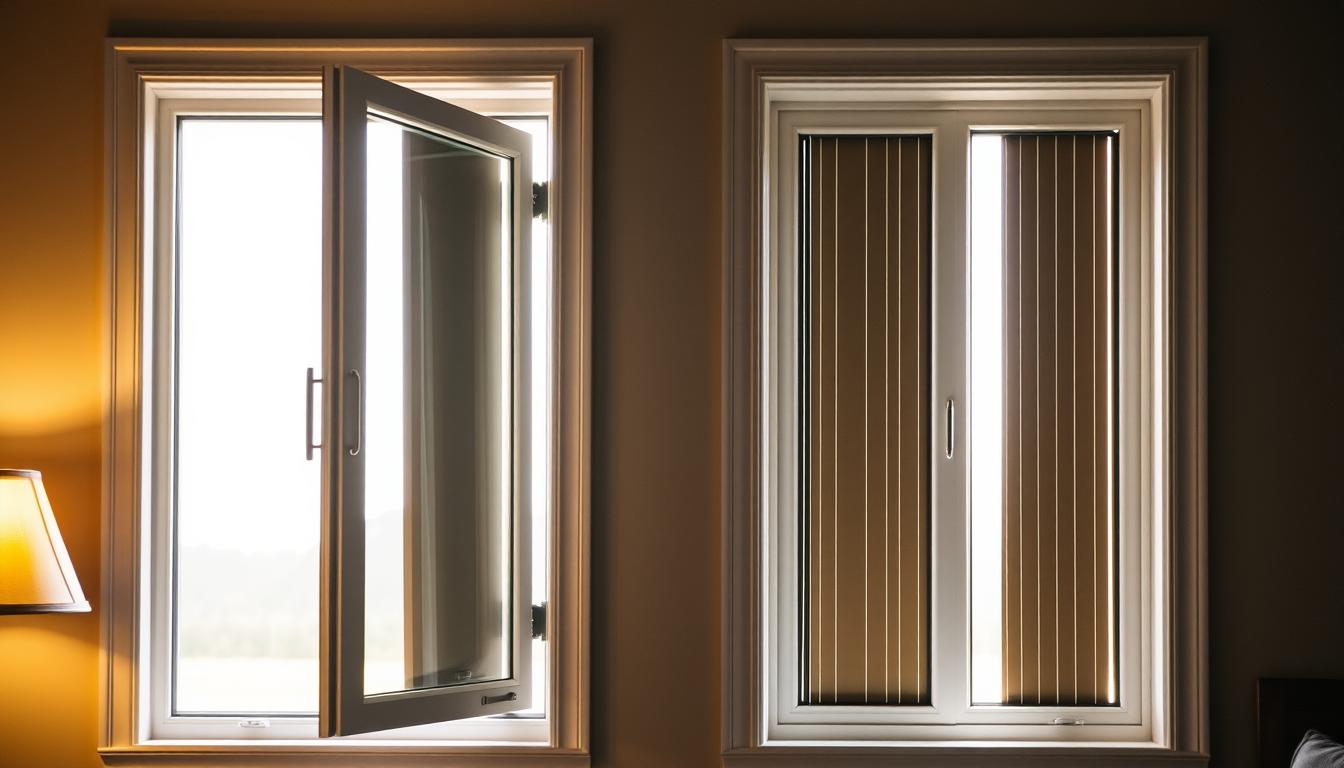
Casement windows open outwards with a crank. They work like a door and let in lots of air. We use them above sinks and counters for easy access.
They seal tight when closed, keeping air and heat in. This makes them great for cold places like Winnipeg.
Casements let in strong breezes. They are better than double hung windows for airflow. This is because they open fully.
They are easy to open in hard spots thanks to the crank. Brands like Magic and Total Home offer durable options. This means less trouble with the sash.
But, they can’t be used in tight spots or where wind is strong. The crank needs checking often. Cleaning the outside can be hard, and they cost more than double hungs.
Casements are good for places that need to save energy. They’re great for kitchens and bathrooms. They fit well in modern homes with lots of glass.
Find related services
What is a Double Hung Window?
Double hung windows have two sashes that slide up and down. We can open the top, bottom, or both for different airflow. They also have tilt-in sashes for easy cleaning from inside, which is safe for tall homes.
These windows are perfect for homes with a classic look. They keep the home’s style while adding modern features like low-E glass. Companies like Total Home Windows & Doors offer these upgrades.
Homeowners like them for their flexibility in ventilation. Opening the top sash lets warm air out while keeping the bottom closed. This is better than casements, which open wide but don’t offer staged airflow.
They’re also great for cleaning and safety. The tilt-in sashes mean no need for ladders. They also allow for safe ventilation and can reduce drafts.
They’re more affordable than casements, costing 10–20% less in Canada. This makes them a good choice for those on a budget who want a traditional look.
But, there are downsides. The weatherstripping and balances can wear out, leading to air leaks. Dirt and moisture can also make the tracks sticky or need repairs.
Double hung windows are best for old homes, tight spaces, and rooms needing easy ventilation and cleaning. When choosing between casements and double hungs, think about airflow, maintenance, and style.
They come in sizes from 24″–48″ wide and 36″–72″ high. Always check local egress rules, like in Ontario, for bedroom installations.
Explore energy-efficient options
Compare energy efficiency between Casement and Double Hung Windows: comparison table
We have made a table to compare energy use. It shows how casement and double hung windows work. You can see how they affect your energy costs over time.
| Metric | Casement | Double Hung |
|---|---|---|
| Airtightness / Seal | Superior. Sash compresses into frame for a tight seal, reducing drafts and heat loss in cold climates. | Moderate. More prone to drafts unless high-quality weatherstripping is installed and maintained. |
| Operable Area / Ventilation | Full-frame opening offers maximum airflow when open, improving cross-ventilation performance. | Partial or staged ventilation. Top or bottom sash can be opened for controlled airflow and safer night use. |
| Typical U-factor Performance | Both styles reach similar U-factor ratings with equal glazing and frame upgrades, though casement’s seal often yields lower effective heat loss. | Dependent on glazing and frame choice. Effective heat loss can be higher if seals are not premium. |
| Upgrade Cost for Improved Efficiency | $100–$300 extra for triple-pane; low-E coatings and argon fill add to cost; draft-lock features increase price further. | Similar upgrade ranges: $100–$300 for triple-pane and additional cost for premium coatings and reinforced frames. |
| Best Climate Fit | Colder Canadian climates or exposed elevations where airtightness reduces heating needs. | Moderate climates or traditional installations where ease of cleaning and staged ventilation matter more. |
| Code & Ventilation Considerations | Meets operable window area if sized properly; check local code for minimum ventilation and emergency egress. | Offers flexible ventilation strategies; ensures compliance when top or bottom sash provides required operable area. |
For casement windows, add low-E coatings, argon fill, or triple-pane if you can. Always check NFRC ratings, U-factor, and SHGC before buying.
If you prefer double hung for style or cleaning, use high-grade weatherstripping. Also, choose quality installation and premium glazing to match casement’s energy efficiency.
Casement windows offer a big opening for fast air flow. Double hungs let you control airflow better, which is safer at night and helps with zoning air.
Look for Canadian-tested products from trusted suppliers like Total Home Windows & Doors. Ask installers for performance data and Code compliance. This ensures the windows work as promised in your home.
Cost Analysis: Comparison table
We give you cost ranges for window projects in Canada. Casement windows cost more than double hung ones. Expect to pay $400–$900 for casement materials. Double hung windows usually cost $400–$700.
Labour and material costs vary by region. In big cities like Toronto and Vancouver, prices are 10–20% higher. Adding features like triple-pane glass can cost $100–$400 per window.
Custom sizes increase costs. Custom windows can add hundreds of dollars. Buying standard sizes in bulk can save money.
| Cost Factor | Casement | Double Hung |
|---|---|---|
| Upfront unit cost (materials) | $400–$900 (standard to custom) | $400–$1,000 (standard to custom) |
| Installation complexity & labour | Higher precision for crank hardware; may need exterior clearance; labour can be higher | Standard procedures for sash replacement; often faster if like-for-like; labour can be lower |
| Maintenance & lifecycle | Periodic crank mechanism checks; fewer sash-track issues | Possible sash balance repairs and track maintenance over time |
| Long-term energy savings | Superior sealing can reduce heating bills, offsetting higher initial spend | Savings depend on glazing upgrades; stock models may offer less sealing benefit |
| Custom vs standard sizing impact | Custom adds hundreds per unit and longer lead times | Custom increases cost similar; standard sizes save time and money |
| Frame material influence | Vinyl most affordable; wood or hybrid increases cost | Same pattern: vinyl least costly; wood or aluminum hybrids pricier |
| Premium glazing add-ons | Triple-pane / low-E / argon: +$100–$400 | Triple-pane / low-E / argon: +$100–$400 |
| Regional surcharge (major metros) | Approx. +10–20% | Approx. +10–20% |
| Typical total installed range (per window) | $650–$1,500 depending on options and labour | $600–$1,600 depending on options and labour |
Get on-site measurements and ask for quotes before choosing. Talk to installers about retrofit vs full-frame replacement. Also, ask about warranties and manufacturer support.
When comparing costs, consider material, glazing, and labour. Buying in bulk can lower the cost per unit.
Casement vs Double Hung Windows: What’s Best for Your Home?
Choosing between casement and double hung windows depends on what you value most. This includes energy efficiency, ventilation, ease of maintenance, and your budget. For cold winters, casement windows are a top choice. They seal well and work with energy-saving glass, keeping your home warm.
Casement windows are great for kitchens and bathrooms because they open fully. Double hung windows are better for easy cleaning and controlled airflow. They also fit well in spaces where casements might get in the way.
Think about your budget and how easy the windows are to maintain. Double hung windows are often cheaper and easier to care for. Casements might cost more but save on energy bills. Make sure to measure your space and check local building codes before buying.
It’s smart to mix both types of windows. Use casements where you need efficiency and ventilation. Choose double hung for style and easy cleaning. Get quotes from different companies and check their warranties and delivery times. For example, Total Home Windows & Doors in the GTA offers good options.
There’s no one-size-fits-all solution. The best windows for your home depend on your needs and budget. Get a professional to help you choose the right mix for your home.
FAQ
What is the main difference between casement and double hung windows?
Casement windows open outwards with a crank. They offer better airtightness and full ventilation. Double hung windows slide up and down. They are easier to clean and offer classic styling.
Which window type is more energy efficient in cold Canadian winters?
Casement windows are better in cold weather. They seal tightly to keep heat in. Double hung windows can also be energy-efficient with special glass and gas.
How do casement and double hung windows compare for ventilation?
Casements open wide for strong breezes. Double hungs offer flexible ventilation. But casements are better for full airflow.
Are casement windows more expensive than double hung windows?
Yes, casements are usually 10–20% more expensive. This is because of their complex design. Upgrades like special glass add more cost.
Which window is better for tight exterior clearance areas like narrow patios or walkways?
Double hungs are better for tight spaces. Casements swing out and can block paths. Double hungs are safer in these areas.
How do maintenance and cleaning differ between the two styles?
Double hungs are easier to clean from inside. Casements have fewer parts to maintain. But cleaning casements on upper floors can be harder.
Can casement or double hung windows meet egress and code requirements in Canada?
Yes, both can meet Canadian codes. They must be the right size and installed correctly. Always check local codes.
Which window type is best for traditional or heritage-style homes?
Double hungs fit traditional homes well. They look right and work well. They can also have modern features.
Are casement windows suitable for hard-to-reach locations like above sinks or bathtubs?
Yes, casements are great for hard spots. They are easy to open without a ladder. There are also crankless options.
How should we choose between casement and double hung windows for energy savings versus budget concerns?
Choose casements for energy savings in cold areas. Double hungs are better for budget and style. Mixing them can balance cost and efficiency.
What performance data should we request from manufacturers or installers?
Ask for NFRC labels or similar data. Look for U-factor, SHGC, and air leakage ratings. Check the frame, glass, and gas fill too.
How much does upgrading to triple-pane or premium coatings typically add to the price?
Triple-pane or premium glass adds 0–0 per window. Size and region affect the cost. Labour and lead time also matter.
Should we buy from a local Canadian manufacturer or installer?
Buying local has benefits. They know Canadian needs and offer support. They can also suggest the best options for your area.
What practical next steps should we take when planning window replacement?
Measure your windows and check egress rules. Compare ratings and get quotes. Think about mixing styles for function and look. Get a professional to measure and advise.