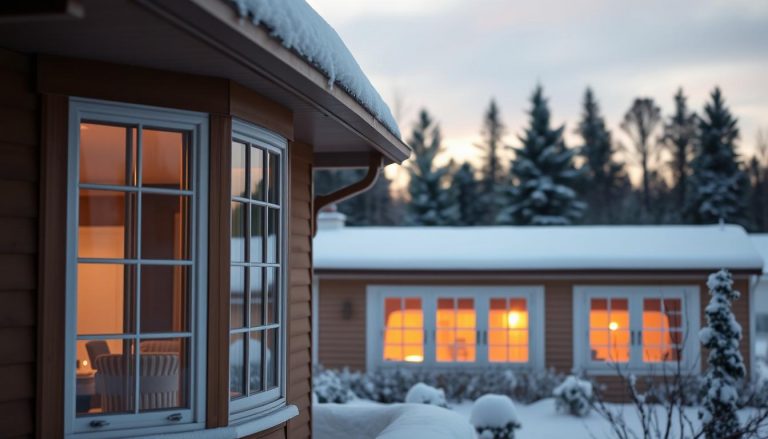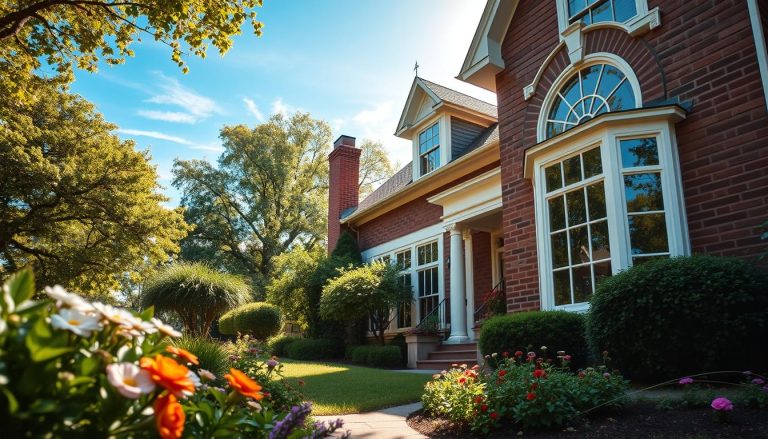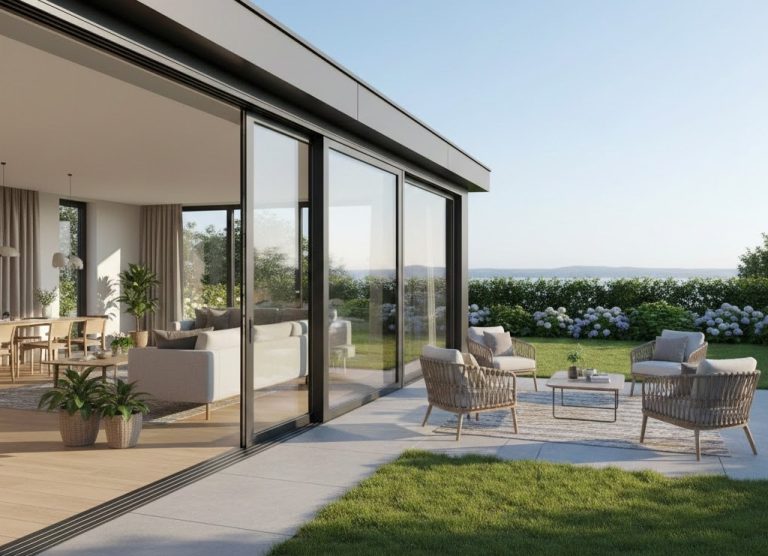
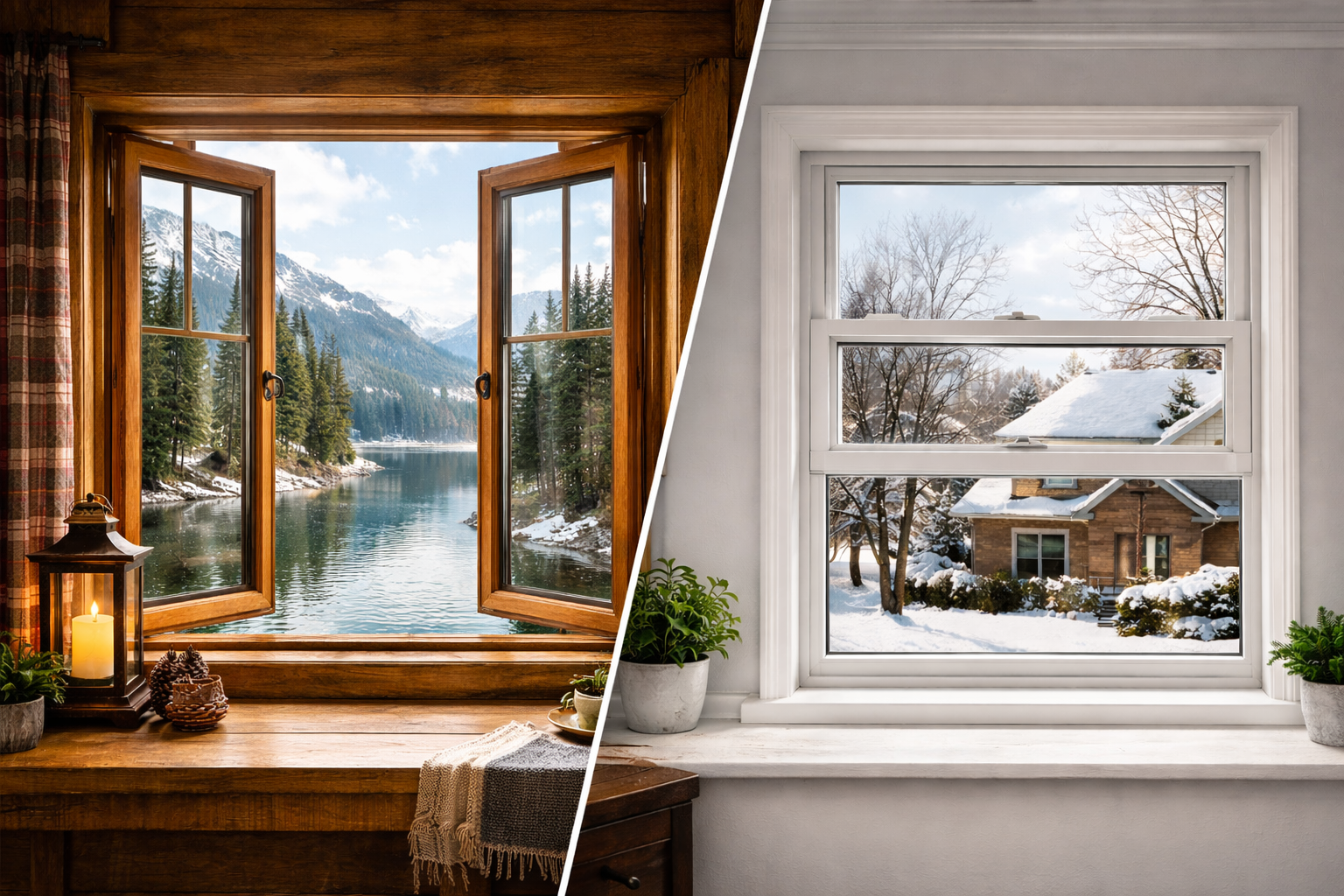
Nearly one in three Canadian homeowners replace windows to save on heating or improve air flow. They often choose between crank out and double hung windows.
We’re looking at crank out and double hung windows to help you pick the best for your home. Crank out windows open outward with a handle. Double hung windows slide up and down, opening the top or bottom.
Choosing the right window is more than just looks. It affects how well your home breathes, stays secure, and keeps drafts out. The style also impacts your home’s look and how it fits with your architecture. Plus, how easy it is to use and maintain affects its long-term cost and durability.
We’ll use insights from the industry and real Canadian suppliers. Total Home Windows & Doors Greater Toronto Area, a vinyl windows maker in Toronto, will be one of them.
Key Takeaways
- Crank out (casement) windows open outward with a crank and often seal tighter than sliding sashes.
- Double hung windows slide up and down, providing easy ventilation control and classic looks.
- Energy performance, measured by U-factor and SHGC, varies by design and glazing more than by style alone.
- Maintenance differs: crank gearboxes can fail, while sash balances and tracks need regular care.
- Installation and cost depend on size, framing, and local labour in the Greater Toronto Area; consult suppliers like Total Home Windows & Doors Greater Toronto Area for accurate quotes.
Window and Doors Replacement Near Me
What is Crank Out Windows?
Crank out windows, also known as casement windows, open by turning a handle. This turns a gearbox and arm that moves the sash. They can be single units or combined in various ways.
These windows come in many materials like wood, vinyl, and aluminium. Vinyl ones are popular for being affordable and well-insulated. Other materials offer more durability and can be painted.
One big advantage of crank out windows is how well they let in air. Their design captures breeze better than many other types. This makes them great for kitchens and living rooms.
When closed, these windows seal tightly. This helps keep cold air out in winter. It also means they can be more energy-efficient than other windows.
There are other benefits too. They have a sleek look and are easy to use, even for those with mobility issues. They are also secure and easy to clean from inside.
But, there are downsides. The crank mechanism can wear out. The sash can also get in the way of outdoor spaces if not placed right. Large windows can be heavy and need extra support.
It’s best to use them where they can really make a difference. This includes rooms that need good air flow and modern homes. Brands like Pella and Andersen offer good options for Canadian homes.
| Feature | Crank Out Windows | Why it matters |
|---|---|---|
| Operation | Crank handle, outward opening | Easy reach and directional ventilation |
| Materials | Vinyl, wood, fibreglass, aluminium, clad | Choices for budget, durability and finish |
| Ventilation | Full-width opening, strong airflow | Better crank windows ventilation than many sliding types |
| Energy performance | Tight compression seal; double/triple IGUs | Benefits of crank out windows in cold climates |
| Security | Latch compresses sash into frame | Harder to force open from outside |
| Limitations | Hardware wear, wind exposure, exterior obstruction | Consider placement and maintenance costs |
What is Double Hung Windows?
Double hung windows have two sashes that slide up and down. They move inside the frame. You can clean the glass from inside thanks to modern designs.
These windows come in many materials like vinyl, wood, and aluminium. They fit both old and new homes. This shows they are versatile in design.
Double hung windows are good for many reasons. They let in air from the top and bottom. This is safer for kids and pets. Cleaning is easy without needing a ladder.
But, there are downsides. They might let more air leak than other types. The lower sash can be heavy. Older models need you to clean them from outside.
They are best for certain situations. They work well where you can’t have a sash that swings out. They also meet safety and security needs. They are a good choice when you want something affordable.
When it comes to energy, they can be good. Modern double hung windows can save energy. But, casement windows might be better at keeping air in.
| Feature | Double Hung | Why it matters |
|---|---|---|
| Operation | Two sliding sashes, tilt-in models available | Easy indoor cleaning and controlled ventilation |
| Materials | Vinyl, wood, clad, aluminium, fiberglass | Choices for budget, aesthetics, and durability |
| Ventilation | Top and bottom sash open independently | Flexible airflow and safer ventilation for families |
| Airtightness | Moderate; depends on seals and weatherstripping | Impacts heating costs and energy ratings |
| Maintenance | Periodic balance and weatherstrip care | Ensures smooth operation and prevents sash drop |
| Ideal placement | Narrow walkways, traditional homes, bedrooms | Space efficiency and classic appearance |
| Cost | Generally cost-competitive | Lower initial expense compared with some casements |
Explore energy-efficient options
Compare Energy Efficiency Between Crank Out Windows and Double Hung Windows: Comparison Table
We look at energy metrics important for Canadian homes. U-factor shows how much heat is lost. Lower values mean better heat retention in winter. SHGC measures solar heat gain; lower SHGC means less unwanted summer heat. ER ratings combine U-factor and SHGC into a single Canadian performance number used for ENERGY STAR certified windows.
We compare typical performance characteristics for crank out (casement) and double hung styles. Casement windows seal tightly when latched, which lowers air leakage and improves U-factor. Double hung units have more leakage at meeting rails and sash lines, which can raise the effective U-factor unless premium seals and installation are used.
| Metric | Crank Out (Casement) | Double Hung |
|---|---|---|
| Typical U-factor | Lower (better): often 1.2–1.6 W/m²·K with high-performance IGUs | Higher tendency: often 1.4–1.8 W/m²·K unless upgraded seals are specified |
| SHGC | Variable by glazing: low-E coatings reduce SHGC for summer comfort | Same glazing options available; choose low-E to limit solar gain |
| ER ratings | Often easier to meet stringent ER thresholds due to airtight seal | High-performance models can achieve competitive ER with better glazing |
| Glass package impact | Double-pane R ≈ 3–3.8; triple-pane R ≈ 7–8 when specified | Same glass packages available; triple-pane and low-E improve results |
| Real-world performance | Better airtightness reduces heat loss in cold climates | Dependent on quality of seals, balances, and installation |
| ENERGY STAR Canada windows | Casement styles commonly meet ENERGY STAR targets for many zones | Double hung can qualify when manufacturers supply strong U-factor SHGC ER ratings |
Upgrades can greatly improve performance. Moving from double-pane to triple-pane or adding low-E coatings can cut heat loss by roughly 30–50%. This applies to both styles and often yields the biggest gains in real-world efficiency.
We recommend choices based on climate and use. For cold Canadian regions, spec casement units with quality IGUs, low-E coatings, or triple-pane glazing when budget permits. If double hung fits the home’s design, demand premium weatherstripping and top-tier glazing to close the gap in crank out windows vs double hung energy performance.
We stress that accurate U-factor SHGC ER ratings from manufacturers are essential for an honest energy-efficient windows comparison. Proper measurement and installation to CSA standards are critical; poor installation will undermine rated performance regardless of the window type.
Find the Best Window Styles for your Home
Cost Analysis: Comparison Table
We break down common cost drivers so readers can compare crank out windows vs double hung cost in Canada with clearer expectations. We look beyond sticker price to factors that shape replacement window prices over time.
Base product cost usually favors double hung. Casement units include a crank gearbox and tighter seals, which raises the initial cost. Frame material, glass package and size add further variation to replacement window prices.
Glass selection matters. Double-pane is standard. Triple-pane raises cost but improves R-value from roughly R-3 to R-7 or R-8, improving long-term savings on heating in cold climates.
Installation labour follows CSA best practices. Professional fitting protects energy performance and warranty, which affects total cost of ownership. We recommend itemized quotes to compare true costs, specially when reviewing Total Home Windows & Doors pricing GTA.
We present representative price ranges gathered from regional examples across Canada. These ranges reflect variations by city, room, glazing and installation complexity to aid a practical cost comparison windows Canada.
| Category | Casement (Crank Out) | Double Hung | Notes |
|---|---|---|---|
| Typical per-window range (Canada) | $329 – $2,116 | $250 – $1,600 | Casement higher due to hardware and sealing; ranges vary by city and size |
| City example: Calgary | $328 – $1,998 | $300 – $1,400 | Market and installer differences affect regional pricing |
| City example: Ottawa | $523 – $953 | $400 – $900 | Climate influences glazing choices and installation practices |
| City example: Vancouver | $444 – $2,116 | $350 – $1,600 | Higher top-end reflects custom sizes and premium glass packages |
| Room/location typical ranges | Kitchen $329 – $1,356; Living $484 – $1,614 | Kitchen $300 – $1,100; Living $400 – $1,200 | Size and complexity drive upper-end costs |
| Upgrade: Triple-pane glass | +$200 – $800 per unit | +$150 – $700 per unit | Triple-pane raises R-value and upfront investment |
| Frame material: vinyl vs fibreglass/wood | Vinyl lower; fibreglass/wood higher | Vinyl lower; fibreglass/wood higher | Cladding and finishes add to product cost |
| Installation labour (per unit) | $100 – $500+ | $100 – $450+ | Complex installs, structural changes increase labour |
| Typical repair/maintenance | Crank gearbox repairs; seals | Sash balance replacements; weatherstripping | Consider long-term operational costs when comparing replacement window prices |
| Example supplier note | Request itemized quotes from installers. We recommend checking Total Home Windows & Doors pricing GTA for vinyl product lines and detailed installation estimates. | ||
We suggest using the table to guide discussions with suppliers and to support a fair cost comparison windows Canada. Keep a checklist for unit price, glass package, frame, installation labour and warranty when comparing replacement window prices and local quotes.
When weighing crank out windows vs double hung cost, include expected energy savings and likely repair needs over the service life. A higher initial outlay for casements can reduce heating bills in cold regions, while double hung often wins on lower upfront replacement window prices.
Crank Out Windows vs Double Hung Windows: What’s Best for Your Home?
Choosing the right windows for our homes involves looking at ventilation, energy use, and style. Crank out (casement) windows are often the best for airflow and keeping air in. They swing out and seal tightly, helping to keep homes warm in cold weather.
Double hung windows are great for those who want a classic look or need less space outside. They fit well with modern homes and traditional buildings. Plus, they make it easy to open the top sash for air while keeping the bottom one closed.
Think about upkeep, safety, and how well they let in light. Casements are easier to use for people with mobility issues, but the crank can break. Double hungs are simpler to clean and have parts that are easy to find. For really cold places, choose windows with triple-pane or low-E glass.
Before deciding, check how well the windows fit and how much space they need. Ask for details on energy ratings and get quotes that include everything. In the Greater Toronto Area, Total Home Windows & Doors can help with certified installation. Casements are usually better for air and energy, but double hungs are cheaper and look classic. By looking at all these factors, we can pick the best windows for our Canadian homes.
FAQ
What is the primary mechanical difference between crank out (casement) windows and double-hung windows?
Crank out windows (casements) open outward. They use a handle that turns a gearbox. This makes the sash swing out. Double-hung windows have two sashes that move up and down. Many modern models also tilt inward for cleaning.
Which window type provides better ventilation and airflow direction?
Crank out (casement) windows offer better ventilation. The sash swings out, directing breezes into the home. Double-hung windows allow flexible ventilation. But they usually provide less airflow than casements.
Which is more energy efficient in Canadian climates — casement or double‑hung?
Casement windows are often more energy efficient. They have compression seals that make them airtight. Double-hung windows can also be energy efficient. They need premium weatherstripping and good glazing to meet ENERGY STAR Canada levels.
How do glazing choices affect performance for both window types?
Glass package is key for both styles. Double-pane IGUs have R-values around 3–3.8. Triple-pane units can reach R-values up to 7–8. Low-E coatings and gas fills improve U-factor and SHGC, regardless of sash type.
What are the main maintenance and mechanical failure concerns for each style?
Casements have a crank gearbox and hinge hardware. These can wear out or fail, and repairs can be expensive. Double-hung windows use balances and weatherstripping. Balances can fail, and sashes can be hard to lift. But their mechanisms are simpler and often less costly to service.
Are casement windows safe and secure compared with double‑hung windows?
Yes, casement windows are very secure when closed and latched. The sash compresses into multiple seals. Double-hung windows can also be secure. But they have more pry points unless reinforced hardware and good installation are used.
Which style is better for homes with limited exterior clearance or narrow walkways?
Double-hung windows are better for limited exterior clearance. They do not project outward when opened. Casement sashes swing outside. They can obstruct patios or walkways unless layout and placement are planned carefully.
How do costs compare between crank out and double‑hung windows in Canada?
Double-hung windows are usually less expensive up front. They have simpler mechanisms and are more in demand. Casements often cost more because of the crank gearbox and hardware. But they can be substantially pricier. Total installed cost also depends on glazing, frame material, size, and labour.
Which window type is better for accessibility and ease of operation?
Casement windows are easier to operate for people with limited strength or mobility. The crank mechanism lets users open and close the sash while seated or from a distance. Double-hung windows can be harder to lift, but tilt-in features reduce cleaning effort.
Can either window type meet ENERGY STAR Canada and local ER requirements?
Yes. Both casement and double-hung windows can meet ENERGY STAR Canada and required ER thresholds. They need the right glazing, low-E coatings, and gas fills. Casements often achieve the necessary ER more readily due to superior sealing. But high-performance double-hungs are available from reputable suppliers.
What installation considerations should we watch for to preserve rated energy performance?
Proper measurement and professional installation to CSA standards are critical. Poor installation will undermine manufacturer ratings and increase air infiltration. Request itemized quotes, certified performance data, and confirm installer experience with the chosen window type.
For a cold Canadian climate, which choice gives the best long‑term value?
In cold climates, casement windows with quality double- or triple-pane IGUs and low-E coatings offer better long-term value. They have lower air leakage and improved ER. If budget or architectural style dictates double-hung, choose premium weatherstripping and high-performance glazing to close the performance gap.
Do standard through‑window air conditioners fit casement openings?
No. Standard through-window air conditioners fit vertically sliding openings. They do not fit casement openings. If window A/C use is likely, double-hung or sliders are better choices. Unless a dedicated wall or portable unit is planned.
How should we balance upfront cost versus long‑term energy savings?
Consider unit price, glazing upgrade cost, expected heating savings, maintenance, and repair costs. Casements may cost more initially but can save on heating in cold climates. Double-hungs lower initial expense but may need more maintenance.
Can both window types meet egress requirements for bedrooms?
Yes. Both casement and double-hung windows can meet egress requirements. They must meet minimum opening dimensions and clearances. Confirm local building code dimensions. Ensure the selected model provides the required net clear opening when installed.