Homes with sealed casement windows can lose up to 25% less heat than older sliding models. This is huge for Canadian winters. Looking at crank windows vs sliding windows shows how they affect comfort and bills.
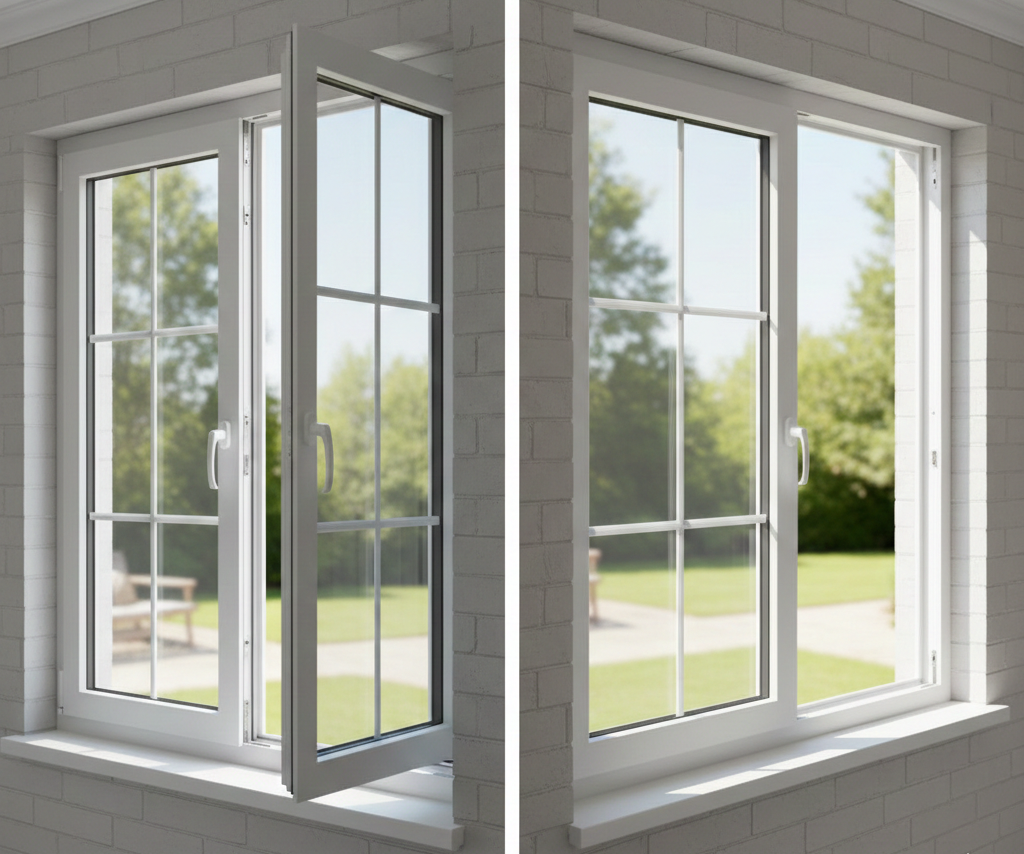
“Crank windows” means casement-style units opened by a crank that swing outward. “Sliding windows” are horizontal gliders. In Canada, the choice between them is critical due to cold winters and warm summers.
Casement (crank) windows seal well and often lead in energy efficiency. Sliding windows are better for wide openings and cost less upfront and to install.
This guide helps Canadian homeowners decide between crank and sliding windows. We use local knowledge from Total Home Windows & Doors, a GTA vinyl windows and doors maker, to guide our advice.
Key Takeaways
- Crank (casement) windows usually offer better sealing and higher energy efficiency than sliding windows.
- Sliding windows fit wide openings and tight spaces and often have lower initial and installation costs.
- Climate matters: Canadian winters make airtight seals and proper insulation important when choosing windows.
- Consider ventilation, maintenance and long-term energy savings, not just purchase price.
- Total Home Windows & Doors (GTA, est. 2007) is a local example of a supplier experienced with Canadian conditions.
Window and Doors Replacement Near Me
What is a Crank Window?
A crank window, also known as a casement window, opens outward with a handle. It swings like a door and seals tight when closed. This makes it great for keeping drafts out and keeping air in.
Crank windows are great for ventilation. They open fully, giving you a clear view and letting in side breezes. They’re also easy to clean, making them popular for upper floors.
When choosing between crank and sliding windows, we consider the pros and cons. Crank windows are better at keeping heat in, thanks to special glass and gas fills. They also have locks for added security.
But, there are downsides to crank windows. They cost more to install and need regular checks to keep working well. They might not fit well near walkways or patios.
Comparing crank and sliding windows helps homeowners decide. Crank windows are better for tight seals and airflow. Sliding windows are great for small spaces and easy to use.
Upgrading from crank to sliding windows is a big decision. It involves changing the frame and considering the space. In some places, like Toronto and Vancouver, it can make walkways easier but might lose some insulation.
We suggest crank windows for cold areas and rooms needing good airflow. Total Home Windows & Doors in the GTA can help with choosing the right windows. They offer ENERGY STAR®-approved crank/casement vinyl units and can guide on upgrading.
Find related services
What is a Sliding Window?
Sliding windows, also known as gliders, move side to side on a track. One part stays fixed while the other slides open. This design keeps the window frame from sticking out.
These windows are easy to use because you don’t need a crank. Homeowners like them because they have fewer parts and need less upkeep.
They fit well in wide openings and modern homes. They’re great for places where you don’t have much room, like patios or basements.
But, there are downsides. Only half the window can open, which limits air flow. The seals might not be as tight as others, which can affect energy use.
Tracks can get dirty, so cleaning them often is important. The view might be a bit blocked by the moving parts. Cleaning the outside can be harder than with other types of windows.
Sliding windows are popular in certain types of homes. They’re good for ranch-style houses, modern homes, and places where you want to save money and install things quickly. They can even have special glass for better energy use.
When deciding between sliding and crank windows, think about your needs. Sliding windows are better for tight spaces and easy use. But, if you need better energy efficiency, crank windows might be better.
| Feature | Sliding Windows | Why It Matters |
|---|---|---|
| Operation | Horizontal glide; no crank | Easy for users and suitable for tight exterior spaces |
| Ventilation | Typically opens half the width | Limits airflow compared with full‑opening casements |
| Maintenance | Fewer moving parts; track cleaning required | Lower mechanical failures but needs regular track care |
| Energy Performance | Good with modern glazing; seals less tight than casements | Upgrades like Low‑E help, but baseline infiltration can be higher |
| Cost | Generally lower purchase and installation costs | Attractive for renovations and rental units on a budget |
| Best Uses | Wide horizontal openings, basements, modern homes | Matches aesthetic and spatial needs where swing is blocked |
Choosing between sliding and crank windows depends on your situation. Sliding windows are a good choice for many homes. Think about your home’s layout, climate, and energy goals before deciding.
Explore energy-efficient options
Compare Energy Efficiency Between Crank Windows and Sliding Windows: Comparison Table
We have a simple comparison for Canadian homes. It shows how crank windows and sliding windows save energy. The table below talks about airtightness, thermal performance, glazing, and real-world results in different climates. Use it to see how they compare and talk to local installers about your needs.
| Performance Factor | Crank / Casement Windows | Sliding Windows |
|---|---|---|
| Airtightness / Sealing | Compression seals make the sash tight, saving energy and reducing air leaks over time. | Weather stripping helps keep air out, but can wear down and let air in with age. |
| Thermal Performance (U‑value & SHGC) | Usually have lower U-values and better SHGC, thanks to proper glazing. NFRC and Natural Resources Canada tests often favor casements. | Can also get strong ratings, but often have slightly higher U-values than casements. |
| Glazing & Upgrade Options | Can take double/triple pane, Low-E coatings, and special fills. Tight seals keep performance up over time. | Can also get these upgrades, but performance depends more on track and installation quality. |
| Suitability by Climate | Best for cold, windy areas of Canada where airtightness saves a lot on heating. | Good for milder climates or wide openings where you want to open the window easily. |
| Installation & Maintenance | Needs proper alignment and occasional oil to keep the seal tight. | Needs track cleaning and weather-strip replacement to keep air out as parts wear. |
| Typical Use Case | When you want energy savings and a tight seal in new or old homes. | When you’re on a budget, need wide openings, or can’t swing the window out. |
Check ENERGY STAR® ratings and NFRC labels for exact numbers before buying. In the Greater Toronto Area, Total Home Windows & Doors can give you specific data and estimates.
This comparison highlights the main technical and practical differences. It helps Canadian homeowners make informed choices between crank and sliding windows.
Cost Analysis: Comparison Table
We look at real costs so homeowners can make a clear choice. The cost comparison starts with purchase and installation. Casement (crank) windows often cost more up front because of hardware, hinges and tighter seals. Sliding windows usually come in at a lower initial price, which helps keep renovation budgets under control.
Maintenance and repair vary over time. Casement windows may need occasional crank and hinge work that raises upkeep costs. Sliding windows ask for track cleaning and roller replacement, which tends to be cheaper but needs attention every few years.
Long-term value is part of any lifecycle check. Casement windows can deliver better energy savings when fitted with Energy Star glazing and proper seals. Sliding windows give immediate savings on purchase and installation. We advise weighing energy performance against upfront cost when comparing which is better crank or sliding windows cost.
Rebates and incentives in Canada can shift the numbers. Energy Star and provincial programs sometimes favour high-efficiency casement units. That can improve payback and narrow the gap in a cost comparison crank vs sliding windows over a decade.
When upgrading from crank to sliding windows, owners should get multiple quotes. Ask for NFRC or Energy Star ratings, and compare lifecycle estimates. Local suppliers such as Total Home Windows & Doors can provide vinyl options and detailed pricing for the Greater Toronto Area and nearby markets.
| Cost Component | Casement (Crank) | Sliding |
|---|---|---|
| Typical upfront price (per standard window) | $500–$1,200 (varies by size, material, glazing) | $300–$900 (lower entry points for vinyl and aluminium) |
| Installation complexity | Higher — precise fitting, hardware alignment | Lower — simpler framing and installation |
| Average maintenance over 10 years | Moderate — crank, hinges, seal checks | Low to moderate — track cleaning, roller replacement |
| Energy performance | High with Energy Star glazing and proper sealing | Moderate to high if specified with high‑efficiency glass |
| Availability of rebates (Canada) | Often eligible — better payback with certified units | Eligible if high‑efficiency ratings are met |
| Lifespan estimates | 20–30 years with good maintenance | 20–30 years with proper care of tracks and rollers |
| Best use case by budget | Worth considering when long‑term energy savings matter | Good for tight budgets and straightforward installs |
To evaluate upgrading from crank to sliding windows we recommend comparing lifecycle costs, not just sticker prices. Request energy ratings, multiple quotes and a clear estimate for long-term maintenance. That will answer practical questions about which is better crank or sliding windows cost for your home.
Crank Windows vs Sliding Windows: What’s Best for Your Home?
When choosing between crank and sliding windows, think about a few things. Look at the climate, what the room is for, the size of the window, your budget, and how much you want to maintain them. If you want to save on energy, crank windows are a good choice. They seal well and keep the cold out, which can save you money in Canada’s cold weather.
Casement windows are also great for getting air in. They open fully, letting in more air than sliders. But, sliders are better if you have little room outside. They fit wide spaces easily.
Think about your budget and how easy you want maintenance to be. Sliders cost less upfront and need less work. But, casements need some upkeep for their cranks and hinges. They’re easier to clean from inside and can save you money in the long run.
Before making a decision, measure your windows and check for any blocks outside. Ask for data on energy performance. Get quotes that include the cost over time and ask about warranties and rebates. Local suppliers like Total Home Windows & Doors in Toronto can help you choose the right one for your home.
FAQ
What do we mean by “crank windows” and “sliding windows”?
Crank windows are casement-style, hinged at the side. They open like a door and seal tight. Sliding windows move side-to-side, with one panel fixed and others sliding.
Which window type offers better energy efficiency in Canadian climates?
Crank windows are more energy-efficient. Their seals pull tight, reducing air leaks. They often have lower U-values and better airtightness. Sliding windows can also be efficient, but they may leak air over time. This is due to wear on tracks and weather strips.
Are crank windows or sliding windows better for ventilation?
Crank windows are better for ventilation. They open fully, allowing more airflow. You can also angle them to catch breezes. Sliding windows only open half the width. They provide less ventilation.
How do purchase and installation costs compare between the two types?
Sliding windows are cheaper upfront. They have simpler hardware and fewer parts. Crank windows cost more due to their heavier-duty parts. Prices vary by size, material, and glazing. Installation costs also differ.
Which window is easier to maintain?
Sliding windows are easier to maintain. They have fewer parts and are cheaper to fix. But, tracks need cleaning to avoid sticking. Casement windows require more upkeep. They need lubrication and sometimes new parts. But, they’re easier to clean inside.
Are there locations where one type is clearly preferred?
Yes. Use crank windows in kitchens and hard-to-reach spots. They offer better ventilation and airtightness. Sliding windows are better for wide openings and basements. They’re also good for budget-friendly upgrades.
Do both types accept energy-efficient glazing upgrades?
Both types can have energy-efficient glass. Casement windows often keep their efficiency better. But, high-quality sliders can also be efficient.
What about security differences between casement and sliding windows?
Casement windows have strong frame locks. They offer better security. Sliding windows can be secure with good locks and track stops. But, worn-out tracks or locks can weaken security.
Will switching from sliding to crank windows save money on heating bills?
Yes, it might. Casement windows are tighter, which can lower heating costs. Savings depend on the windows’ quality and your climate. Compare costs and look for rebates like ENERGY STAR® incentives.
What should we ask suppliers when comparing quotes?
Ask for NFRC and ENERGY STAR® ratings. Check the glazing, spacer systems, and frame materials. Also, ask about warranties and installation for cold climates. Request a cost estimate for the whole lifecycle. Look for installers like Total Home Windows & Doors who know Canadian conditions.
Which window type offers better long-term value?
It depends on what you value most. Crank windows are better for energy savings and airtightness. Sliding windows are cheaper upfront and easier to maintain. Consider your budget, climate, and needs when deciding.
Are there rebate programs that favour one type over the other?
No, rebates focus on energy performance, not window style. Casement windows often meet energy criteria better. Always check current local programs and manufacturer data.
Can Total Home Windows & Doors help with retrofit or upgrade decisions?
Yes. Total Home Windows & Doors offers casement and sliding vinyl windows. They provide data, customization, and installation advice for your home.