Did you know old windows can cost up to 20% more to heat in Canadian homes? This choice is not just about looks. It’s about comfort, saving money, and keeping your home’s value up.
This guide helps homeowners choose between fixed and sliding vinyl windows. Total Home Windows & Doors Greater Toronto Area has been helping homes in Toronto and suburbs with windows and doors for 15 years. Our experience makes our advice reliable for your area.
We’ll explain fixed and sliding windows, their good and bad points, and how they save energy. We’ll talk about air flow, light, and views. We’ll also cover upkeep, size, cost, and how they fit with your home’s look.
Thinking about new windows for a room or a whole new house? This guide will help you choose the right one for your needs and budget. It covers the main types of windows you can find in homes.
Key Takeaways
- Fixed windows generally offer better energy performance and larger unobstructed views.
- Sliding windows provide ventilation and are ideal for openings where inward or outward swing is limited.
- Total Home Windows & Doors Greater Toronto Area brings local installation insight for vinyl windows and doors manufacturer standards.
- Consider U-factor, SHGC, maintenance and panel size when choosing between styles.
- Cost and long-term value depend on configuration, glass options and installation quality.
Window and Doors Replacement Near Me
What is a Fixed Window?
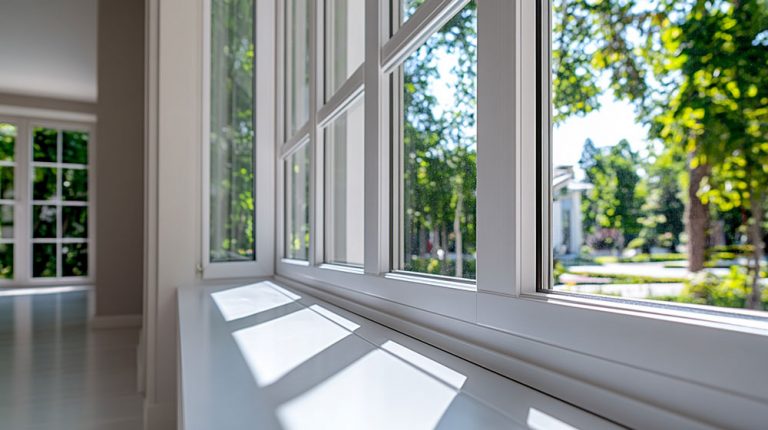
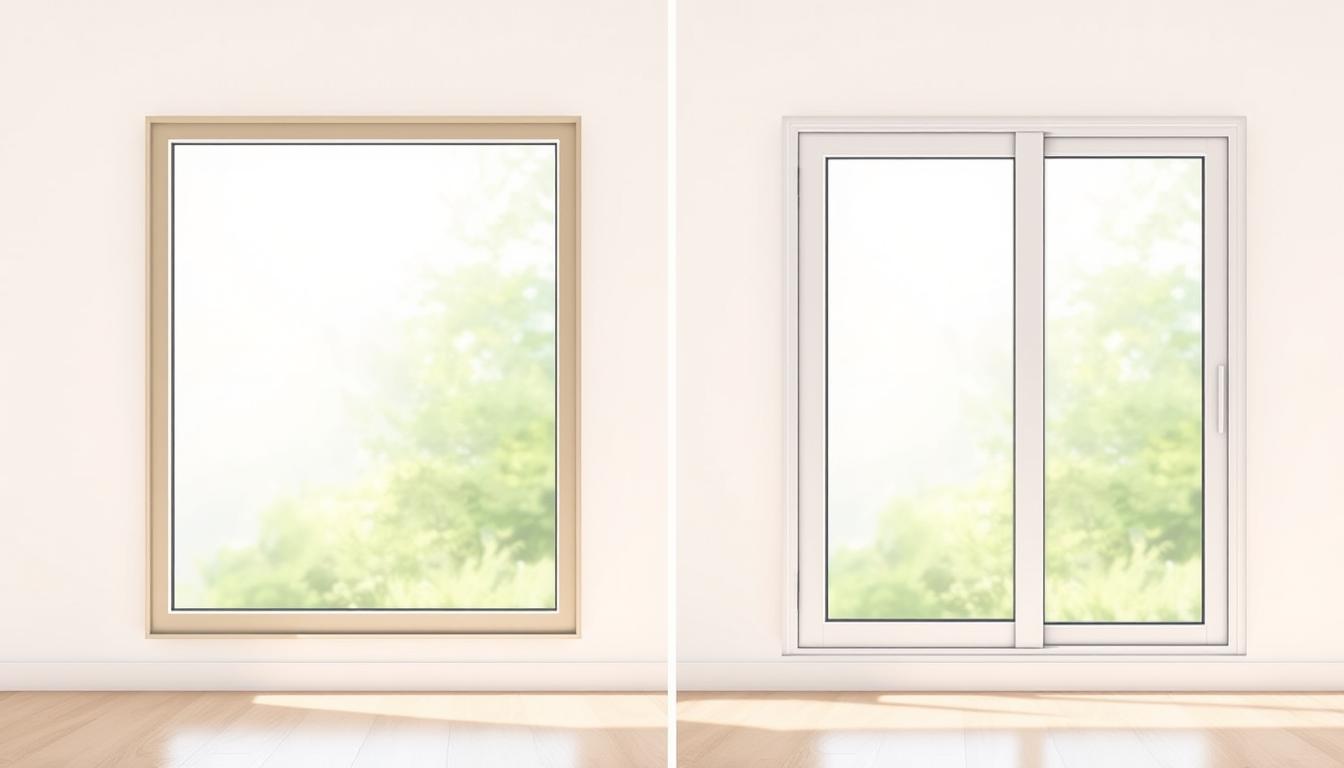
Fixed windows, also known as picture windows, don’t open. They let in lots of light and offer a clear view. They have fewer parts than other windows, making them easier to keep up.
These windows come in many shapes and sizes. You can find them in rectangles, arches, circles, rakes, and triangles. They can be single or multi-panel, even filling entire walls for a bold look.
The choice of glass and frame affects how well they work. You can pick from different types of glass and frames. This lets us meet your needs for energy and looks.
Fixed panels can hold heavier glass. This means you can have big, clear windows. Some systems can handle glass up to 45 kg, making them strong and stable.
Fixed windows are good for saving energy. They have fewer parts, which means less air can leak. They’re great for places that need to be well-insulated and bright.
They’re also easy to keep clean because they don’t have moving parts. This makes them a good choice, even if they cost a bit more.
But, they don’t let in air, and they can be more expensive for special shapes. If you need air to move, fixed windows won’t work. You might need to do some extra work to fit them in.
They’re perfect for making a statement in rooms. They’re great for living and dining areas, high ceilings, and kitchen backsplashes. Designers like Andersen and Jason Windows often choose them for their modern look.
Fixed windows are more than just pretty. They add style, save energy, and can even increase your home’s value. They’re a smart choice for any window replacement or design project.
Find related services
What is a Sliding Window?
A sliding window, or gliding window, has one or more sashes that slide on tracks. It stays flush with the wall, so it doesn’t block walkways or decks. This makes it a good choice for homes.
There are different styles like single slider, double slider, and centre slider. These can be paired with fixed panels for more options. This gives you control over light, views, and air flow.
The weight of the panels affects how easy it is to open and close the window. Aluminium systems can handle panels up to 30 kg. This makes opening and closing smooth and secure.
Sliding windows are great for letting in air. They work well in rooms that need good airflow. You can choose which side opens to fit your space.
They are often cheaper than custom fixed windows. This is because they are easier to make and install. They are a good value when comparing costs.
Keeping the tracks and rollers clean is important. This helps the window slide smoothly. Newer designs last longer and work better.
But, there are downsides. The sashes can sometimes block the view. The panels can’t be as big as fixed windows. They might let in a bit more air, so they might not be as energy-efficient.
They are best for places where you can’t swing a window out. This includes areas above sinks and beside decks. Designers like Andersen say they are good for modern homes and places that need lots of air.
When comparing window types, sliding windows fall between fixed and operable windows. Think about how they look, cost, and how easy they are to maintain when choosing windows for your home.
Explore energy-efficient options
Compare Energy Efficiency Between Fixed Windows and Sliding Windows: Comparison Table
We look at how windows perform in Canadian homes. We compare U-factor, SHGC, air leakage, and more. Our goal is to show how different windows affect comfort and energy use.
Fixed windows have less air leakage and better U-factor. They work well with double or triple glazing and special coatings. This makes them good for keeping warm in winter and cool in summer.
Sliding windows have more air leakage and slightly worse U-factor. But, they can be as efficient as fixed windows with the right features. Modern materials and special glass help them keep up.
| Performance Factor | Fixed Window | Sliding Window |
|---|---|---|
| Typical U-factor range (NFRC) | 0.18–0.28 (better with triple glazing) | 0.22–0.32 (improves with advanced seals) |
| SHGC control | Wide options; ideal for south-facing glazing to raise passive gain | Good options; preferred where adjustable solar control is needed |
| Air leakage | Minimal; fixed seals reduce drafts | Moderate; depends on track design and weatherstripping quality |
| Glazing & coatings | Supports low-e, argon/krypton, thicker double/triple panes up to 24mm | Supports low-e, argon/krypton, multi-pane units with narrower sightlines |
| Frame material impact | Vinyl and wood-clad offer strong thermal breaks; aluminium needs thermal break | Vinyl and thermally-broken aluminium perform well; quality seals matter |
| Best use | Primary glazed areas where ventilation is not required | Bedrooms, basements and living areas needing ventilation |
For cold climates, choose windows with lower U-factor. Adjust SHGC based on the sun’s direction. This helps keep your home comfortable and energy-efficient.
Getting your windows installed right is key. Poor installation can lower performance. Always check the condition of your frames and the structure before replacing windows.
For insulation, fixed windows are better if you don’t need to open them. But, for rooms that need air, sliding windows with good glazing and weatherstripping are a good choice.
Find the Best Window Styles for your Home
Cost Analysis: Comparison Table
We look at upfront costs, ongoing maintenance, and long-term value. This helps homeowners make informed decisions about window replacements. We compare prices for vinyl fixed and sliding windows in Canada. The final cost depends on the market and glazing choices.
Below is a cost analysis for Canada. We’ve adjusted industry ranges to fit local conditions. This shows common cost factors for fixed and sliding windows.
| Item | Fixed Window (vinyl) | Sliding Window (vinyl) |
|---|---|---|
| Typical retail price (standard size, per unit) | $420–$1,800 CAD | $370–$1,600 CAD |
| Custom shapes or large panels | High; bespoke fabrication raises cost significantly | Moderate; sliding units scale more predictably |
| Glazing upgrades (low-e, argon, triple) | $120–$700 added per unit | $100–$650 added per unit |
| Installation complexity | Higher when structural work or openings are enlarged | Lower for replacement-in-kind; quicker install |
| Typical labour & install (per unit) | $200–$600 CAD | $150–$500 CAD |
| Expected maintenance over 10 years | Low; fewer moving parts, minimal track work | Moderate; tracks, rollers and weatherstripping require attention |
| Energy performance impact | Potentially higher ROI with optimized glazing and larger glass area | Good when sealed well; sliding seals can be weaker than fixed |
| Perceived resale value | High for architectural appeal and large fixed views | Viewed as practical upgrade for everyday use |
| Common cost drivers | Size, custom shape, glazing package, structural work | Size, number of panels, glazing package, ease of swap-out |
When getting quotes, compare similar glazing packages. Reputable suppliers in Ontario and British Columbia can give exact prices. They need to know the size, glazing, and installation details.
Think about both short-term costs and long-term benefits when choosing windows. The table helps us understand the differences between fixed and sliding windows. This way, we can make a choice that fits our budget and style.
Fixed Windows vs Sliding Windows: What’s Best for Your Home?
We start by making a list of what’s important to you. This includes things like how much light and air you want, how much you want to spend, and how easy it is to clean. This helps us find the right windows for you.
Fixed windows are great for letting in lots of light and keeping views clear. They are also good for saving energy and are easy to keep clean. They are perfect for areas where you don’t need to open windows, like sunrooms.
Sliding windows are better for places where you need to open and close windows often. They are good for rooms like bedrooms and kitchens. They are also easier on your wallet and simpler to put in.
Some people like to mix both fixed and sliding windows. This way, you get the best of both worlds. For example, you can have big fixed windows and smaller sliding ones on the sides. This lets in lots of light while keeping air flowing.
When choosing windows, think about the size of your openings and how the sun hits your rooms. Look for windows with special features like low-e glass and argon fill. Always get quotes that include important details like U-factor and air leakage. For help, talk to local experts like Total Home Windows & Doors in the GTA. They can make sure you get the right windows for your home.
FAQ
What are the main differences between fixed (picture) windows and sliding (gliding) windows?
Fixed windows don’t open and let in lots of light. They give a clear view with few parts moving. Sliding windows open by sliding on tracks. They let in air and are easy to open.
Fixed windows are better at keeping air in and out. But sliding windows are cheaper and easier to use.
Which window type is more energy efficient for Canadian homes?
Fixed windows are better at saving energy. They don’t have moving parts, so they leak less air. But, sliding windows can be just as good if they have the right features.
Choose windows based on how cold it is where you live. Also, think about how much sun you get in different rooms.
Can fixed windows come in custom shapes and large sizes?
Yes. Fixed windows come in many shapes and sizes. They can be big and fit into special designs. But, they can cost more for custom shapes and big sizes.
Are sliding windows suitable for kitchens, bathrooms and bedrooms?
Yes. Sliding windows are great for rooms that need air. They work well in kitchens, bathrooms, and bedrooms. They’re also good where you can’t open windows outward.
Consider using sliding windows with fixed panels for more light and air.
How do maintenance and longevity compare between the two types?
Fixed windows need little care because they don’t move. Sliding windows need regular checks to keep them working well. Modern parts help them last longer, but sliding windows can wear out faster.
What are typical glazing and frame specifications to look for in vinyl fixed and sliding windows?
Look for windows with special glass and gas fills. Fixed windows can have thicker glass and be safer. Vinyl frames should keep warm in and cold out.
Which window type costs more upfront and why?
Fixed windows can be pricier for big, custom, or hard-to-install sizes. Sliding windows are often cheaper for standard sizes. The cost depends on size, shape, glass, material, and how hard they are to install.
How should we decide room by room which window type to choose?
Think about what you need in each room. Fixed windows are best for light and energy saving. Sliding windows are better for air and are more affordable.
Consider using both types to get the best of both worlds.
Will installation affect window energy performance?
Yes. The right installation is key. Bad installation can ruin energy savings. Use experts for big or custom windows and make sure they follow warranties.
How do we compare long‑term value and resale appeal between fixed and sliding windows?
Fixed windows add value with their views and light. Sliding windows are more practical and cost less upfront. The best choice depends on quality and installation.
Using both types can make your home more valuable and functional.
What specific performance metrics should we request from manufacturers and installers?
Ask for U‑factor, SHGC, and air leakage ratings. Check for special glass and gas fills. For sliding windows, ask about weight limits and track quality. For fixed windows, ask about glass thickness and support needs.
Can we mix fixed and sliding windows in the same opening?
Yes. Mixing types is a smart choice. Big fixed panes with sliders or hi‑lite panels above can offer views and air. It’s a good way to get the best of both.
Who should we contact in the Greater Toronto Area for quotes and local advice?
Talk to local experts in vinyl windows and doors. Total Home Windows & Doors in the GTA can give quotes and advice. They know the local climate and building codes.
Are there specific guidance points for Canadian climate and window orientation?
Yes. In cold areas, choose windows with low U‑factor. For south-facing windows, use high SHGC to keep warm in winter. For west or southwest, use low SHGC to keep cool in summer.
Use shading and overhangs to control sunlight and temperature.
What are the limitations of fixed and sliding windows we should be aware of?
Fixed windows don’t let in air and can be expensive. Sliding windows might leak air and block some view. Both need good glass and installation to save energy.