

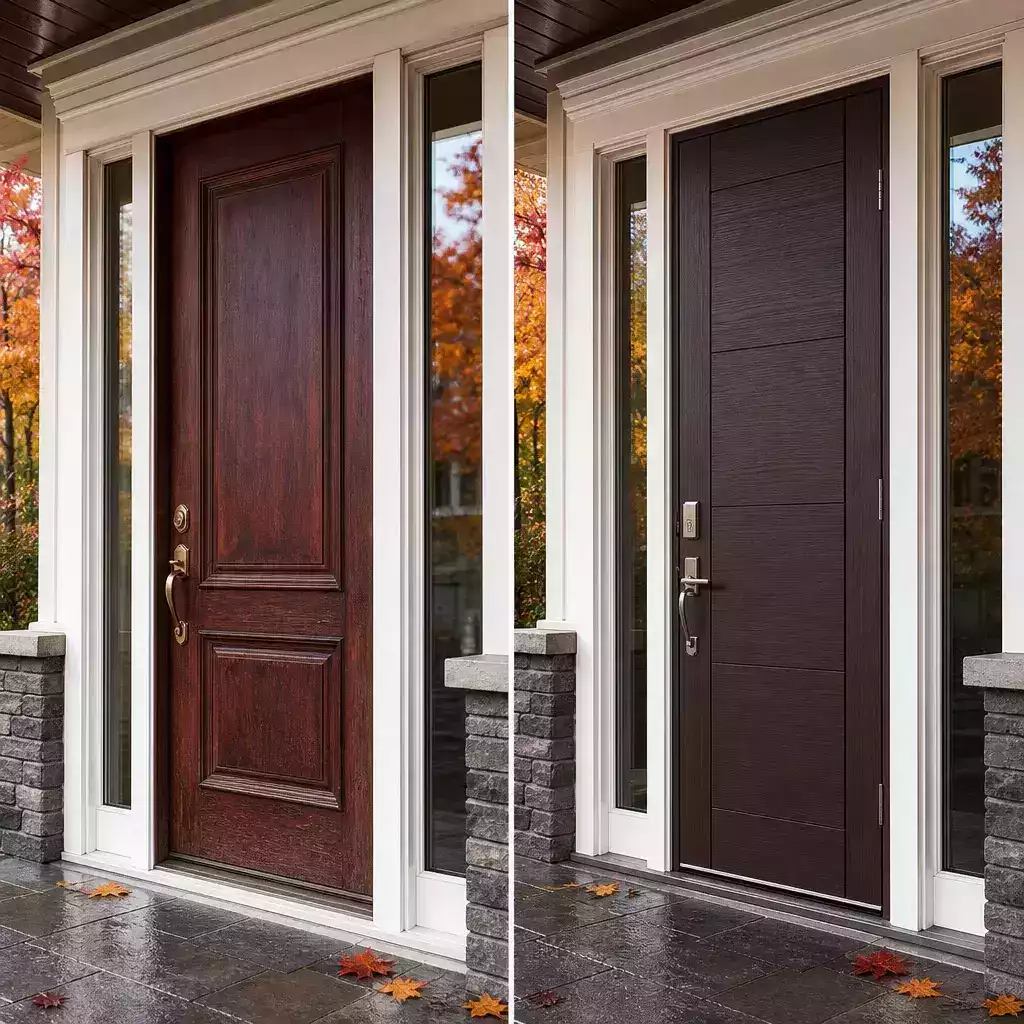
You’ve narrowed it down to two materials for your front door, but they seem equally appealing in the showroom. Composite doors offer superior durability, weather resistance, and lower maintenance than wood doors, typically lasting 35+ years with minimal upkeep, while wood doors provide authentic aesthetics and customisation potential but require regular refinishing every 3-5 years. This comparison helps Canadian homeowners choose between composite and wood entry doors based on climate demands, budget constraints, and long-term value.
Both materials serve as primary entry points to your home, but they differ fundamentally in construction and performance. Understanding these differences matters because your front door faces Ontario’s harsh winters, summer humidity, and daily wear whilst representing roughly 5-10% of your home’s curb appeal value.
This article examines opening mechanisms, energy performance, security features, maintenance requirements, and total cost of ownership. You’ll learn which material suits your specific situation, climate zone, and aesthetic preferences. We’ll also address common concerns about warping, fading, and return on investment based on real-world performance data from Canadian installations.
At-a-Glance Comparison Table
| Feature | Composite Doors | Wood Doors |
|---|---|---|
| Opening mechanism | Standard hinged, pre-hung | Standard hinged, custom options |
| Best use case | High-traffic, low-maintenance homes | Heritage homes, custom designs |
| Energy efficiency | Excellent (polyurethane core) | Good (requires proper sealing) |
| Security level | Very high (reinforced core) | Moderate (depends on thickness) |
| Price range | $1,800 – $4,500 installed | $2,500 – $8,000+ installed |
| Maintenance | Minimal (wash annually) | High (refinish every 3-5 years) |
| Lifespan | 35+ years | 20-30 years (with maintenance) |
| Common materials | GRP skin, polyurethane foam, timber frame | Oak, mahogany, fir, cedar |
Window and Doors Replacement Near Me
Composite Doors Overview
Composite doors combine multiple materials into a single unit. The typical construction includes a glass-reinforced plastic (GRP) skin over a solid polyurethane foam core, supported by a timber or composite frame. This engineered approach creates a door that mimics wood’s appearance whilst eliminating many of its vulnerabilities.
The manufacturing process involves moulding the outer skin to replicate wood grain patterns, then injecting high-density foam insulation. Most quality composites incorporate a steel or aluminium reinforcement layer for added rigidity. The result resembles traditional wood but performs differently under stress and weather exposure.
Key Advantages
- Weather resistance: GRP skins don’t absorb moisture, preventing warping, swelling, or rot even during freeze-thaw cycles common in Canadian climates
- Thermal performance: Polyurethane cores typically achieve U-values of 0.9-1.2 W/m²K, significantly better than solid wood construction
- Colour retention: Through-colour technology means scratches don’t reveal different underlayers, and UV-resistant finishes prevent fading for 10+ years
- Security enhancement: Reinforced cores resist forced entry better than wood, often incorporating multi-point locking systems as standard
- Dimensional stability: Composite materials maintain their shape across temperature extremes, ensuring consistent operation and seal integrity
Limitations and Trade-Offs
- Repair complexity: Deep gouges or cracks in GRP skins require professional repair; you can’t simply sand and refinish like wood
- Aesthetic authenticity: Despite advanced moulding techniques, composites lack the tactile warmth and unique grain patterns of genuine wood
- Environmental concerns: The manufacturing process involves petroleum-based products, and end-of-life recycling options remain limited compared to wood
- Initial cost perception: Quality composites often match or exceed entry-level wood prices, though lifecycle costs tell a different story
Ideal Use Cases
Composite doors excel in high-traffic family homes where durability matters more than heritage aesthetics. They’re particularly suitable for north-facing or weather-exposed entries that experience harsh conditions. Homeowners who value convenience over customisation benefit most from composite construction. These doors also suit rental properties where maintenance budgets are tight and durability reduces long-term costs.
Find related services
Wood Doors Overview
Wood doors represent traditional craftsmanship using solid timber or engineered wood products. Construction methods range from solid slabs milled from single pieces to stile-and-rail designs with raised panels. Premium species like mahogany and oak offer superior density and grain patterns, whilst more affordable options include fir and pine.
Manufacturing involves selecting, cutting, and joining wood components, then applying protective finishes. The natural material responds to environmental conditions, expanding and contracting with humidity changes. This organic behaviour defines both the appeal and the maintenance requirements of wood entry systems.
Key Advantages
- Authentic aesthetics: Natural wood grain, texture, and colour variations create unique, irreplaceable character that enhances heritage and luxury homes
- Customisation potential: Wood accepts virtually any design modification, from intricate carvings to custom dimensions and specialty glass configurations
- Repairability: Scratches, dents, and weathering can be sanded out and refinished multiple times throughout the door’s lifespan
- Environmental profile: Sustainably harvested wood is renewable, biodegradable, and stores carbon rather than releasing it during production
- Prestige value: High-end wood doors signal quality and investment, potentially increasing home appraisal values in premium markets
Limitations and Trade-Offs
- Maintenance intensity: Wood requires refinishing every 3-5 years in Canadian climates, including sanding, staining, and sealing to prevent deterioration
- Moisture vulnerability: Without proper maintenance, wood absorbs water, leading to warping, splitting, and rot, particularly in bottom rails and corners
- Cost variability: Premium hardwoods command significant prices, and custom work multiplies costs beyond standard composite options
- Thermal performance gaps: Solid wood provides less insulation than foam-core composites unless specifically engineered with insulated cores
Ideal Use Cases
Wood doors suit heritage properties where historical accuracy matters for preservation guidelines or neighbourhood character. They’re ideal for homeowners who appreciate natural materials and don’t mind regular maintenance schedules. Custom home builders often specify wood for unique architectural requirements that composites can’t accommodate. Properties with covered porches or protected entries also benefit from wood’s aesthetics whilst minimising weather exposure.
Head-to-Head: Key Decision Factors
Energy Efficiency
Composite doors typically outperform wood in thermal resistance due to their polyurethane foam cores. Standard composites achieve U-values between 0.9-1.2 W/m²K, whilst solid wood doors range from 1.5-2.0 W/m²K unless engineered with insulated cores. This difference translates to measurable heat loss during winter months.
According to Natural Resources Canada, improved door insulation can reduce heating costs by 8-12% annually in cold climates. The continuous foam core in composites eliminates thermal bridging that occurs in wood stile-and-rail construction. Both materials benefit from energy-efficient windows and proper weatherstripping for maximum performance.
Air infiltration rates also favour composites. Their dimensional stability maintains consistent seal contact, whilst wood’s seasonal expansion and contraction can create gaps. Quality wood doors with proper weatherstripping can match composite performance, but this requires vigilant maintenance and periodic adjustment.
Ventilation and Airflow
Neither material inherently provides ventilation unless fitted with operable glass panels or sidelights. However, wood’s natural breathability allows minimal moisture vapour transmission, which can be beneficial in preventing condensation buildup in certain climates. Composite doors create a complete vapour barrier.
For homes requiring entry-point ventilation, both materials accommodate glass inserts, transoms, or sidelights equally well. The frame construction matters more than the door material itself. Consider pairing your entry door with casement windows nearby for controlled fresh air intake.
Security
Composite doors offer superior intrusion resistance due to their reinforced cores. The solid polyurethane foam, often reinforced with steel or aluminium bars, resists kick-in attempts better than wood. Most composites come standard with multi-point locking systems that engage the frame at three or more points.
Wood door security depends heavily on thickness and species density. A solid 1¾-inch mahogany door with quality deadbolts provides excellent security, but lighter woods like pine offer less resistance. Both materials benefit from reinforced strike plates and proper frame installation. Total Home Windows and Doors installs all entry systems with the TotalSeal Multi-Point Locking System for enhanced protection.
“In our experience installing doors across the GTA, composite doors maintain their structural integrity far longer than wood in high-traffic applications. We see wood doors developing security vulnerabilities around hardware mounting points after 15-20 years, whilst composites show minimal degradation.” — Vitaly Shapiro, Vice President of Sales
Ease of Operation and Accessibility
Both door types operate identically when properly installed and maintained. However, composite doors maintain consistent operation across seasons due to dimensional stability. Wood doors may stick during humid summer months or create gaps during dry winter periods, requiring seasonal adjustments.
For accessibility considerations, both materials accommodate lever handles, reduced-force closers, and low-threshold options equally well. The key difference emerges over time: composite doors require fewer adjustments to maintain smooth operation, benefiting elderly users or those with mobility limitations.
Price and Installation Cost
| Cost Component | Composite Doors | Wood Doors |
|---|---|---|
| Entry-level door (material only) | $800 – $1,500 | $1,200 – $2,000 |
| Mid-range door (material only) | $1,500 – $2,500 | $2,000 – $4,000 |
| Premium door (material only) | $2,500 – $3,500 | $4,000 – $6,000+ |
| Professional installation | $500 – $1,000 | $500 – $2,000 |
| Annual maintenance (averaged) | $25 – $50 | $150 – $400 |
| 10-year total cost of ownership | $2,050 – $4,500 | $3,700 – $10,000+ |
Installation costs vary based on frame condition, structural modifications, and regional labour rates. Wood doors often require more extensive preparation and finishing work, increasing labour charges. Custom wood installations can double standard installation costs due to fitting requirements.
The total cost of ownership calculation includes maintenance, refinishing, and potential early replacement. Over a typical 20-year period, composite doors cost 30-40% less to maintain than wood, offsetting any initial price premium. For detailed pricing specific to your project, explore door cost factors.
Maintenance and Lifespan
Composite doors require minimal maintenance: annual washing with mild soap and water, occasional hinge lubrication, and periodic weatherstrip inspection. The GRP skin resists fading, cracking, and peeling without refinishing. Expected lifespan exceeds 35 years with basic care.
Wood doors demand significantly more attention. Canadian climates necessitate refinishing every 3-5 years, including:
- Complete sanding to remove old finish and weathered wood fibres
- Application of wood conditioner or primer to ensure even stain absorption
- Multiple coats of stain or paint with drying time between applications
- Protective clear coat or sealant to resist moisture and UV damage
- Annual inspection and touch-up of vulnerable areas like bottom rails
Without proper maintenance, wood doors deteriorate rapidly. Moisture infiltration causes rot, particularly in bottom rails and corners. Finish failure leads to accelerated weathering and structural damage. Well-maintained wood doors last 20-30 years, but neglected units may require replacement in 10-15 years.
“We regularly service homes where original composite doors installed 25 years ago still operate perfectly with just weatherstrip replacement. Comparable wood doors from the same era typically show significant weathering, require hardware upgrades, and often need complete refinishing or replacement.” — Daniel Klein, Project Manager
Aesthetics and Curb Appeal
Wood doors offer unmatched natural beauty. Each door displays unique grain patterns, colour variations, and textural depth that composite manufacturing cannot fully replicate. For heritage properties or luxury homes, authentic wood signals quality and investment.
Modern composite doors have narrowed the aesthetic gap considerably. Advanced moulding techniques create convincing wood-grain textures, and through-colour technology ensures consistent appearance. From street view, quality composites often pass for wood, particularly in painted finishes.
Colour options differ significantly. Wood accepts any stain or paint colour but requires professional refinishing to change. Composites come in fixed colours but maintain that colour indefinitely without fading. For architectural styles, both materials suit traditional and contemporary designs, though ultra-modern aesthetics may favour composites’ clean, consistent appearance.
Consider how your entry door coordinates with other elements. If you’re also upgrading windows, explore vinyl windows or aluminum windows that complement your door choice.
Find the Best Window Styles for your Home
Which Should You Choose?
Choose Composite Doors If…
- Your entry faces harsh weather exposure (north-facing, unprotected from elements)
- You prioritise low maintenance and long-term value over authentic wood aesthetics
- Energy efficiency and consistent thermal performance matter for your climate zone
- You prefer modern convenience features like integrated multi-point locking systems
- Your budget favours lower total cost of ownership rather than minimum initial investment
Choose Wood Doors If…
- You own a heritage property where historical accuracy matters for preservation or resale value
- Custom design requirements exceed standard composite manufacturing capabilities
- You appreciate natural materials and don’t mind regular maintenance schedules
- Your entry has significant weather protection (deep porch, southern exposure with overhang)
- Authentic wood aesthetics justify the premium price and ongoing refinishing costs
Best window companies reviews
Making the Final Decision
If energy efficiency and minimal maintenance drive your decision, composite doors deliver superior long-term value. If authentic aesthetics and customisation potential matter more, wood doors justify their higher maintenance requirements. Both materials perform well when properly specified and installed.
Your choice should reflect your specific climate exposure, maintenance willingness, and aesthetic priorities. Consider visiting a showroom to compare materials in person. Total Home’s showroom displays both composite and wood options alongside complementary fiberglass doors and steel doors for comprehensive comparison.
For expert guidance specific to your home’s architecture and your budget, professional consultation ensures you select the right material. Total Home Windows and Doors brings over two decades of experience installing entry systems across the GTA, with an A+ BBB rating, 4.9 Google rating, and 5.0 Homestars rating. Our installations include ENERGY STAR™ certified options and the TotalSeal Multi-Point Locking System for maximum security.
Ready to upgrade your entry? Explore exterior door options or contact our team for a free consultation and quote. We’ll assess your specific requirements, climate exposure, and aesthetic goals to recommend the optimal solution for your home.
Frequently Asked Questions
Do composite doors look fake compared to real wood?
Modern composite doors replicate wood grain convincingly from typical viewing distances. Advanced moulding creates realistic texture, though close inspection reveals differences. Painted finishes look virtually identical, whilst stained finishes show more variation from genuine wood.
How long does a wood door last in Canadian winters?
Properly maintained wood doors last 20-30 years in Canadian climates. This requires refinishing every 3-5 years and prompt repair of finish damage. Neglected wood doors may deteriorate significantly within 10-15 years due to moisture infiltration and freeze-thaw cycles.
Can you paint composite doors a different colour later?
Yes, composite doors accept paint, though their through-colour construction means repainting isn’t necessary for colour maintenance. Use exterior-grade paint designed for GRP surfaces. Proper surface preparation ensures good adhesion and durability comparable to the original factory finish.
Which door material offers better resale value?
Wood doors may command higher perceived value in luxury markets, whilst composites appeal to buyers seeking low maintenance. Actual ROI depends on neighbourhood standards and buyer preferences. Both materials positively impact curb appeal when well-maintained and appropriately specified for the home’s style.
Do composite doors crack or fade over time?
Quality composite doors resist cracking and fading for 10+ years due to UV-resistant finishes and flexible GRP construction. Lower-quality units may show surface crazing or colour shift. Choose composites with comprehensive warranties covering colour retention and structural integrity for best long-term performance.