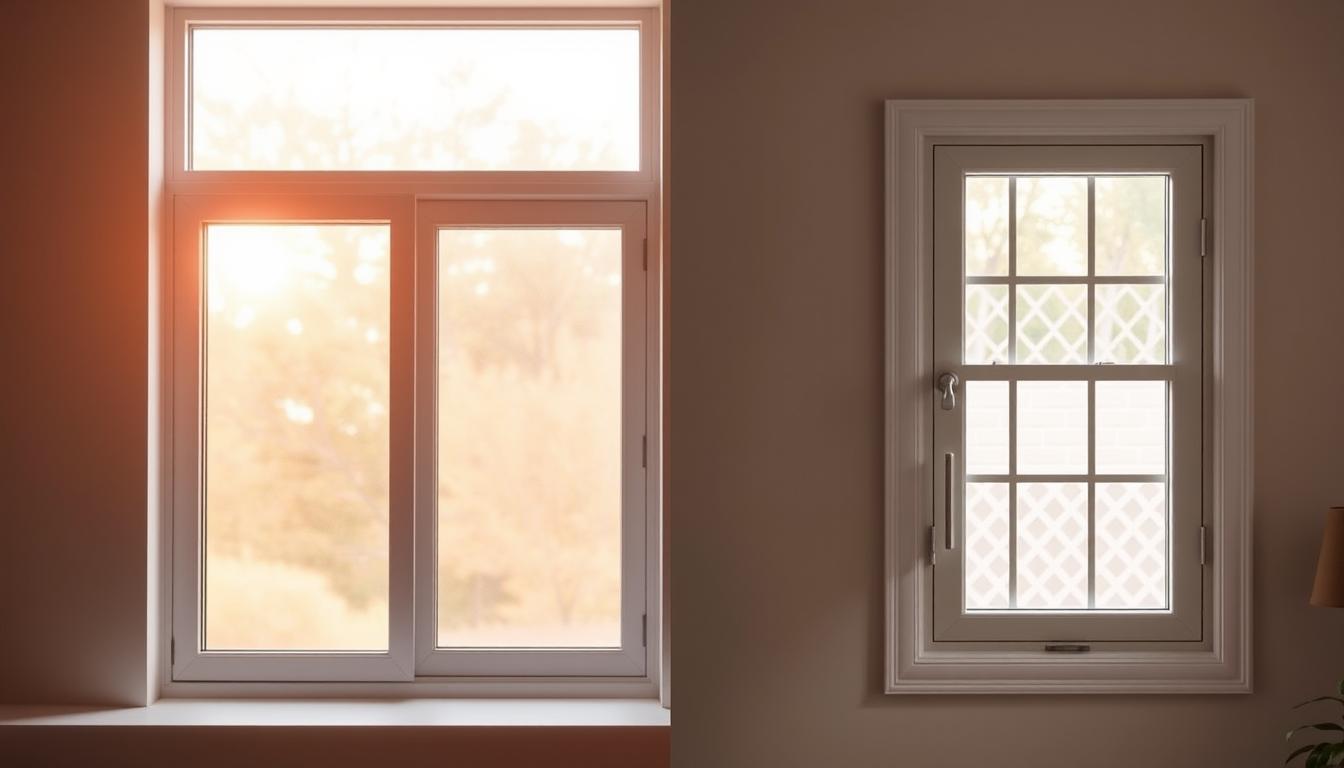
Nearly 40% of a home’s heat loss comes through windows. This is more than just a style choice. For Canadian homeowners, the choice affects comfort, energy bills, and rebates.
We start by explaining the main differences between sliding and crank windows. Crank windows open outward with a hand crank. They offer tight seals and strong ventilation with double- or triple-glazing and special coatings. Sliding windows move horizontally and are good for wide openings and low-profile spaces. They are often cheaper to buy.
Key Takeaways
- Crank (casement) windows offer better airtightness and ventilation for Canadian climates.
- Sliding windows suit wide openings and lower profiles and cost less initially.
- Energy upgrades (Low-E, argon fills, warm-edge spacers) benefit both types, but cranks typically perform better over time.
- Maintenance differs: cranks need mechanical upkeep; sliders need track cleaning and lubrication.
- Crank windows can qualify for energy-efficiency rebates; sliders often win on upfront affordability.
- Total Home Windows & Doors in the Greater Toronto Area is a local window manufacturer homeowners can consult for vinyl windows and custom quotes.
Window and Doors Replacement Near Me
What is a Sliding Window?
A sliding window is a type of window that moves horizontally. It’s also known as a glider. It has one fixed pane and one that can open.
There are also double-slider units where both panes move. And multi-panel formats with fixed centre panes. Sliders don’t need a crank arm to move.
Sliding windows work by pushing or pulling them. They don’t need a crank. The sash is supported by rollers that guide it along the track.
This design has fewer parts. It can affect how well the window works, lasts, and can be fixed.
Homeowners like sliding windows for their easy motion. They cost less to make and install. They also have a slim look that’s good for patios and walkways.
They fit wide openings well. They look modern and go with contemporary and ranch-style homes.
But, there are downsides. Ventilation is limited unless both sashes move. Weather stripping is used to seal them, so they need regular checks to keep drafts out.
Tracks can get dirty with debris, snow, and ice. This can cause jams if not cleaned often.
For Canadian weather, consider upgrades. Use double- or triple-pane glass and Low-E coatings. Add argon fills for better insulation.
Check seals and rollers every season. Think about multi-point locks and easy-to-find replacement rollers for better security and durability.
Sliding windows are great for wide living-room walls and basement egress. They’re also good for low-profile sites where outward swing would block walkways. They’re a budget-friendly choice for renovations or rental units.
The sliding design is popular for its clean, modern look. It’s perfect when you want unobstructed views and a sleek appearance.
What is a Crank Window?
A crank window is a side-hinged sash that opens outward. It uses a manual crank to operate. This type includes single and double casement styles that open fully.
Canadian homeowners love casement windows for many reasons. They offer great ventilation and let you catch side breezes. The slim frames give you a clear view, and the seals reduce air leaks.
When comparing sliding and crank windows, casements often win. They have lower U-values and better SHGC with quality glazing. Tests by Natural Resources Canada show casements are better at keeping warm in.
Choosing between sliding and crank windows has its trade-offs. Crank windows cost more upfront and take longer to install. Prices can go up to $2,000 for big, triple-glazed ones.
Maintenance is key for both types. Crank windows need regular checks and oiling. Weatherstripping should be replaced yearly. Fixing a crank is harder than fixing a sliding window.
Security and ease of use are big pluses for crank windows. They have strong locks and make cleaning easier. This is great for kitchens and bathrooms.
But, there are limits to where you can put them. They need space to swing out. Harsh weather can also wear them down, so choose durable parts.
To get the most out of crank windows, pair them with triple glazing. Use argon gas and Low-E glass. Regular care keeps them working well in Canada.
Explore energy-efficient options
Compare Energy Efficiency Between Sliding Windows and Crank Windows
We look at how well windows keep heat in and cold out in Canadian homes. We focus on what matters most for keeping warm in winter and cool in summer. The table below shows how sliding and crank windows differ.
Here’s a quick table to compare airtightness, U-value, ventilation, weather resistance, upkeep, and rebate chances.
| Metric | Crank (Casement) Windows | Sliding Windows |
|---|---|---|
| Airtightness | High — compression seals made by the crank action keep air out; works well in cold, windy weather. | Moderate — depends on weather stripping and track seals; can leak if debris or ice builds up. |
| Typical U-value Range | Lower U-values with the same glazing; double- and triple-glazed, Low-E, and gas fills work best. | Comparable with better glazing, but frame and seal differences might make U-values slightly higher. |
| Ventilation (% opening) | Up to 100% operable for strong airflow and natural cooling control. | About 40–60% operable area for standard sliders; some designs offer more. |
| Vulnerability to Weather/Debris | Tighter seals resist wind-driven infiltration; fewer track problems in snow and ice with proper installation. | Tracks can collect debris and ice, affecting airtightness without regular upkeep. |
| Typical Lifespan & Maintenance Notes | Long lifespan with occasional hardware service; seals rarely need frequent replacement with quality installation. | Durable frames with simple mechanics; track cleaning and seal replacement improve performance over time. |
| Rebate / Qualification Likelihood | Higher chance of qualifying for energy programs with Energy Star-rated glazing and certified installation. | Possible qualification with upgraded glazing; initial cost might affect rebate value. |
The main difference between sliding and crank windows is in sealing and opening area. This difference affects energy use and comfort in Canadian climates.
For cold winters, crank windows can save on heating costs. Their higher upfront cost can be offset by lower bills and rebates in many provinces.
Homeowners should weigh sliding vs crank window benefits based on their needs. Crank windows offer tight seals and directional ventilation. Upgraded sliding windows are cheaper upfront and have large openings, but need regular upkeep.
Homeowners in the Greater Toronto Area should contact local suppliers like Total Home Windows & Doors. They offer vinyl options, Energy Star advice, and rebate guidance for the area.
Find the Best Window Styles for your Home
Cost Analysis: Comparison Table
We compare sliding vs crank window installation and cost for Canadian homeowners. We look at purchase price, installation, maintenance, and long-term value. This is all in an easy-to-read format.
Prices vary based on glazing, frame material, and size. Sliding windows are often cheaper to buy and install. Crank windows cost more because of their hardware and seals.
| Category | Sliding Window | Crank (Casement) Window |
|---|---|---|
| Purchase price (low) | $150 — $350 (vinyl, basic double-pane) | $250 — $450 (standard double-pane) |
| Purchase price (median) | $350 — $700 (better glass, mid-size) | $450 — $900 (enhanced seal, mid-size) |
| Purchase price (high) | $700 — $1,200 (triple-glaze, premium frames) | $900 — $2,000+ (triple-glaze, custom sizes) |
| Installation cost (typical ranges) | $550 — $1,400 depending on size, glazing and labour | $800 — $2,000+ for complex installs and larger units |
| Maintenance frequency | Low to moderate; clean tracks annually, rollers as needed | Moderate; lubricate crank and hinges, inspect gears yearly |
| Typical maintenance cost (annual avg) | $25 — $75 for parts/strip replacement over time | $50 — $150 for specialized parts or mechanism servicing |
| Expected energy bill impact | Neutral to modest savings with quality seals and low-e glass | Better airtightness often yields stronger heating savings in cold climates |
| Expected payback period (Ontario/GTA) | 5 — 12 years when budget is tight and units are standard | 7 — 15 years but shorter if high airtightness reduces heating costs |
| Rebate and incentive program | Energy Star sliders qualify if performance ratings meet criteria | High-performance casements often qualify for larger incentives |
Choosing between sliding and crank windows depends on where you live and how you use them. In cold areas, crank windows might save more on heating. For rentals or tight budgets, sliding windows might be quicker to pay off.
Things that increase cost include triple glazing, special fills, and custom sizes. Removing old windows also adds to the cost.
Get quotes from several places and ask for performance data. Local suppliers like Total Home Windows & Doors in the GTA can give you real quotes. They can help you decide between sliding and crank windows.
Consider the upfront cost of sliding vs crank windows against long-term savings and rebates. This helps you see the true value for your home.
Sliding Windows vs Crank Windows: What’s Best for Your Home?
Choosing between sliding and crank windows depends on several factors. These include the climate, energy use, room purpose, and your budget. Also, think about how easy they are to maintain and their long-term value.
For tight seals and good airflow, crank windows are great. They work well in cold weather. Sliding windows are cheaper and better for wide openings.
Crank windows are best for kitchens and bedrooms. They seal well and let in lots of air. Sliding windows are good for big rooms and basements. They are easy to keep up and let you see more.
It’s smart to mix both types. Use casements for energy and airflow, and sliders for wide openings.
When installing or maintaining windows, look for NFRC or ENERGY STAR labels. Check the U-value and SHGC of your glazing. Keep sliders clean to reduce air leaks.
For crank windows, check the cranks and hinges often. Make sure you have warranty and parts info. In the Greater Toronto Area, Total Home Windows & Doors offers custom vinyl options and quotes.
There’s no clear winner in the sliding vs crank debate. Casement windows are best for saving energy in cold areas. Sliding windows are cheaper and good for big openings.
Get quotes from two trusted installers. Compare ratings and ask about the cost over time. This will help you make a confident choice.
FAQ
What is the difference between sliding (glider) windows and crank (casement) windows?
Sliding windows move horizontally on a track. They come in single-slider, double-slider, and multi-panel units. These windows glide with few parts and don’t swing out.
Crank windows, or casements, open by turning a handle. They swing out and seal tightly when closed. Sliders are good for wide spaces and low-clearance areas. Cranks offer better air tightness and full ventilation.
Which window type offers better energy efficiency for Canadian homes, specially in Ontario and the GTA?
Crank windows are more airtight and have lower U-values. This is because the crank action seals the sash against the frame. Adding double- or triple-glazing, Low-E coatings, and special fills makes them even better.
Sliding windows can also be upgraded. But, they might let more air in over time due to wear on weather strips and tracks.
How do ventilation and airflow compare between sliders and cranks?
Crank windows open fully, allowing up to 100% ventilation. They also let you control the breeze direction. Sliding windows usually open less, but advanced designs can offer more.