More than 40% of Canadian homeowners say natural light is key when renovating. Yet, many pick windows without thinking about ventilation and energy. Our guide compares picture windows and single hung to help you choose the best for your home.
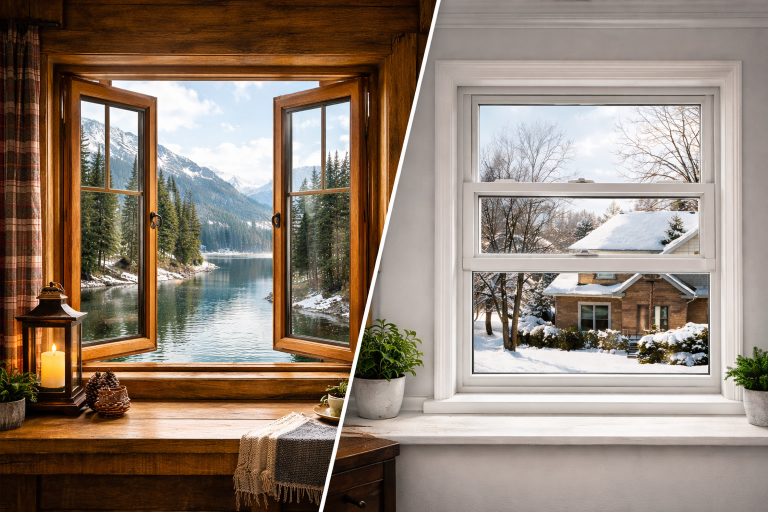
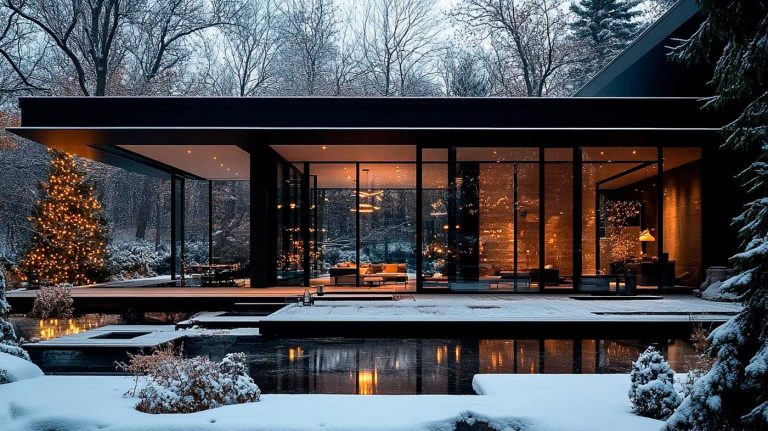
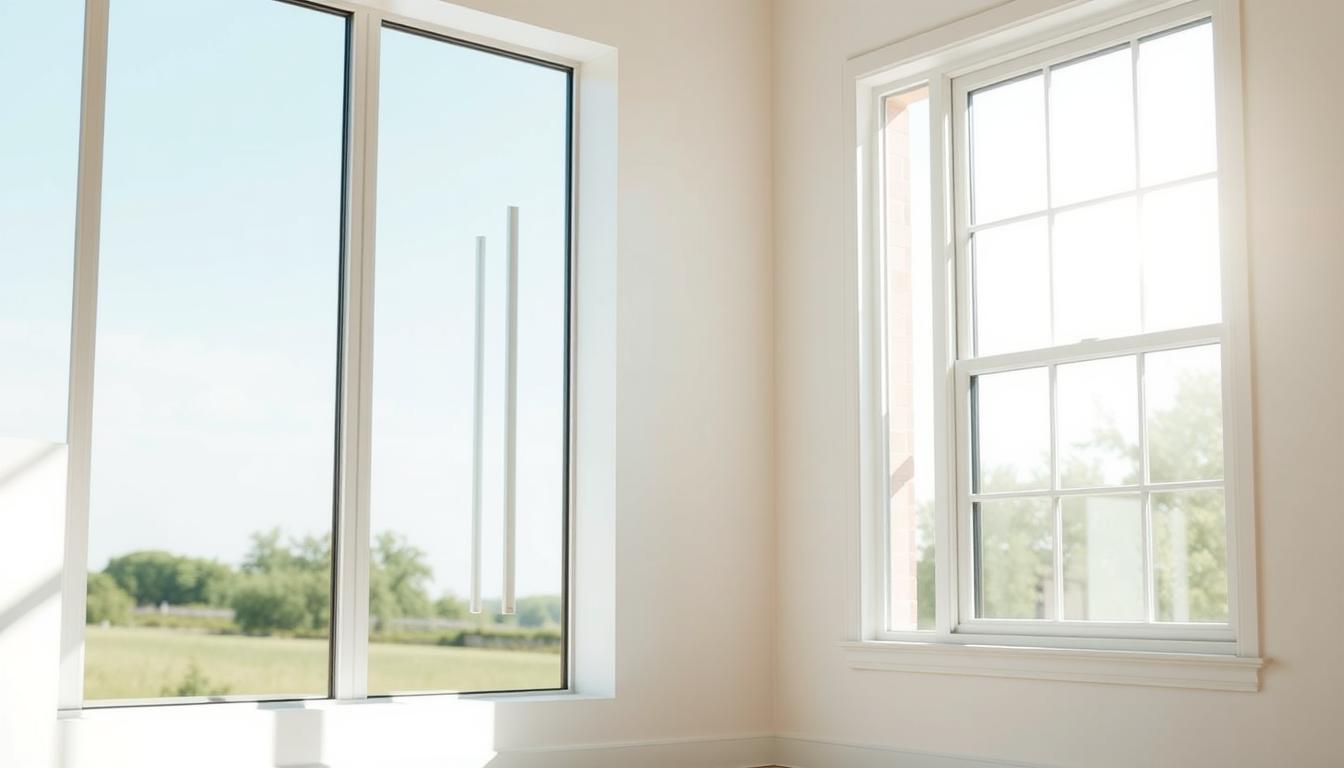
Picture windows are fixed panes that show the outdoors like a photo. They give clear views and keep heat in, making them great for living rooms and places with glare.
Single hung windows have a moving lower sash and a fixed upper one. They let in air but can block some view when open. They’re also cheaper and easier to keep up.
In this article, we look at energy, durability, looks, and cost. We help you decide if a picture window or a single hung is best for your Canadian home.
Key Takeaways
- Picture windows give clear views and keep heat in but don’t let in air.
- Single hung windows let in air with the lower sash and are a good, space-saving choice.
- Both styles can be energy-efficient with the right glazing and frames.
- Choose picture windows for views and light, and single hung for bedrooms and air flow.
Window and Doors Replacement Near Me
What is a Picture Window?
A picture window is a big, fixed pane that doesn’t open. It shows outdoor views like a photo. This design lets in lots of light and views without any moving parts.
Picture windows don’t let in air, so they’re not good for places that need fresh air. It’s best to use them with windows that open nearby. This way, you get both views and air.
These windows are very secure because they don’t move. This makes them hard for intruders to break into.
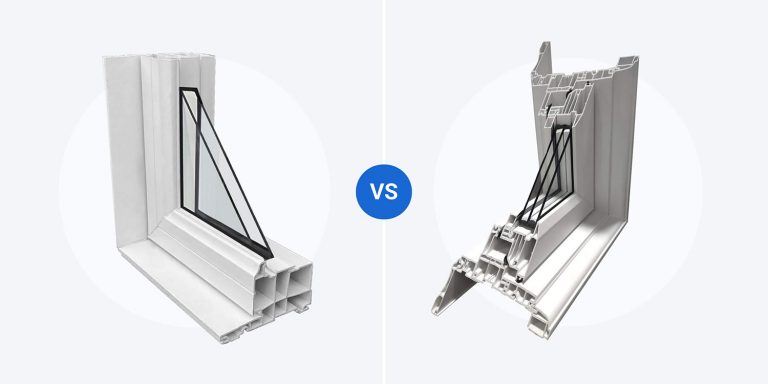
In cold places like Canada, picture windows can be very energy-efficient. They work best with special glass and frames. They are better than old single-hung windows at keeping air in.
When choosing between picture windows and single hung, think about what you need. Single hungs are good for air and getting out. Use picture windows for views and light, and operable ones for air.
For better windows, pick low-E glass, argon gas, and frames that don’t conduct heat. These help keep warm in winter and cool in summer. They make your home more comfortable and save on energy bills.
What is a Single Hung Window?
A single hung window has two parts. The top part doesn’t move, and the bottom part slides up and down. This design is popular in many homes in Canada.
The bottom sash opens for ventilation. This lets us control airflow by opening the bottom sash. It’s great for using fans or air conditioners for a breeze.
Security-wise, hung windows are better than fully open ones but not as secure as fixed windows. We use strong locks and safety devices to keep them secure.
Size is key for escape and egress. The right size single hung window meets safety standards. But, smaller ones might not. We check local codes before choosing.
For those looking to renovate, single hung windows are a good choice. They fit well with various frames and are cost-effective. They’re a solid option in any window guide.
Energy efficiency is also important. Modern single hung windows have low-E glass and Argon fills. These features help save energy and lower heating costs in Canada.
Explore energy-efficient options
Compare Energy Efficiency Between Picture Windows and Single Hung Windows: Comparison Table
We have a detailed energy efficiency comparison for homeowners in Canada. Our guide focuses on thermal performance, air leakage, glazing, and maintenance.
Picture windows are fixed and don’t move. They are great for keeping energy in. They have low air leakage and stable U-factors with the right coatings and gas.
Single hung windows open at the bottom. They can be efficient but might let in drafts if not installed well.
| Feature | Picture Window | Single Hung Window |
|---|---|---|
| Air infiltration | Very low due to fixed frame and sealed glazing | Moderate; movable sash increases leakage |
| U-factor | Often lower (better) with multi-pane and gas fill | Comparable with high-quality sashes and seals |
| Solar heat gain control | Excellent with low-e coatings and proper orientation | Good; depends on glass options and frame material |
| Ventilation | None; fixed glazing only | Yes; allows airflow when sash is open |
| Maintenance | Low; fewer moving parts to service | Moderate; sash and balance systems need upkeep |
| Best use | Large openings, view-focused rooms, passive solar designs | Bedrooms, living spaces that need airflow and egress |
| Typical energy-efficient upgrades | Triple glazing, low-e coatings, argon/krypton fill | Low-e glass, warm-edge spacers, reinforced weatherstripping |
This guide helps understand the trade-offs between picture and single hung windows. For those focusing on keeping warmth in, the choice depends on sealing and glazing.
Choosing the right windows means balancing keeping warm with letting in air. Always check NFRC ratings and ClimateZone recommendations when picking energy-efficient windows.
Find the Best Window Styles for your Home
Cost Analysis: Comparison Table
We look at costs to help with window cost comparison for renovations. Picture windows are fixed and simple, with no moving parts. This makes them cheaper than operable styles.
Single hung windows have sashes, tracks, and locks. These parts make them more expensive to make and install. They are a good choice for big projects.
Here are some cost factors to help homeowners choose. This way, they can match their budget and style goals.
| Item | Picture Window | Single Hung Window |
|---|---|---|
| Typical unit cost (materials) | $250–$700 — fixed glass, simpler frame | $300–$900 — includes sash, hardware, weatherstripping |
| Average installation time | 1–2 hours per window — faster due to no operable parts | 2–4 hours per window — extra time for alignment and sealing |
| Repair and maintenance | Low — fewer moving parts, rare repairs | Moderate — periodic hardware and track maintenance |
| Energy upgrade cost (low-E, argon) | Similar — upgrades apply to both styles; glazing cost comparable | Similar — glazing adds to unit cost, seals and frames matter |
| Best fit for large openings | Excellent — offers unobstructed views with lower per-panel cost | Good — can be used in banks, but more frames increase cost |
| Suitability for multi-window replacements | Moderate — cost-effective as accent or fixed-light areas | High — budget-friendly choice for replacing many windows quickly |
| Estimated lifespan | 20–40 years with quality sealing and glazing | 15–30 years depending on hardware wear and maintenance |
| Typical labour cost range (Canada) | $75–$200 per window — less complex installation | $100–$300 per window — extra labour for fit and testing |
| Impact on resale and style | High visual impact — one of the best window styles for view rooms | Widely accepted — practical choice noted in home improvement tips |
It’s good to compare these numbers with local quotes. This helps make a clear budget for your project.
Use these figures when planning your window renovation. This keeps your choices in line with your budget and style goals.
Picture Window vs Single Hung Window: What’s Best for Your Home?
Choosing between picture windows and single hung ones depends on what you value most. Picture windows offer lots of glass and stunning views. They are perfect for letting in lots of natural light.
On the other hand, single hung windows are great for rooms that need air. They are easy to open and close. Plus, they are more affordable.
Picture windows are best for walls that don’t get used much. They look amazing in living rooms or dark areas. They work well with energy-saving features like low-E glass.
For rooms that need air, single hung windows are a good choice. They fit well in tight spaces and meet building codes.
When planning to replace windows, think about what you need. Use picture windows for light and views. Choose single hung for air and cost savings.
Remember to consider insulation, upkeep, and your local climate. This helps choose the right windows for comfort and savings in Canada.
FAQ
What’s the main difference between a picture window and a single-hung window?
A picture window is fixed and doesn’t open. It gives a clear view and lots of light. A single-hung window has two parts but only the bottom moves. It lets in air and can meet safety rules if it’s the right size.
Which window is more energy-efficient: picture window or single-hung?
Picture windows save more energy because they don’t move. Single-hung windows can also save energy, thanks to new seals and glass. But, they might let more air in than fixed windows.
Can a picture window be used where emergency egress is required?
No. Picture windows can’t be opened for escape. For rooms needing an exit, like bedrooms, you need a window that opens, like a single-hung or casement.
Are picture windows more secure than single-hung windows?
Yes, usually. Picture windows are safer because they can’t be opened by intruders. Single-hung windows can be opened and are less secure, but good locks and frames can help.
Which window type is better for ventilation?
Single-hung windows are better for air flow because the bottom part opens. Picture windows don’t open and are best where air isn’t needed.
How do costs compare between picture windows and single-hung windows?
Picture windows are often cheaper because they don’t need moving parts. Single-hung windows cost more because they have more parts and are harder to install. But, they’re a good choice for replacing windows.
Where should we install a picture window versus a single-hung window?
Put picture windows where you want a clear view and lots of light, like living rooms. Use single-hung windows in rooms needing air, like kitchens, or where you need to open a window.
Can single-hung windows work with fans or air conditioners?
Yes. Single-hung windows open at the bottom, so you can use fans or air conditioners. Picture windows can’t because they don’t open.
Are there modern options that combine benefits of both styles?
Yes. New window systems mix fixed picture windows with operable ones. This gives you big views, light, and air. They also use energy-saving glass and designs.
How should we decide between the two when planning a renovation?
Think about what you need: views, light, or air. Choose picture windows for views and light. Pick single-hung for air, safety, or if you’re on a budget. Consider the room’s purpose and how to save energy too.