Nearly 70% of Canadian homes have double hung windows. But, tilt and turn windows are gaining popularity in modern homes and energy-efficient builds.
This guide compares tilt and turn windows with double hung for Canadian buyers. We discuss the main differences and benefits. We also talk about energy efficiency, ventilation, and how easy they are to maintain and clean.
We look at important features like U-factor, SHGC, and air leakage. We also consider multi-point locking, glazing options, and installation quality. We mention Total Home Windows & Doors in the Greater Toronto Area for vinyl options, cost, and availability.
Our goal is to help you understand the differences in performance, looks, and value for your next project.
Key Takeaways
- We explain how tilt and turn windows work differently than double hung. Tilt and turn offer full inward turn for cleaning and egress.
- We measure energy efficiency by U-factor, SHGC, and air leakage. This shows how well they perform in real life.
- Tilt and turn windows have better ventilation and are easier to clean. They offer secure top-ventilation and easy interior access.
- Aesthetics and materials are important for fitting with Canadian homes. Vinyl suppliers like Total Home Windows & Doors affect cost and availability.
- We consider practical costs and ROI. This helps you choose the best option for your project.
Window and Doors Replacement Near Me
What is Tilt and Turn Windows?
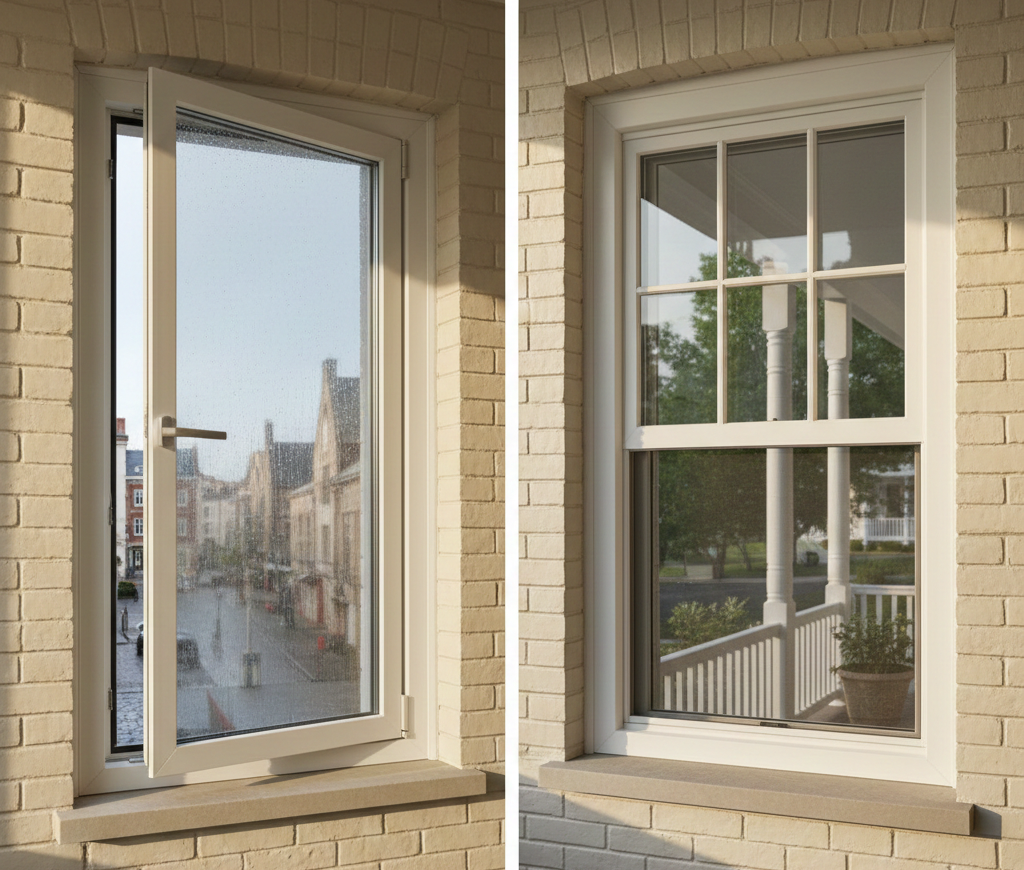
Tilt and turn windows are European-style units. They have a single handle for two ways of use. The tilt position lets in air while keeping the opening secure.
The turn position opens the sash fully for better airflow and cleaning from inside.
These windows use strong hinges and locks for safety. They also have gaskets for a tight seal. This makes them energy-efficient.
In tilt mode, we can let in air without big openings. This stops sudden drafts. In turn mode, we get fast air exchange and easy cleaning.
The inward swing makes cleaning easier. It also reduces the need for ladders.
Security is built into these windows. The locks make it hard for intruders. Tilt mode also offers a safe opening.
When sized right, they meet egress needs for bedrooms.
They are energy-efficient due to locks and seals. Double- or triple-glazing lowers energy loss. They also block noise well, great for busy streets.
Custom options include different frames and colours. You can choose from various glazing types. They also have features for easy access and safety.
But, they cost more than regular windows. They might not be easy to find everywhere. You might need to replace parts sometimes.
They need space to open inward. This can be a problem with blinds or furniture. Plan your space well before choosing them.
They’re best for new homes or big renovations. They fit modern styles well. They’re great for homes that value security, air flow, and easy cleaning.
Total Home Windows & Doors in the Greater Toronto Area offers these windows. Check with local experts to see if they meet Canadian standards.
What is Double Hung Windows?
Double hung windows have two sashes that slide up and down. This lets you open the window from the top, bottom, or both. Modern ones are easy to clean and maintain from inside.
They are loved for their classic look and ability to let in air. They fit well with old homes and many Canadian styles. You can open the top sash to let air out and the bottom one to let fresh air in.
They are also easy to find and affordable. Local makers offer many double hung windows at good prices. They are great for updating homes because they fit well and are easy to install.
Newer models are even better. They have better seals, locks, and glass to save energy. Total Home Windows & Doors in the GTA has vinyl hung windows for those who want to upgrade.
But, there are downsides. Over time, they might let air in more. You’ll need to keep the moving parts working well.
Cleaning and keeping them safe can be tricky. Even with easy-to-clean sashes, the top panes can be hard to reach. The locks might not be as secure as others unless you upgrade them.
They’re best for old homes, historic restorations, and when you want a classic look. Double hung windows are a good choice if you value tradition, availability, and easy upkeep.
Explore energy-efficient options
Compare energy efficiency between Tilt and Turn Windows and Double Hung Windows
We have a table that shows how different windows save energy. It looks at U-factor, SHGC, and air leakage. We also talk about how design and installation affect these numbers.
Tilt and turn windows are better because of their locks and gaskets. These help keep air in and out. They also work well with special glass to save more energy.
Double hung windows are good too, but they need better weatherstripping. Their design can let air in over time. But, with the right glass and installation, they can also save a lot of energy.
| Performance Attribute | Tilt and Turn | Double Hung |
|---|---|---|
| Ventilation control | Flexible: tilt for secure ventilation, turn for full opening and cleaning | Conventional: partial ventilation via sash operation; limited tilt-in models |
| Air leakage (AL) | Low when sealed: multi-point locks and compression gaskets deliver strong airtightness | Higher risk: meeting rails and sliding sashes create tolerances that can raise AL |
| Typical U-factor ranges | Lower with proper specification: triple glazing plus thermally broken frames can achieve superior U-factor | Moderate: typical double glazing yields higher U-factor than top-tier tilt and turn assemblies |
| SHGC (solar heat gain) | Customisable per orientation with varied glazing options and coatings | Customisable as well; whole-unit SHGC sensitive to sash design and frame fraction |
| Glazing options | Wide: double, triple, sometimes quadruple glazing supported by many European and North American brands | Good: double and some triple glazing available; fewer quadruple offerings |
| Airtightness impact on HVAC | Improved comfort and reduced cycling when airtightness targets met | Performance varies: acceptable when well-specified and well-installed, but long-term wear can affect airtightness |
| Acoustic performance | Better when sealed tightly; glazing and frame choices further improve results | Decent with laminated or thicker glazing, yet more sensitive to seal degradation |
| Installation sensitivity | Stil important: correct flashing, WRB integration and gasket compression optimise results | Equally critical: plumb, level and square installation plus continuous sealant preserve performance |
| Blower-door testing | Tilt and turn systems often make tighter targets easier to meet due to uniform seals | Achievable but may require extra attention to sashes, rails and long-term maintenance |
When choosing windows, think about the glass and how they’re installed. U-factor and SHGC tell us about energy use. But, air leakage and airtightness show how well a window seals in Canada’s weather.
For double hung, North American makers offer better weatherstripping and glass. This makes them a good choice when you’re on a budget or want a certain look.
Find the Best Window Styles for your Home
Cost Analysis: Comparison table
We have a clear cost comparison framework. It covers the upfront price, installation complexity, and maintenance savings. This helps homeowners see the value of windows over time.
The upfront price depends on materials and hardware. Tilt and turn windows cost more because of special mechanisms and better glazing. Double hung windows are cheaper for basic vinyl or aluminium. Vinyl windows are often the most affordable.
| Category | Tilt and Turn | Double Hung |
|---|---|---|
| Upfront Cost | Higher unit price for premium frames, multi-point locks and possible triple glazing. | Lower unit price for standard double-glazed vinyl or aluminium; vinyl windows cost commonly reduces sticker shock. |
| Installation Complexity / Cost | Requires experienced installers familiar with European details; possible higher labour and custom flashing. | Many contractors are experienced with sash replacements; faster, lower labour complexity for like-for-like retrofits. |
| Maintenance Frequency / Cost | Durable seals and protected hardware reduce weather exposure; parts may cost more but need service less often. | Balances and sliding hardware can need regular tune-ups; seal degradation can raise long-term maintenance costs. |
| Energy Savings | Tighter seals and higher-spec glazing can cut heating and cooling demand, improving operational savings. | Performance depends on specification and installation; energy savings are often modest unless upgraded glazing is chosen. |
| Typical Applications | High-performance builds, colder climates, projects prioritising ventilation and airtightness. | Mainstream residential retrofits and budget-conscious new builds where familiar service is valued. |
| Regional Availability | Specialty suppliers and import options in Canada; sourcing may add to material lead times and cost. | Widely available from regional manufacturers and dealers, including Total Home Windows & Doors across the GTA. |
Total Home Windows & Doors offers a variety of vinyl options. This affects the cost and availability of vinyl windows locally. For those on a tight budget, double hung windows might be the best choice.
If you’re looking for long-term savings, tilt and turn windows might be worth it. They perform better in harsh weather. Use the table to decide between upfront cost and long-term savings for your home.
Tilt and Turn Windows vs Double Hung Windows: What’s Best for Your Home?
Choosing between tilt and turn and double hung windows depends on what matters most to you. Tilt and turn windows are great for keeping energy in and noise out. They seal well with triple glazing, perfect for cold Canadian homes.
Double hung windows are good for homes that want a traditional look. They are easier to replace and cost less upfront. They also fit well in heritage homes and can be made better with new weatherstripping and glass.
Tilt and turn windows are better for ventilation and easy cleaning. They let you open the window in two ways, making it safer on upper floors. Double hung windows are better if you can’t swing the window inward because of space or curtains.
To pick the right window, think about what you need. Do you want energy savings, good ventilation, or easy cleaning? Also, consider the look you want and how much you can spend. Make sure the windows are installed right and tested to see if they meet your standards.
For vinyl double-hung windows in the Greater Toronto Area, Total Home Windows & Doors can help. For high-performance tilt-and-turn systems, look for specialized suppliers and certified installers.
FAQ
What are the main operational differences between tilt and turn windows and double-hung windows?
Tilt and turn windows have one handle for two ways: tilt and turn. Tilt lets you open a bit for air, while turn opens fully for cleaning. Double-hung windows slide up and down, and some can tilt for cleaning.
Tilt and turn use strong hinges and seals for better air tightness. Double-hungs use balance systems and tracks.
Which window type performs better for energy efficiency and air leakage (U-factor, SHGC, AL)?
Tilt and turn windows are better at keeping air out and energy in. They use special hardware and seals for a tight fit. They also work well with thick, energy-saving glass.
Double-hung windows can also be energy-efficient, but it’s harder to match the performance of tilt and turn windows.
Are tilt and turn windows better for ventilation control and indoor air quality?
Yes. Tilt mode lets you control airflow, which is good in windy or cold weather. Turn mode opens wide for fast air exchange.
Double-hung windows also let air in, but they don’t control airflow as well as tilt mode.
How do they compare for maintenance and exterior cleaning, especialy for upper-storey windows?
Tilt and turn windows are easier to clean because the sash swings in. This keeps the exterior safe from weather. Double-hung windows need ladders for upper floors, making cleaning harder.
Which window type is more secure?
Tilt and turn windows are more secure. They lock in multiple points and tilt inward for ventilation. Double-hung windows have single-point locks and can be less secure unless upgraded.
What about acoustic performance—do tilt and turn windows reduce street noise better?
Yes. Tilt and turn windows block noise better. They have tighter seals and can have thicker glass. This makes them better at keeping out sound.
How do costs compare—upfront, installation and lifecycle?
Tilt and turn windows cost more upfront. They have special hardware and often come with triple glazing. Installation can be more complex.
Double-hung windows are cheaper to buy and install. They need more maintenance over time, but parts are less expensive.
Will tilt and turn windows work in Canadian cold climates?
Yes. They work well in cold climates with the right frames and glass. Proper installation is key for good performance.
Are tilt and turn windows widely available in Canada and who supplies them regionally?
They are becoming more common in Canada. You can find them in new builds and retrofits. Total Home Windows & Doors in the GTA offers vinyl double-hungs.
For European-style tilt and turn, look for specialist suppliers and experienced installers.
What installation practices most affect real-world performance for either window type?
Quality installation is critical. Use the right flashing, seal the gaps, and ensure the windows are properly aligned. Testing with a blower door is the best way to check performance.
Which window type is better for heritage or traditional Canadian homes?
Double-hung windows fit better in traditional homes. They match the look and feel of older homes. Tilt and turn windows are better for modern homes.
How should we decide between tilt and turn and double-hung windows for our project?
Think about what you need most. Choose tilt and turn for energy efficiency and security. Pick double-hung for a traditional look and lower cost.
For a balance, choose high-quality double-hungs and ensure they are installed well.
Do tilt and turn windows require special interior layouts due to the inward swing?
Yes. You need space for the sash to open fully. Furniture and other items may need to be moved. Double-hung windows or partial-opening might be better if space is limited.
Can tilt and turn windows meet egress requirements for bedrooms?
Yes. They can open wide enough for egress when sized correctly. Check dimensions and local codes during installation.
How do glazing choices affect performance for each window type?
The right glass is key for both types. Tilt and turn often use thicker glass for better energy efficiency. Double-hung windows can also have energy-saving glass, but achieving the same performance is harder.
Are spare parts and servicing a concern for tilt and turn windows in Canada?
Yes. Parts can be expensive and hard to find. Regular maintenance keeps them working well. Make sure you can get parts and service locally.