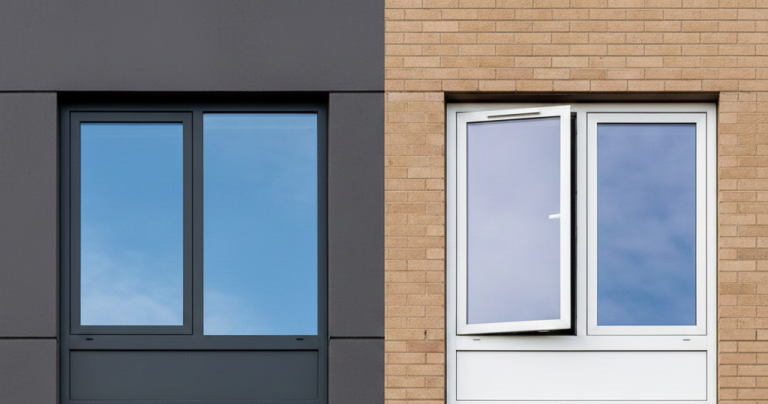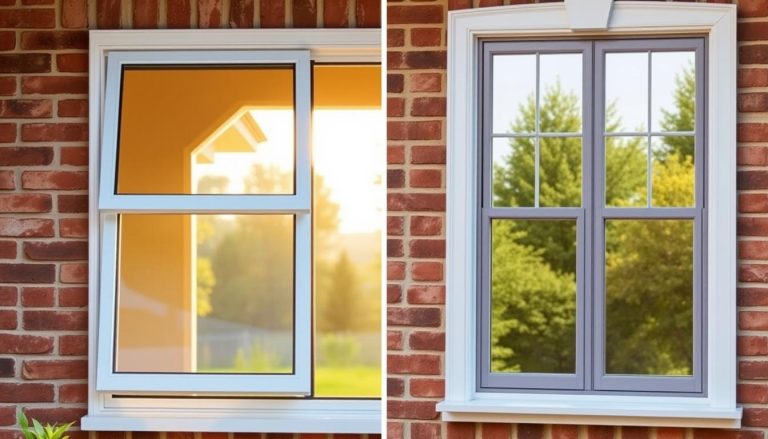
Replacing windows can make a home look 70% better. It’s not just about looks. It can also increase the home’s value.
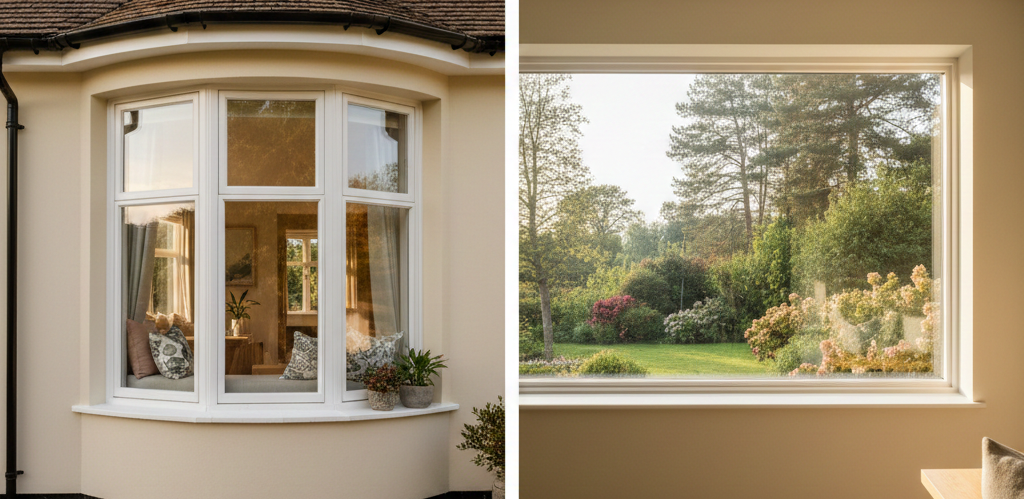
Bow windows are curved and stick out, making a cozy spot. Picture windows are big and don’t move, giving you a clear view.
Windows change how we see, get light, and breathe. They also affect how we decorate and where we sit. Think about space, walls, and upkeep too.
We are Total Home Windows & Doors, based in the Greater Toronto Area. We’ve been making vinyl windows and doors for 15 years. We can help with your window needs, no matter where you are in Canada.
In this article, we’ll explain each window type. We’ll talk about their good and bad sides. We’ll also compare them for energy use and cost. You’ll learn which one is best for your room and home.
Key Takeaways
- Bow windows extend outward in a curved, multi‑panel form and can create seating or extra space.
- Picture windows are fixed, flush panes that maximise light and uninterrupted views but do not open.
- Choice depends on desired ventilation, visual impact, structural allowances and maintenance needs.
- Energy performance and cost vary; we’ll compare both in clear tables later in the article.
- Total Home Windows & Doors offers local expertise for installation and code guidance across Ontario.
Window and Doors Replacement Near Me
What is a Bow Window?
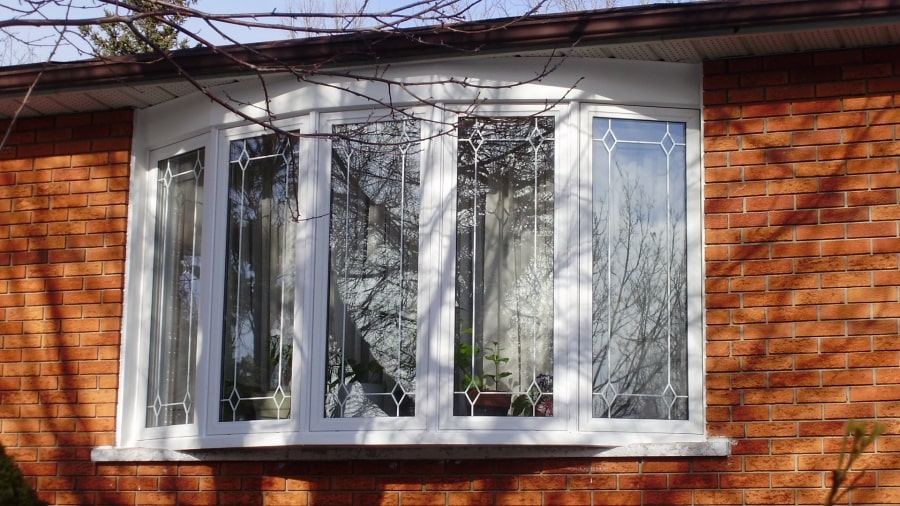
A bow window is a curved part of a house made from four or more panels. It forms a gentle arc from the wall. Builders also call it a compass window.
The curved shape gives a wide view inside. It’s different from flat windows.
It’s built with sash units on a frame. Some parts can open, like casement or double-hung units. This makes it better for air flow than fixed windows.
Bow windows are great for letting in lots of light and views. They turn a wall into a cozy spot or a place to show off things. People often pick them for living rooms and dining areas because they look elegant.
But, there are downsides. They need more glass, frames, and skilled installers. This makes them more expensive. In cold Canadian winters, they need extra care. Always talk to an installer about fitting them into your wall.
We compare them to other windows to see how they stack up. Bow windows have a smoother curve and wider views than bay windows. They can have casement windows for air flow and look better.
Compared to sliding windows, bow windows offer more light angles. They also have more space inside than double-hung windows. When choosing between a bow and a picture window, bow windows let in air and add depth.
Windows can be made from vinyl, wood, fiberglass, or composites. It’s smart to talk to a certified installer. They can help pick the right size, sightlines, and maintenance for your home and climate.
What is a Picture Window?

A picture window is a big, fixed glass pane that fits right into the wall. It doesn’t open. Its main job is to show an outdoor view like a photo and let in lots of light.
Building one is simple. It has a solid sash and special glass that saves energy. Today’s models also have special coatings and gas inside. These help the window keep your home warm in Canada’s cold.
There are many good things about picture windows. They let you see everything outside clearly, bring in lots of light, and need little upkeep. They’re fixed, so they’re easy to seal. This makes your home warmer and keeps cold air out.
But, there are downsides too. You can’t open them to get fresh air. Big ones might need extra support and careful setup to avoid heat loss.
Picture windows are different from bow and bay windows. Bow and bay windows stick out and make rooms bigger. Picture windows are better for views and are simpler to install.
We’ve listed the good and bad points of picture and bow windows. Picture windows are great for living rooms or over sinks. They fit well with modern homes where the view is the main attraction.
Think about how well a picture window saves energy and looks good. The right glass and expert installation make it a great, easy-to-care-for part of your Canadian home.
Explore energy-efficient options
Compare energy efficiency between Bow Windows and Picture Windows
We look at key energy factors for windows in Canadian homes. U-factor shows heat transfer. Solar heat gain coefficient (SHGC) measures solar heat entry. Air leakage shows drafts.
Installation quality and glazing options affect real-world performance.
We compare how each window type performs. Picture windows are fixed, which lowers air leakage and thermal bridging. Bow windows have more panels and joints, increasing the risk of seams unless made and installed well.
| Factor | Picture Window | Bow Window |
|---|---|---|
| U-factor (heat transfer) | Typically lower U-factor with a single large pane and advanced glazing like triple-pane glass, Low‑E coatings, and argon fills. | Higher U-factor possible due to multiple seams and curved frames; better with thermal-break frames and high-performance glazing. |
| SHGC (solar heat gain) | Direct control with selected glazing packages; easy to balance daylight and heat gain for passive solar benefits. | Comparable when using the same glazing, but geometry can change solar exposure and distribution of heat. |
| Air leakage | Low air leakage because panes are fixed; fewer moving parts reduce infiltration risk. | Higher air leakage risk if operable sashes are present or seams are not sealed precisely. |
| Glazing options | Readily accepts double or triple glazing, Low‑E coatings, and gas fills to enhance picture window energy efficiency. | Can use the same glazing upgrades; multi-panel fit and sealing are critical to reach similar performance levels. |
| Installation sensitivity | Less complex installation; correct flashing and sealing improve long-term performance. | More complex installation; retrofits may need structural adjustments that risk thermal bridging if not addressed. |
| Cold-climate suitability | Generally superior in cold climates when specified with triple glazing and High‑performance Low‑E coatings. | Capable of good performance with premium materials and certified installation; ventilation benefits remain an advantage. |
| Practical recommendation | Choose a high-quality picture window for maximum insulation and minimal air leakage in Canadian homes. | If choosing bow windows, specify rigorous glazing packages and certified installation to reduce seams and operable sash losses. |
Picture windows benefit from modern glazing and tight installation. The comparison of bow and picture windows must consider workmanship as much as product specs.
We suggest choosing certified installation and energy-efficient glazing. Total Home Windows & Doors in the Greater Toronto Area offers vinyl products with Low‑E triple glazing and professional installation that meet regional performance needs.
Cost Analysis: Comparison Table
We break down key cost factors so homeowners can compare the cost of bow window vs picture window in real terms. Costs vary with material, glazing, panel count, and structural work. We recommend getting itemized quotes that separate product, glazing package, labour, structural modifications and finishing.
Material drives prices. Vinyl is the most cost-effective choice. Wood and fiberglass raise the bow window cost and picture window price because they require more skilled labour and finishing. High-performance glazing such as triple pane, Low-E coatings and gas fills increase upfront cost but reduce operating expenses over time.
Panel count and glass area matter. Picture windows are single fixed panes with simpler framing, so picture window price per project tends to be lower. Bow units require four or more panels and more curved framing, which increases install time and bow window cost. Bay windows, with three panels, sit between picture and bow in complexity and cost; owners often ask about bow window vs bay window cost for that reason.
Structural and finish work can change totals dramatically. Replacing a standard picture window with a like-for-like vinyl unit often needs minimal flashing and trim work. Installing a bow may require reinforcement, custom exterior work, and interior trim, all of which push labour and material costs higher.
Long-term maintenance and resale value should factor into decisions. Picture windows offer low maintenance and straightforward future replacement. Bow windows add visual appeal and usable ledge space, which can raise home value and offset higher initial expense at resale. We advise weighing immediate picture window price against the long-term returns from a bow.
| Cost Factor | Picture Window (Typical) | Bow Window (Typical) |
|---|---|---|
| Material impact (vinyl, wood, fiberglass) | Lowest with vinyl; moderate with fiberglass; higher with wood | Lowest with vinyl; moderate with fiberglass; highest with wood due to custom work |
| Number of panels & glass area | Single pane, smaller glass area; lower material cost | Four or more panels, larger glass area; higher material cost |
| Glazing options (Low-E, gas, triple pane) | Upgrades add moderate cost but improve efficiency | Upgrades add significant cost because of greater glass area |
| Labour & installation complexity | Simple installation; lower labour hours | Complex installation; higher labour hours and specialist carpentry |
| Structural modification required | Rare for same-size replacements; minimal cost | Common for larger openings; significant structural cost |
| Finishing & interior trim | Standard trim, lower finishing cost | Custom trim and ledge work; higher finishing cost |
| Maintenance & long-term value | Low maintenance; lower replacement cost | Higher maintenance; can increase resale value and usable space |
| Relative project cost | Lower overall picture window price in most cases | Higher overall bow window cost in most cases |
We find that manufacturers such as Total Home Windows & Doors in the Greater Toronto Area often offer competitive vinyl picture windows that reduce initial picture window price. For bow projects, we suggest detailed site assessments to estimate custom framing and structural work.
More about picture window prices by size
When comparing options, ask for line-item estimates. A clear comparison of bow window vs bay window cost and a thorough comparison of bow window and picture window will reveal where savings or added value appear. We urge homeowners to balance upfront cost, energy performance and resale impact when choosing their next window upgrade.
Bow Windows vs Picture Windows: What’s Best for Your Home?
When we look at bow or picture windows, we think about what we want. Picture windows are great for clear views, lots of light, and keeping warm. They are also cheaper and work well with special coatings for cold weather.
Bow windows are perfect for wide views, cozy spots, and making your home look good. They offer a rounded view and can open for air. But, they need more space, might need extra support, and cost more upfront.
Our guide helps you decide based on your needs. Picture windows are good for saving money and simple designs. Bow windows are better for traditional homes and adding value, if installed right.
Before making a choice, measure your wall and talk to a builder for bow windows. Get quotes with important details and compare warranties. Double-hung windows offer air but less view than pictures. Pick what looks good, saves energy, and meets your needs.
FAQ
What is the main difference between a bow window and a picture window?
A bow window is curved and projects out. It has operable parts for air and a cozy spot inside. A picture window is flat and doesn’t open. It’s all about the view and light.
How do bow windows compare to bay windows?
Bow windows have a smooth curve and wide views. Bay windows are angular and have a smaller view. Bow windows cost more but offer a bigger view.
Are bow windows or picture windows better for energy efficiency in Canada?
Picture windows keep heat better because they’re fixed and have fewer gaps. Bow windows can be energy-efficient too, but it’s harder to match a picture window’s performance.
Do bow windows provide ventilation compared with picture windows?
Yes, bow windows have parts that open for air. Picture windows don’t open, so you need other windows for air.
Which window type is more expensive to buy and install?
Bow windows cost more because of the extra glass and framing. Picture windows are cheaper because they’re simpler and have less labour needed.
Can bow or picture windows be made from vinyl?
Yes, vinyl is a common choice for both. Total Home Windows & Doors in the GTA offers vinyl windows that are energy-efficient.
Which window type adds more usable interior space?
Bow windows add space because they stick out. Picture windows don’t add space but offer great views.
Are there special structural requirements for installing a bow window?
Yes, bow windows need more wall space and extra framing. They must be installed right to avoid water and heat issues.
How does maintenance compare between the two types?
Picture windows need less upkeep because they don’t move. Bow windows have more parts that need care, like cleaning and snow removal.
Which window works best for modern or minimalist homes?
Picture windows fit modern homes because they’re simple and let in lots of light. They’re also easy to keep clean.
When should we choose a bow window instead of a picture window?
Choose a bow window for wide views, extra space, and a unique look. They cost more and need more work to install.
What glazing and performance metrics should we compare when choosing between them?
Look at U-factor, SHGC, and air leakage. Also, check the frame’s thermal breaks and glazing options. Make sure the installation is certified.
How do bow windows compare with casement and sliding windows?
Bow windows can have casement or double-hung sashes for air. Casement sashes in a bow are good for airflow. Sliding windows save space but don’t offer the view or space of a bow. Picture windows are fixed and focus on views and insulation.
Will a large picture window require structural support?
Yes, big picture windows might need extra headers and framing. They’re heavy and need proper support for long-term use.
How should we decide between energy performance and aesthetic/function when comparing these windows?
Think about what you need most. For insulation and cost, a picture window is best. For views and space, a bow window might be better, even if it costs more.
What are recommended next steps before committing to either window type?
Measure your wall and talk to a pro for a check-up. Get quotes that list everything. Compare warranties and upkeep needs. Consider Total Home Windows & Doors for vinyl options.