

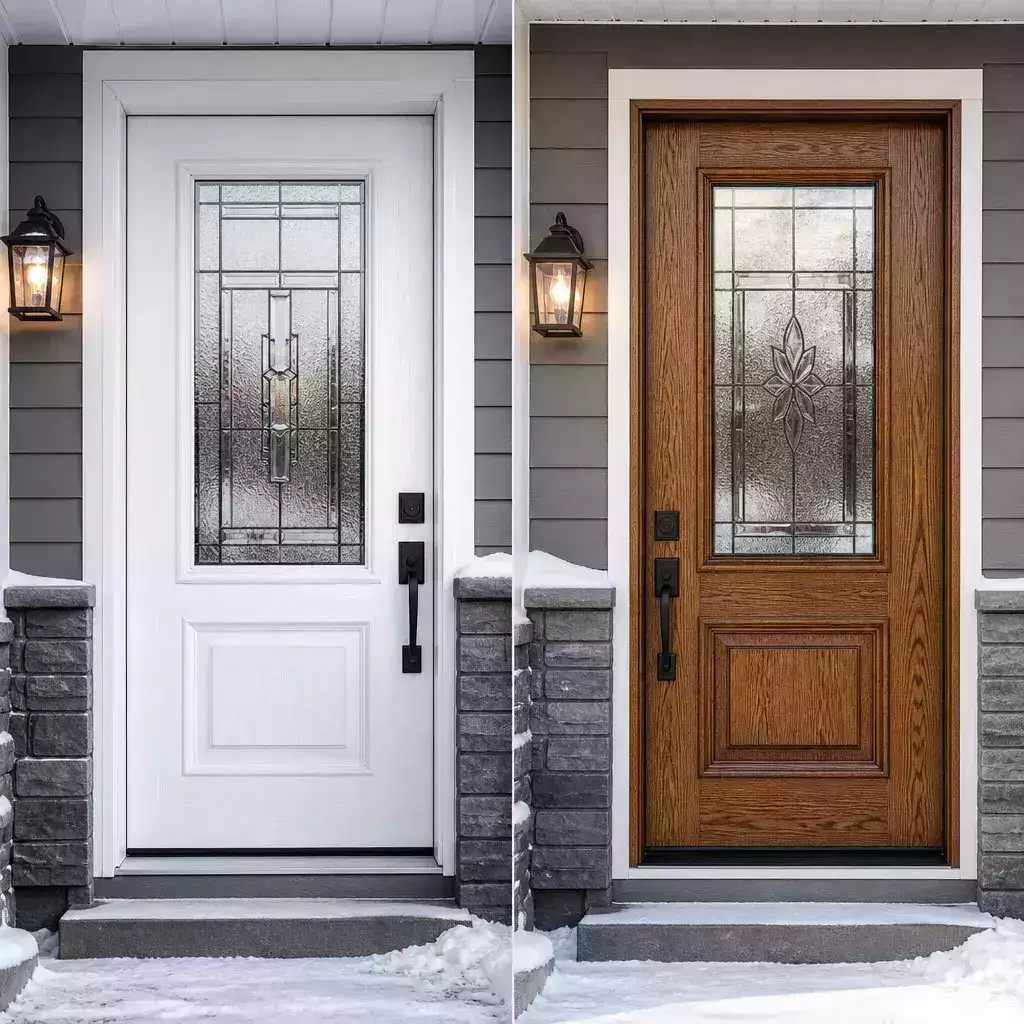
You’re standing in the showroom, comparing two beautiful entry doors that look equally appealing. One is vinyl, the other wood. Both promise curb appeal, but their long-term performance, maintenance demands, and energy efficiency differ dramatically. Vinyl doors offer minimal upkeep and consistent thermal performance, whilst wood doors provide classic aesthetics but require regular refinishing and are more susceptible to weather damage. This guide breaks down maintenance schedules, actual ownership costs over 20 years, and energy performance data to help you choose the right material for your Canadian home.
Both door types serve the same basic function—securing your home and creating a first impression—but they achieve these goals through different material properties. Understanding how vinyl and wood respond to Ontario’s freeze-thaw cycles, UV exposure, and humidity swings will save you thousands in unexpected repairs and energy bills.
At-a-Glance Comparison Table
| Feature | Vinyl Doors | Wood Doors |
|---|---|---|
| Maintenance frequency | Minimal (wash annually) | High (refinish every 2-4 years) |
| Best use case | High-traffic, weather-exposed entries | Sheltered entries, heritage homes |
| Energy efficiency | Excellent (multi-chamber construction) | Good (requires proper sealing) |
| Price range | $800–$2,500 | $1,200–$5,000+ |
| Lifespan | 30–40 years | 20–30 years (with maintenance) |
| Weather resistance | Excellent (won’t rot or warp) | Moderate (needs sealing) |
| Customization | Limited colour options | Unlimited (stain/paint) |
| Common materials | PVC with foam core | Oak, mahogany, fir, maple |
Window and Doors Replacement Near Me
Vinyl Doors Overview
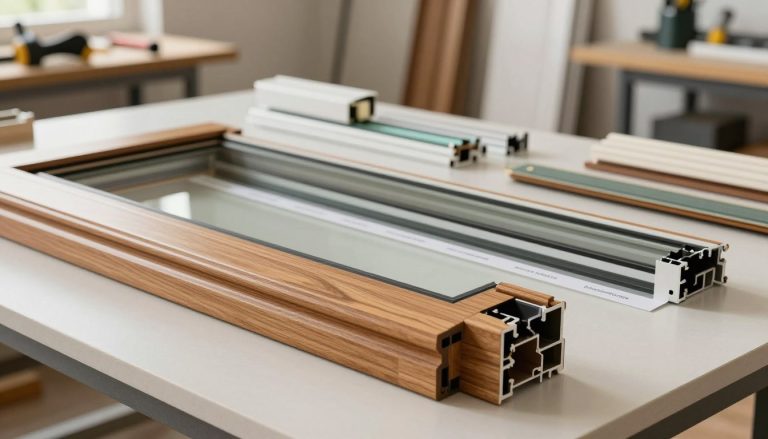
Vinyl doors consist of PVC (polyvinyl chloride) outer shells with polyurethane foam cores for insulation. The material doesn’t absorb moisture, which prevents the warping and rotting common in organic materials. Most quality vinyl doors feature welded corners rather than mechanical fasteners, creating seamless joints that resist air infiltration.
Key advantages include:
- Zero refinishing required: The colour runs through the entire material, so scratches barely show and never need repainting
- Consistent thermal performance: Multi-chamber construction maintains R-values even during temperature extremes
- Moisture immunity: Won’t swell, shrink, or develop mould regardless of humidity levels
- Lower lifetime cost: Minimal maintenance translates to significant savings over 20+ years
- ENERGY STAR™ certified options: Many models meet or exceed certification standards for Canadian climate zones
Limitations and trade-offs:
- Limited aesthetic range: Whilst modern vinyl can mimic wood grain, purists notice the difference in texture and depth
- Colour restrictions: Typically available in white, beige, and a few darker shades; custom colours are rare
- Surface damage is permanent: Deep scratches or dents cannot be sanded out like wood
Ideal use cases: Vinyl excels in fully exposed north-facing entries, coastal properties with salt spray, and homes where owners prioritize low maintenance. It’s particularly suitable for rental properties or busy families who can’t commit to regular refinishing schedules.
Find related services
Wood Doors Overview
Wood entry doors are crafted from solid timber or engineered wood cores with veneer faces. Species like oak, mahogany, and fir offer distinct grain patterns and natural beauty that many homeowners prefer. Wood’s cellular structure provides natural insulation, though performance varies significantly based on density and construction quality.
Key advantages include:
- Unmatched aesthetic appeal: Natural grain, texture, and warmth create a premium appearance that synthetic materials can’t fully replicate
- Complete customization: Can be stained, painted, carved, or refinished in any colour or finish
- Repairable surface: Scratches, dents, and wear can be sanded out and refinished multiple times
- Heritage compatibility: Essential for maintaining character in older or historically designated homes
- Higher resale perception: Many buyers associate wood doors with quality craftsmanship
Limitations and trade-offs:
- Intensive maintenance: Requires refinishing every 2-4 years depending on exposure and climate
- Moisture vulnerability: Can warp, crack, or rot if protective finishes fail, especially in Canadian winters
- Higher upfront cost: Quality wood doors typically cost 50-100% more than comparable vinyl options
- Seasonal movement: Expands and contracts with humidity changes, sometimes causing fit issues
Ideal use cases: Wood doors work best in covered entryways with overhangs that protect from direct weather exposure. They’re perfect for heritage restorations, luxury custom homes, and situations where architectural authenticity outweighs maintenance concerns. Consider fiberglass alternatives if you want wood aesthetics with better durability.
Head-to-Head: Key Decision Factors
Energy Efficiency
Vinyl doors consistently outperform wood in thermal testing. Quality vinyl entry doors achieve U-values between 0.15 and 0.25, whilst wood doors typically range from 0.25 to 0.35. The difference stems from vinyl’s multi-chamber construction, which creates multiple air pockets that resist heat transfer. According to Natural Resources Canada, doors account for up to 11% of home heat loss, making material choice significant for energy bills.
Wood’s natural cellular structure provides some insulation, but solid wood doors lack the engineered thermal breaks found in vinyl designs. Engineered wood doors with foam cores perform better but still trail vinyl. Both materials benefit from proper weatherstripping, though vinyl’s dimensional stability maintains tighter seals over time.
“In our installations across the GTA, we’ve measured temperature differences of 3-5°C between interior door surfaces in vinyl versus wood doors during January cold snaps. That translates directly to comfort and heating costs,” notes Daniel Klein, Project Manager.
Ventilation & Airflow
Neither door type inherently provides ventilation—that function comes from sidelights, transoms, or integrated glass panels. However, air infiltration (unwanted airflow) differs significantly. Vinyl’s welded construction and stable dimensions create superior air seals. Wood doors develop gaps as they shrink in winter’s dry air, then swell in summer humidity.
Air leakage testing shows quality vinyl doors achieve ratings below 0.1 cubic feet per minute per square foot at 25 mph wind pressure. Wood doors often measure 0.2-0.3 CFM/ft², double the infiltration rate. This matters during Ontario’s winter wind events when drafts increase heating loads and reduce comfort near entryways.
Security
Both materials accommodate robust entry door locks and multi-point locking systems. The key difference lies in frame integrity. Vinyl doors with steel or aluminium reinforcement in the lock area resist kick-in attempts effectively. Solid hardwood doors also resist forced entry well, but softer woods like pine or fir can split around lock hardware.
Modern vinyl doors from reputable manufacturers include steel reinforcing plates at deadbolt locations. Wood doors require proper installation of strike plates with 3-inch screws into framing studs. Neither material has an inherent security advantage when properly reinforced and installed with quality hardware.
Ease of Operation & Accessibility
Vinyl doors maintain consistent operation year-round because they don’t swell or shrink. Homeowners with mobility challenges appreciate this reliability—the door opens with the same effort in January and July. Wood doors often stick during humid summer months and develop gaps in winter, requiring seasonal adjustment of strike plates and weatherstripping.
Weight differs significantly. A standard 36-inch vinyl door weighs 80-100 pounds, whilst a solid wood door of the same size weighs 120-180 pounds. This affects hinge stress and ease of use for elderly residents. Engineered wood doors fall between these weights.
Price & Installation Cost
| Cost Component | Vinyl Doors | Wood Doors |
|---|---|---|
| Entry-level door | $800–$1,200 | $1,200–$2,000 |
| Mid-range door | $1,200–$1,800 | $2,000–$3,500 |
| Premium door | $1,800–$2,500 | $3,500–$5,000+ |
| Professional installation | $300–$600 | $400–$800 |
| Annual maintenance | $20 (cleaning) | $150–$400 (refinishing) |
| 20-year total ownership | $2,500–$3,700 | $5,200–$11,000 |
Installation costs vary by region within Ontario. GTA pricing runs 15-20% higher than smaller markets. The 20-year ownership calculation includes refinishing wood doors six times at $250-400 per session. Vinyl requires only occasional cleaning with soap and water.
“When clients calculate true lifetime costs including maintenance, vinyl doors often cost half what wood doors do over two decades. That’s a significant consideration for budget-conscious homeowners,” explains Vitaly Shapiro, Vice President of Sales.
Maintenance & Lifespan
Vinyl maintenance consists of annual washing with mild detergent. Hinges need occasional lubrication. Weatherstripping may require replacement every 8-10 years. That’s the complete maintenance schedule. Vinyl doors regularly last 30-40 years without material degradation.
Wood door maintenance is substantially more involved:
- Inspect finish twice yearly for cracks or peeling
- Sand and refinish every 2-4 years (more frequently on south and west exposures)
- Touch up scratches and dings promptly to prevent moisture intrusion
- Check and adjust weatherstripping seasonally
- Monitor for wood rot, especially at bottom rails and threshold contact points
With diligent maintenance, quality wood doors last 20-30 years. Neglected wood doors fail in 10-15 years through rot, warping, or finish failure that allows moisture damage. The maintenance burden isn’t trivial—refinishing a door properly requires 4-6 hours of labour plus materials.
Aesthetics & Curb Appeal
Wood wins the pure aesthetics category. Natural grain patterns, hand-rubbed finishes, and carved details create visual depth that vinyl can’t match. Wood doors suit traditional, craftsman, Victorian, and heritage architectural styles authentically. High-end custom homes often specify wood for this reason alone.
Modern vinyl has improved significantly. Embossed wood-grain textures and multiple panel designs allow vinyl to blend with most architectural styles. From 15 feet away, quality vinyl convincingly mimics painted wood. Up close, the difference becomes apparent to trained eyes.
For contemporary or modern homes, vinyl’s clean lines and consistent finish often look more appropriate than wood. The choice depends on your home’s architectural style and your personal aesthetic priorities. Consider reviewing our steel doors gallery for additional style options.
Find the Best Window Styles for your Home
Which Should You Choose?
Choose vinyl doors if:
- You want minimal maintenance and maximum durability in harsh Canadian weather
- Your entry faces direct weather exposure without protective overhangs
- Energy efficiency and consistent thermal performance are priorities
- You prefer predictable long-term costs without refinishing expenses
- The home has contemporary, ranch, or modern architectural styling
Choose wood doors if:
- You’re restoring a heritage home or maintaining architectural authenticity
- The entry has substantial overhang protection from weather
- You value natural materials and traditional craftsmanship above convenience
- You’re willing to commit to biennial refinishing schedules
- Budget allows for both higher upfront costs and ongoing maintenance
Most homeowners in the GTA find vinyl doors offer the best balance of performance, cost, and convenience. The technology has matured to where thermal performance, security, and appearance meet or exceed most households’ needs. Wood remains the choice for specific architectural contexts and homeowners who prioritize aesthetics above all other factors.
Your decision should also consider your home’s other elements. If you’ve recently invested in energy-efficient windows, pairing them with high-performance vinyl doors maximizes your return. For homes with existing wood trim and traditional detailing, wood doors maintain visual consistency.
Best window companies reviews
Frequently Asked Questions
Can vinyl doors withstand Canadian winters as well as wood?
Vinyl doors outperform wood in freeze-thaw cycles because they don’t absorb moisture. Wood doors can crack and warp when water penetrates failing finishes then freezes. Quality vinyl maintains integrity through temperature extremes without seasonal adjustment.
Do wood doors provide better insulation than vinyl?
No, vinyl doors typically achieve lower U-values (better insulation) than wood. Multi-chamber vinyl construction creates superior thermal barriers. Solid wood has natural insulating properties, but engineered vinyl designs outperform it in standardized testing.
How often do vinyl doors need repainting?
Never. Vinyl’s colour is integral to the material, not a surface coating. This eliminates painting and refinishing entirely. The colour won’t fade significantly for decades, and scratches don’t expose contrasting underlayers.
Can I stain or paint a vinyl door later?
Painting vinyl doors isn’t recommended. Paint doesn’t bond well to PVC and will peel. If you want colour flexibility, choose wood or consider fiberglass doors, which accept paint and stain whilst offering vinyl-like durability.
Which door type adds more home value at resale?
Both add value when appropriate to the home’s style. Wood doors may command premium pricing in heritage or luxury markets. Vinyl doors appeal to buyers prioritizing low maintenance. The condition matters more than material—a well-maintained vinyl door outvalues a deteriorating wood door.
If you’re ready to upgrade your home’s entry with a door that matches your climate, budget, and lifestyle, Total Home Windows and Doors offers both vinyl and wood options with professional installation throughout the GTA. Our team helps you select the right material for your specific situation, backed by our A+ BBB rating and 4.9 Google reviews. We carry ENERGY STAR™ certified doors with the TotalSeal Multi-Point Locking System for superior security and efficiency. Whether you choose the low-maintenance reliability of vinyl or the classic beauty of wood, you’ll get expert guidance on making your investment last. Contact us today for a free consultation and quote—we’ll assess your entry’s exposure, architectural style, and performance needs to recommend the optimal door solution for your home.