Nearly 40% of a home’s heat loss happens through windows. This is not just about looks; it affects comfort and energy bills in Canada.
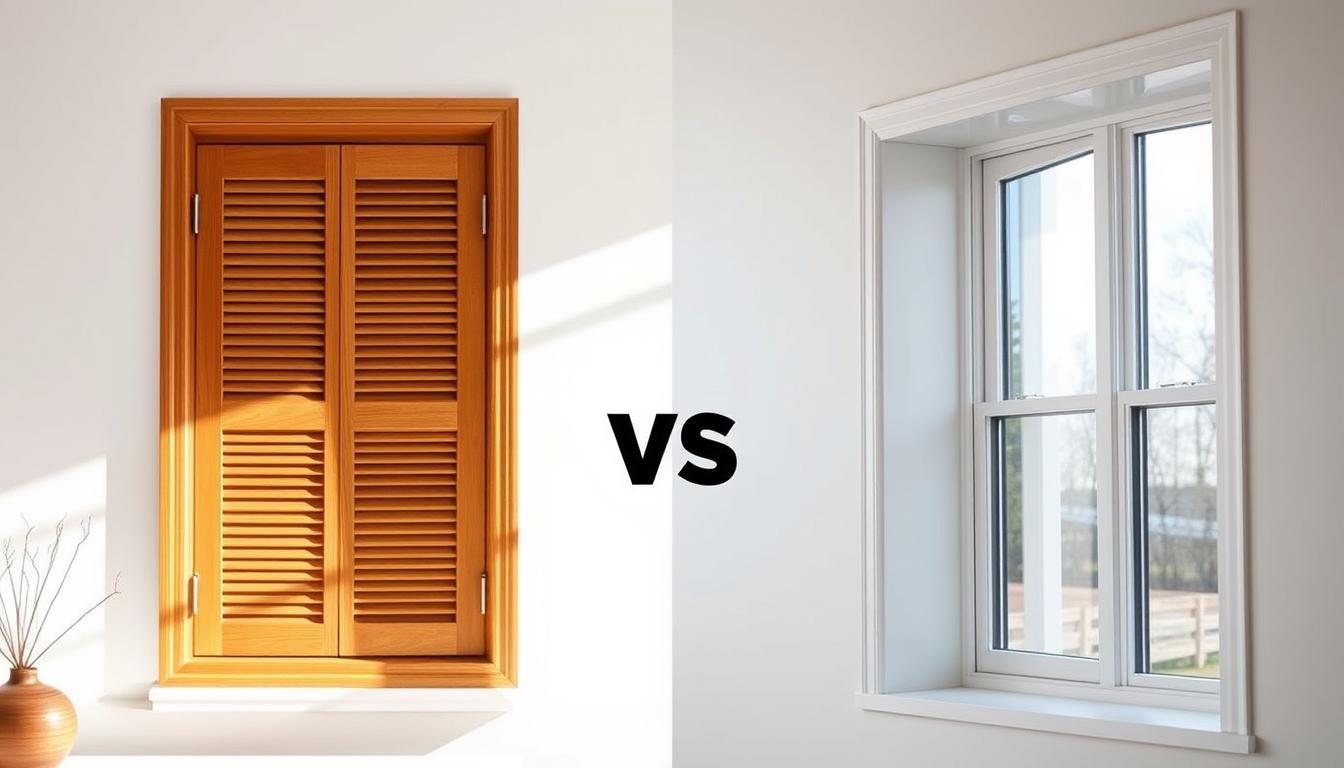
This guide compares wood and vinyl windows for Canadian homes. We look at energy efficiency, durability, looks, and cost over time. You’ll learn which is better for your home.
Canada has different climates, from rainy to cold. Windows must handle big temperature changes and weather. They need to expand and contract without losing seal.
Windows keep heat in, control moisture, and block sound. They also affect your home’s value. Make sure they’re installed right and meet building codes.
In Ontario, Total Home Windows & Doors offers vinyl options. They’ve been in the GTA for over 15 years. Vinyl is good for condos and commercial places.
This guide will help you choose between wood and vinyl. We’ll cover pros and cons, energy and cost comparisons, and maintenance tips for Canada. By the end, you’ll know which is best for your home.
Key Takeaways
- Wood vs vinyl windows impact energy loss significantly; pick based on climate and maintenance willingness.
- Our wood vs vinyl window comparison focuses on thermal performance, durability and lifecycle cost.
- Differences between wood and vinyl windows matter more in extreme climates due to expansion and moisture risks.
- Certification and correct installation (CSA/ENERGY STAR®) are as important as material choice.
- Total Home Windows & Doors is a local GTA vinyl option to consider for Ontario projects and condo installations.
Window and Doors Replacement Near Me
What is Wood Windows?
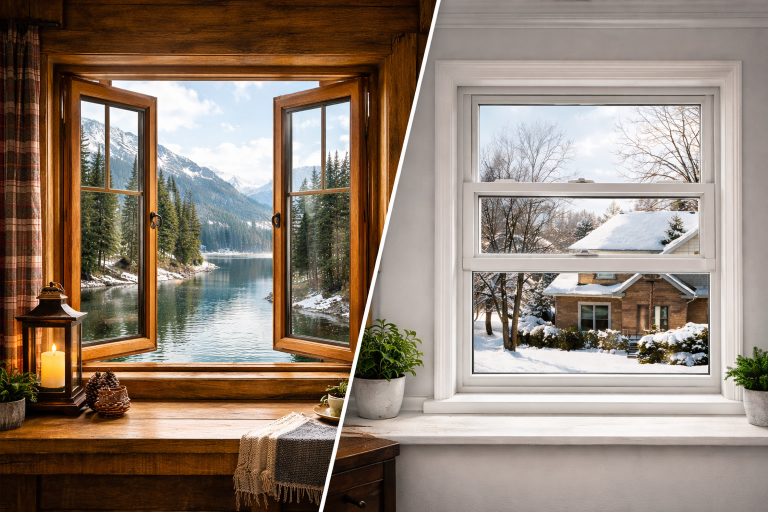
Wood windows are made from solid or engineered hardwoods like pine, mahogany, and Douglas fir. We can make custom profiles and add detailed trim. They can be finished with paint or stain.
Wood windows keep your home warm and look great. They are good at keeping sound out and can make your home quieter. This is because wood is dense and blocks noise well.
Wood windows cost more upfront and need more care. In Ontario, they can cost between $700 and $1,800 per window. You’ll need to paint or stain them every three to five years and check for damage yearly.
Wood is good for the environment if it comes from FSC or sustainably managed forests. It’s renewable and can be broken down easily. This makes it a popular choice for those who care about the planet.
Wood windows are better for certain homes. They are great for heritage restorations, luxury homes, and stores that need a classic look. They are worth the extra effort for those who want a timeless look.
It’s important to get wood windows installed by experts. They know how to make sure they work well in Canadian weather. This helps them last longer and keeps your home comfortable.
| Feature | Wood Windows | Typical Consideration |
|---|---|---|
| Materials | Solid or engineered hardwoods (pine, mahogany, Douglas fir) | Custom-milled, paint or stain finishes |
| Insulation | High R-values with proper glazing | Pairs well with double/triple glazing and Low-E |
| Durability | 30–50+ years with maintenance | Requires sealing, inspections for rot and pests |
| Maintenance | Regular painting/staining every 3–5 years | Higher upkeep than vinyl |
| Cost (Ontario) | $700–$1,800 standard; up to $5,000 custom | Higher installation labour due to weight and fit |
| Acoustic Performance | Strong soundproofing, higher STC vs vinyl | Beneficial near busy roads or commercial zones |
| Environmental | Renewable, biodegradable when certified | Look for FSC or sustainably managed sources |
| Best Uses | Heritage restoration, luxury homes, boutiques | Where appearance and bespoke detail matter |
| Warranty | Varies; often finish- and installer-dependent | Confirm terms before purchase |
Find related services
What is Vinyl Windows?
Vinyl windows are made from a material called polyvinyl chloride (PVC). They have strong frames and special fills to keep warm in. You can find them in many colours and wood-like designs for homes in Canada.
Vinyl windows are great for saving energy. They keep warm in and cold out, thanks to special glass and gas fills. This makes them perfect for Canada’s cold areas.
They are also easy to care for. No need to paint or stain them. Just soap and water will do. This is a big plus for those who don’t want to spend a lot of time on upkeep.
They are also good for your wallet. Prices in Ontario range from $300 to $2,500 per window. This makes them a cost-effective choice when you’re on a budget.
They last long in wet places too. This is great for places like British Columbia and parts of Ontario. They don’t rot or leak like untreated wood can.
They are also easy to put in because they are light and come in standard sizes. This means less time and money spent on installation. Many companies even offer 20–25 year warranties.
But, there are some downsides. Vinyl can’t look as real as wood, and it’s hard to find custom shapes. Also, if not installed right, they can warp or leak over time.
There are also environmental concerns. PVC is made from oil and can be hard to recycle. Cheap vinyl can also turn yellow in the sun, but better versions are available.
Fixing vinyl is harder than wood if you need to. For old homes, wood might be better. But for new ones, vinyl is often the better choice.
Who benefits from vinyl windows? People who want to save money, condo boards, and businesses. They also work well in wet places.
Make sure to check for CSA certification and ENERGY STAR® when choosing vinyl. And make sure it’s installed right to avoid problems later.
Explore energy-efficient options
Compare energy efficiency between Wood Windows and Vinyl Windows: comparison table
We look at key factors that affect how well windows work in Canadian homes. This comparison focuses on how well they keep heat in, glazing, air tightness, and how they handle moisture.
Wood is a natural insulator, with a thermal conductivity of about 0.80 per inch. Vinyl, with foam inside, has a conductivity of 0.95–1.0 per inch. But, vinyl with more chambers can be even better at keeping heat in.
But, glazing, Low-E coatings, and gas fills are more important than the frame itself. Even with triple glazing, Low-E, and special gases, both can have U-values under 0.30. This meets ENERGY STAR® standards for cold areas.
| Performance Factor | Wood Windows | Vinyl Windows |
|---|---|---|
| Base thermal conductivity / R-value | ≈0.80/inch; strong natural insulation when dry and sealed | ≈0.95–1.0/inch with foam fill; multi-chamber boosts effective R-value |
| Typical U-value achievable | Under 0.30 with triple glazing, Low-E and argon/krypton | Under 0.30 with triple glazing, Low-E and argon/krypton |
| Low-E coatings & gas fills | Available; critical for cold Canadian zones | Available; commonly paired with foam-filled frames for best result |
| Air infiltration resistance | Excellent if installed and sealed professionally | Excellent if installed and sealed professionally |
| Condensation management | Wood needs intact paint or seal to avoid moisture damage | Better resistance to condensation-related frame issues |
| Sound transmission (STC) | Typical double-pane STC 28–33; acoustic glazing raises values | Typical double-pane STC 26–32; laminated or acoustic glazing improves performance |
| Maintenance affecting energy life | Periodic painting/sealing preserves thermal performance | Minimal upkeep; seals and weatherstripping require inspection |
| Hybrid options | Wood interior with vinyl or aluminum exterior for aesthetics and durability | Vinyl exterior with wood interior offers similar hybrid benefits |
| Best climate recommendations | Cold continental zones: excellent if well-maintained; triple glazing recommended | Humid/coastal zones: favoured for moisture resistance; triple glazing works well in cold zones |
| Certification to request | Ask for CSA, ENERGY STAR ratings, U-value and STC test data | Ask for CSA, ENERGY STAR ratings, U-value and STC test data |
Quality of installation is key in this comparison. Poor installation can lead to drafts, failed seals, and moisture issues, no matter the material.
Seasonal upkeep differs between wood and vinyl windows. Vinyl windows need little care in Canadian winters. Wood windows keep insulation better if sealing and finishes are maintained.
Check U-value, ER, and certifications from manufacturers. For those who want to reduce noise, ask for STC test data from installers.
Cost Analysis: Comparison table
We look at upfront and long-term costs to help homeowners plan. The figures show common Ontario prices and what affects costs across Canada.
Material costs vary a lot. Wood windows cost between $700 and $1,800 each. High-end wood can be up to $5,000. Vinyl windows cost between $300 and $1,700, with high-end ones near $2,500. Bay or bow vinyl windows can cost from $2,500 to $6,000.
Installation costs a lot too. Vinyl windows are lighter and easier to install, saving time and money. Wood windows need more time and skilled carpentry, making them more expensive.
| Cost Component | Wood (Typical Range) | Vinyl (Typical Range) |
|---|---|---|
| Standard unit price (per window) | $700–$1,800 | $300–$1,700 |
| Custom / high-end unit | Up to $5,000 | Up to $2,500 |
| Bay / Bow configuration | $1,800–$6,000 depending on build | $2,500–$6,000 |
| Installation & labour | Higher — custom fit, longer install time | Lower — quicker retrofit options |
| Maintenance (20–30 year horizon) | Repainting/staining every 3–5 years; inspections for rot; higher ongoing cost | Periodic cleaning and seal checks; lower ongoing cost |
| Expected lifecycle | 30–50+ years with maintenance | 20–40 years typical |
| Warranty (typical) | Varies by maker; often limited on finish | 20–25 years common |
| Common upgrades impact | Triple-pane, Low-E, gas fills add significantly | Triple-pane, Low-E, gas fills add significantly |
We talk about lifecycle and ROI to understand costs better. Vinyl is often cheaper to own in Canada because it needs less maintenance.
Wood might increase your home’s value in certain areas. It’s more expensive but can be worth it in upscale places.
When getting quotes, ask for detailed breakdowns. Make sure warranties cover both product and installation. Consider using a mix of materials for a balance between cost and upkeep.
Wood Windows vs Vinyl Windows: What’s Best for Your Home?
Choosing between wood and vinyl windows depends on what you value most. Vinyl is great if you want to save money and don’t mind low upkeep. It’s also good for places near the sea because it doesn’t rot easily.
Wood windows are better if you love the look and feel of wood. They make your home look nicer and can even increase its value. Wood also keeps your home warm, but it needs to be painted or stained often.
Some people choose a mix of wood and vinyl. This way, you get the look of wood inside and the durability of vinyl outside. Vinyl is often the best choice for condos and commercial buildings because it’s easy to replace.
To make a decision, think about your climate and what you need for insulation. Get quotes from at least three places and ask about their installation methods. Look for suppliers like Total Home Windows & Doors in the GTA and check for ENERGY STAR®/CSA certifications. The best choice depends on how well you specify, install, and maintain your windows.
FAQ
What are the main differences between wood windows and vinyl windows?
Wood windows are made from solid or engineered hardwoods. They offer better natural insulation and custom finishes. They also last longer if well-maintained.
Vinyl windows are made from PVC. They cost less upfront and need little maintenance. Both can meet Canadian energy standards with the right glazing and coatings.
Which performs better for energy efficiency in Canadian climates?
Both wood and vinyl windows can be very energy-efficient. With triple glazing and special coatings, they can meet cold Canadian standards. Wood naturally insulates better, but modern vinyl is catching up.
How well they perform depends on installation and glazing choices. These factors are key for real energy savings.
How do wood vs vinyl window costs compare in Ontario?
In Ontario, wood windows cost $700–$1,800 each. Custom wood can go up to $5,000. Vinyl windows cost $300–$1,700 each, with high-end options at $2,500.
Labour costs are often lower for vinyl due to its ease of installation. Wood requires more custom fitting, raising installation costs. Upgrading glazing improves energy savings but increases costs for both.
Which material is better for coastal or humid regions in Canada?
Vinyl is better for coastal British Columbia and humid Atlantic regions. It resists moisture and lasts longer with less maintenance. Wood can be used but needs careful sealing and regular checks to avoid damage.
Are vinyl windows environmentally friendly?
Vinyl is made from petroleum-based PVC and is not biodegradable. Yet, high-quality vinyl may include recyclable parts and last a long time. Wood is renewable and biodegradable if sourced sustainably.
Environmental impact depends on how it’s sourced, made, lasts, and handled at the end of its life.
Can wood or vinyl windows meet CSA or ENERGY STAR® requirements?
Yes, both wood and vinyl windows can meet CSA and ENERGY STAR® standards. They need the right glazing, coatings, and gas fills. Check U-values, ER ratings, and certifications, and ensure professional installation.
How long do wood and vinyl windows typically last in Canadian conditions?
Vinyl windows last 20–40 years with little upkeep. Many manufacturers offer 20–25 year warranties. Wood windows can last 30–50 years or more with proper care.
Wood needs repainting or restaining every 3–5 years and annual checks for damage.
What maintenance should homeowners expect for each type?
Vinyl windows need only occasional cleaning and seal checks. Wood windows require repainting or restaining every 3–5 years and annual inspections for damage. Both need glass care and hardware lubrication.
Are hybrid windows a good compromise?
Yes. Hybrid windows combine wood interiors with vinyl or aluminium exteriors. They offer the look of wood inside and durability outside. Costs are between wood and vinyl.
Which windows are better for condos and multi-unit buildings?
Vinyl windows are often chosen for condos and multi-unit buildings. They are standard-sized, cost less upfront, and require less maintenance. They are practical for large-scale retrofits. Wood or hybrid may be chosen for heritage or boutique properties.
How does thermal expansion affect vinyl windows in Canada?
Vinyl expands and contracts more than wood with temperature changes. Proper installation is key to prevent warping and seal failures. Choose reputable installers and CSA-certified products for Canadian climates.
Will choosing wood windows increase my home’s resale value?
Wood windows can increase resale value in certain markets. They are valued in heritage neighbourhoods and high-end homes. The value depends on local preferences, window condition, and maintenance.
What should we ask installers when getting quotes?
Ask for separate costs for materials, glazing, labour, and permits. Check U-values, ER/ENERGY STAR®/CSA certifications, and STC data for soundproofing. Ask about warranties and how they manage sealing and thermal expansion.
Get at least three written quotes and confirm the installer’s experience with your climate zone.
Are there specific glazing recommendations for cold Canadian zones?
In cold zones, use triple glazing with Low-E coatings and argon or krypton gas. These upgrades lower U-values and improve comfort. Both wood and vinyl can accommodate triple-pane units; confirm performance data and frame depth with suppliers.
Can we use wood windows in coastal areas if we maintain them?
Technically yes, but wood needs careful maintenance in coastal areas. It requires frequent checks, timely repainting or resealing, and quick repairs to prevent decay. Many prefer vinyl or hybrid exteriors in coastal areas for less maintenance.