Nearly 40% of a home’s heat loss comes through windows. This makes choosing between french windows and casement windows very important. It affects both comfort and energy bills in Canada.
Many ask if style or performance should come first when comparing window styles. In this guide, we focus on what matters for Canadian homes. We look at design preference, ventilation, insulation, and how different climates affect these choices.
Vinyl options from makers like Total Home Windows & Doors show affordable, energy-efficient modern designs. Window replacement costs in Canada vary from $300 to $4,500. So, we set realistic expectations before comparing.
We want to help homeowners find the right balance between looks and comfort. We’ll compare french windows and casement windows on style, pros and cons, energy performance, and cost. This way, you can pick the best windows for your home renovation or replacement.
Key Takeaways
- Choosing the right windows affects energy efficiency and comfort in Canada’s different climates.
- French windows focus on classic style and wide views. Casement windows are great for sealing and ventilation.
- Vinyl frames are low maintenance and offer good value among window options.
- Expect to spend $300–$4,500 per window, depending on materials and features.
- Consider design, function, and insulation needs to find the best windows for home renovations.
Window and Doors Replacement Near Me
What is French Windows?
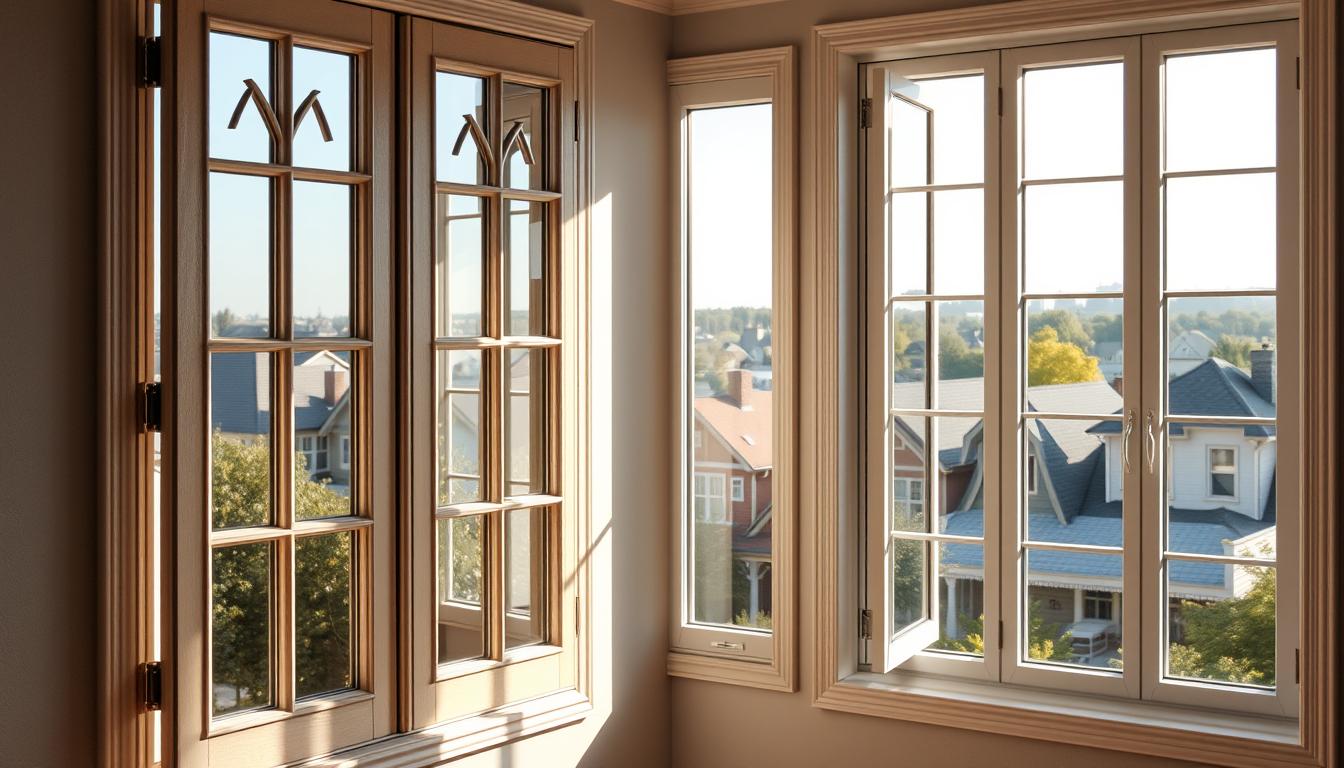
French windows are two windows that open side by side. They swing from the middle, like French doors. This design lets in lots of light and shows off outdoor views.
These windows are loved for their beauty. They look great in both old and new homes. They fit well with modern styles, thanks to their design and hardware.
They are great for letting in air and for easy access. Opening both sashes lets in strong breezes. They also serve as an emergency exit, which is rare for single windows.
They are also practical. Vinyl French windows are easy to care for and keep warm. They are a smart choice for home renovations that last.
But, there are some downsides. French windows need space to open outward or inward. Big windows can be pushed by the wind, so strong hardware is key.
Size and glass type affect cost and upkeep. In Canada, using energy-saving features like Low-E glass is important. This helps keep warm air in and cold air out.
Choosing between French and casement windows depends on what you want. French windows are stylish and open wide. Casements are easier to open in small spaces.
For rooms like living areas, sunrooms, and dining rooms, French windows are perfect. They bring in light, views, and style. They work well with other windows to create a unique look.
Find related services
What is Casement Windows?
Casement windows open like a door. They swing out and are often cranked open. Now, there are new ways to open them without a crank, like parallex® hardware.
They let in a lot of air. This is great for rooms that need fresh air. Kitchens, bathrooms, and living areas are perfect for them.
They seal tight when closed. This helps keep the cold out and the warm in. People in Canada say they save on heating costs.
They are also secure. Casements lock well and are hard to break into. You can see outside clearly and clean them easily from inside.
But, they need space to open. This can be a problem near walkways or patios. In windy areas, they might not work well.
They need regular care. Cranks and hinges can wear out. But, good brands last longer.
In Ontario, prices vary. A single casement can cost between $300 and $2,000. Double ones are pricier. Get quotes from experts to plan your budget.
Choosing between casements and French windows depends on your needs. Casements are good for modern homes and places that need a lot of air. They are also energy efficient and secure.
Explore energy-efficient options
Compare energy efficiency between French Windows and Casement Windows
We look at how different windows affect heating costs and comfort in Canadian homes. We focus on things like seal quality, glazing, and frame material. This helps when picking the right windows for cold climates and home makeovers.
Here’s a clear comparison of energy features for french and casement windows. We offer tips for homeowners in Alberta, Ontario, and other provinces looking to upgrade their windows.
| Criterion | Casement Windows | French Windows | Practical Impact |
|---|---|---|---|
| Seal quality and air infiltration | Tight compression seal when closed, multi-point locks improve airtightness. | Depends on meeting rails, hardware and frame precision; good models match casements. | Tighter seals reduce drafts and lower heating demand in cold seasons. |
| Glazing options | Compatible with Low-E coatings, argon or argon-krypton fills, double or triple glazing. | Same glazing choices; triple glazing offers best insulation for cold climates. | Higher-performance glazing cuts heat loss; triple glazing increases upfront cost. |
| Frame material impact | Vinyl frames (e.g., Total Home Windows & Doors style) give good thermal breaks; wood insulates but needs upkeep; aluminium requires thermal break. | Identical material options; long-term performance depends on quality and maintenance. | Frame choice directly affects U-value and long-term operating costs. |
| Wind and weather durability | Outward-opening panes must have robust hardware; properly installed casements resist wind well. | French units with multi-point locks and reinforced meeting rails perform reliably. | Correct installation and quality seals preserve energy performance during storms. |
| Certification and standards | Choose ENERGY STAR-certified models; brands like REHAU noted for multi-chamber profiles. | Same certification advice; verify manufacturer claims and CSA testing where applicable. | Certified windows provide measurable performance and warranty support. |
| Best fit for cold Canadian climates | Edge for casements when installation and hardware are high quality due to tighter seals. | French windows with high-quality meeting rails and triple glazing can match performance. | Prioritize glazing and installation to meet local heating demands and comfort goals. |
| Ventilation vs fixed options | Operable casements trade some insulation for ventilation; picture windows outperform in insulation but lack airflow. | Operable French windows share the same trade-off between ventilation and insulation. | Fixed panes reduce heat loss; choose a mix for comfort and energy savings. |
Canadian homeowners should check installer credentials and product certification before buying. Choosing certified energy efficient windows and working with experienced installers ensures the reported performance is real.
When choosing windows for a retrofit, consider the cost and long-term savings. We suggest focusing on glazing upgrades and solid seals. This improves comfort and lowers heating bills, fitting the local climate and budget.
Cost Analysis: Comparison table
We make it easy to compare window costs without confusing terms. Prices change based on material, glass quality, and how well they’re installed. Knowing these ranges helps with planning your renovation budget.
Casement windows have a wide price range. A single one costs about $300–$2,000, depending on the frame and hardware. Double casement windows cost more, around $600–$3,700 for top-quality ones. The price depends on the crank system, locks, and whether it’s vinyl, wood, or aluminium.
French windows are priced similar or a bit higher. They cover bigger openings and need stronger hardware. Expect to pay mid-hundreds to several thousands for high-end or custom designs. The price goes up with size, glass choices, and extra features like transoms or sidelights.
Choosing the right frame is key. Vinyl is cheap and easy to maintain. Wood is more expensive but fits heritage homes well. Aluminium is sleek but might need extra insulation for energy efficiency.
| Item | Typical Price Range (CAD) | Primary Cost Drivers | When to Consider |
|---|---|---|---|
| Single casement | $300 – $2,000 | Vinyl vs wood, crank hardware, double vs triple glazing | Small openings, budget-conscious upgrades |
| Double casement | $600 – $3,700 | Larger frames, multi-point locks, better seals | Bedrooms, main-floor openings needing ventilation |
| French-style double casement | $700 – $5,000+ | Size, custom hardware, integrated sidelights or transoms | Patio access, heritage-style renovations |
| Picture window | $500 – $2,000 | Glass size, frame material, low-E coatings | Fixed views, energy performance focus |
| Bay/Bow | $1,000 – $4,500 | Structural work, custom framing, installation complexity | Design impact, increased interior space |
| Triple-glazed unit | $900 – $2,500 | Glass tech, gas fills, spacer systems | Cold climates, highest energy efficiency needs |
Adding more glass upfront saves money later. Double-glaze is common. Triple-glaze, Low-E coatings, and argon fills cost more but keep your home comfy all year. Think about long-term savings when choosing between casement and French windows.
Good installation quality affects price and performance. Reputable installers charge more but ensure fewer problems later. They might include removing old windows and fixing siding as extra services. Local makers like Total Home Windows & Doors offer good service in the GTA.
Custom sizes, big openings, and special features increase costs. Bay conversions and custom details will raise the price. Get detailed quotes to understand where your money goes and find the best windows for your home.
Upgrades for energy efficiency might get you government help or financing. Ask your contractor about these programs. Also, consider the warranty offered by the installation service when making your choice.
French Windows vs Casement Windows: What’s Best for Your Home?
When choosing between french and casement windows, think about function, style, and value. Casement windows are great for saving energy and keeping air out. They have tight seals and special glass that keeps cold out.
French windows are perfect for big openings and a classic look. They connect your home to the outdoors beautifully. Make sure to use energy-saving glass and strong parts to keep your home warm.
Think about how well windows let in air and how easy they are to open. Casement windows are top for air flow and are easy to use. But, check if you have enough space for them to open.
For many homes, a mix of windows works best. Use casements for air and french for big views. Fixed windows are good for keeping warm. Get quotes that show what you’re getting, and look for ENERGY STAR ratings. This way, you’ll find the right windows for your home in Canada.
FAQ
What is the difference between French windows and casement windows?
French windows are two side-by-side sashes that open inward or outward. They offer a big opening and a classic look. Casement windows swing outward like a door and are often easier to open. Both types let in air and provide views. But casements seal tighter and keep air out better. French windows are great for big openings and a traditional look.
Which window type is more energy efficient for Canadian climates?
Casement windows are better at keeping air out because of their tight seals. But you can make both types energy-efficient with special features. Look for Low-E coatings, gas fills, and double-glazing. In cold places like Alberta, triple-glazed windows are best. Choose reputable brands with ENERGY STAR ratings.
How do frame materials affect performance and cost?
The material of the frame affects how well it keeps heat, how long it lasts, and its price. Vinyl frames are affordable, easy to care for, and keep heat well. Wood frames are good at keeping heat and look nice but need upkeep. Aluminium frames are modern but not as good at keeping heat unless they have a thermal break.
What are typical price ranges for casement and French windows in Ontario and Canada?
Prices vary based on size, glazing, and hardware. Single casement windows cost between $300 and $2,000. Double casements or French units cost more, from several hundred to several thousand dollars. Picture windows cost between $500 and $2,000. Bay/bow windows cost $1,000–$4,500. Triple-glazed units cost $900–$2,500. These prices help set budget expectations.
Which window type is better for ventilation and airflow?
Casement windows are great for ventilation because they open outward and catch breezes. French windows also let in air well when both sashes are open. If you want controlled airflow, casements are better. For big openings and views, French windows are ideal.
Are there operation or clearance concerns with outward-swinging units?
Yes. Outward-swinging windows need space outside and can be hard to fit in tight areas. Inward-swinging French windows need space inside. Wind, snow, or ice can also make them hard to open. Consider sliding or fixed windows if space is a problem.
How does hardware affect long-term performance and maintenance?
The quality of the hardware affects how well the windows work and last. Casement cranks and hinges need to be strong and well-installed. French windows need good meeting rails and hardware to seal well. Better hardware costs more upfront but saves money and energy in the long run.
Can French windows or casements be fitted with triple glazing and Low-E coatings?
Yes. Both types can have triple glazing and Low-E coatings for better insulation. Triple glazing is best in very cold places like Canada. Specifying these options helps meet energy goals and save on heating costs.
What certifications or labels should homeowners request?
Look for ENERGY STAR certification, U-factor and R-value data, and test results. Reputable manufacturers should provide clear specs and warranties. Certified installers and a detailed installation plan are also important.
Should homeowners mix window types in a renovation?
Mixing window types can be a good idea. Use fixed windows for efficiency, casements for tight seals, and French windows for big openings. This way, you can spend more on glazing where it matters most for energy savings.
What installation and service factors affect long-term results?
Professional installation is key for good energy performance. Make sure the installer includes flashing, weatherproofing, and finishing. Choose installers with warranties, clear plans, and local support. Consider removal and disposal of old windows and any repairs needed.
How should homeowners start the selection and quoting process?
Get detailed quotes that list materials, glazing, hardware, and installation. Ask for site visits and confirm lead times. Look for rebates or financing options. Compare local manufacturers and installers for price, quality, and service.
Where do French windows make the most sense?
French windows are best for homes wanting a traditional look, big openings, and lots of natural light. They’re great for living rooms, sunrooms, and dining areas. With energy-efficient glazing and strong hardware, they can improve your home’s look and value while keeping it warm.
Which window type is better for ventilation and airflow?
Casement windows are great for ventilation because they open outward and catch breezes. French windows also let in air well when both sashes are open. If you want controlled airflow, casements are better. For big openings and views, French windows are ideal.
Are there operation or clearance concerns with outward-swinging units?
Yes. Outward-swinging windows need space outside and can be hard to fit in tight areas. Inward-swinging French windows need space inside. Wind, snow, or ice can also make them hard to open. Consider sliding or fixed windows if space is a problem.
How does hardware affect long-term performance and maintenance?
The quality of the hardware affects how well the windows work and last. Casement cranks and hinges need to be strong and well-installed. French windows need good meeting rails and hardware to seal well. Better hardware costs more upfront but saves money and energy in the long run.
Can French windows or casements be fitted with triple glazing and Low-E coatings?
Yes. Both types can have triple glazing and Low-E coatings for better insulation. Triple glazing is best in very cold places like Canada. Specifying these options helps meet energy goals and save on heating costs.
What certifications or labels should homeowners request?
Look for ENERGY STAR certification, U-factor and R-value data, and test results. Reputable manufacturers should provide clear specs and warranties. Certified installers and a detailed installation plan are also important. This way, you can spend more on glazing where it matters most for energy savings.
What installation and service factors affect long-term results?
Professional installation is key for good energy performance. Make sure the installer includes flashing, weatherproofing, and finishing. Choose installers with warranties, clear plans, and local support. Consider removal and disposal of old windows and any repairs needed.
How should homeowners start the selection and quoting process?
Get detailed quotes that list materials, glazing, hardware, and installation. Ask for site visits and confirm lead times. Look for rebates or financing options. Compare local manufacturers and installers for price, quality, and service.
Where do French windows make the most sense?
French windows are best for homes wanting a traditional look, big openings, and lots of natural light. They’re great for living rooms, sunrooms, and dining areas. With energy-efficient glazing and strong hardware, they can improve your home’s look and value while keeping it warm.