

You’ve narrowed it down to two casement-style windows, but they look almost identical in the showroom. The key difference lies in how they open: awning windows hinge at the top and swing outward, whilst hopper windows hinge at the bottom and tilt inward. This fundamental distinction affects everything from ventilation patterns to maintenance requirements, making your choice crucial for both function and comfort. This comprehensive comparison examines opening mechanisms, energy efficiency, security features, and installation costs to help you determine which window style best serves your specific needs and budget.
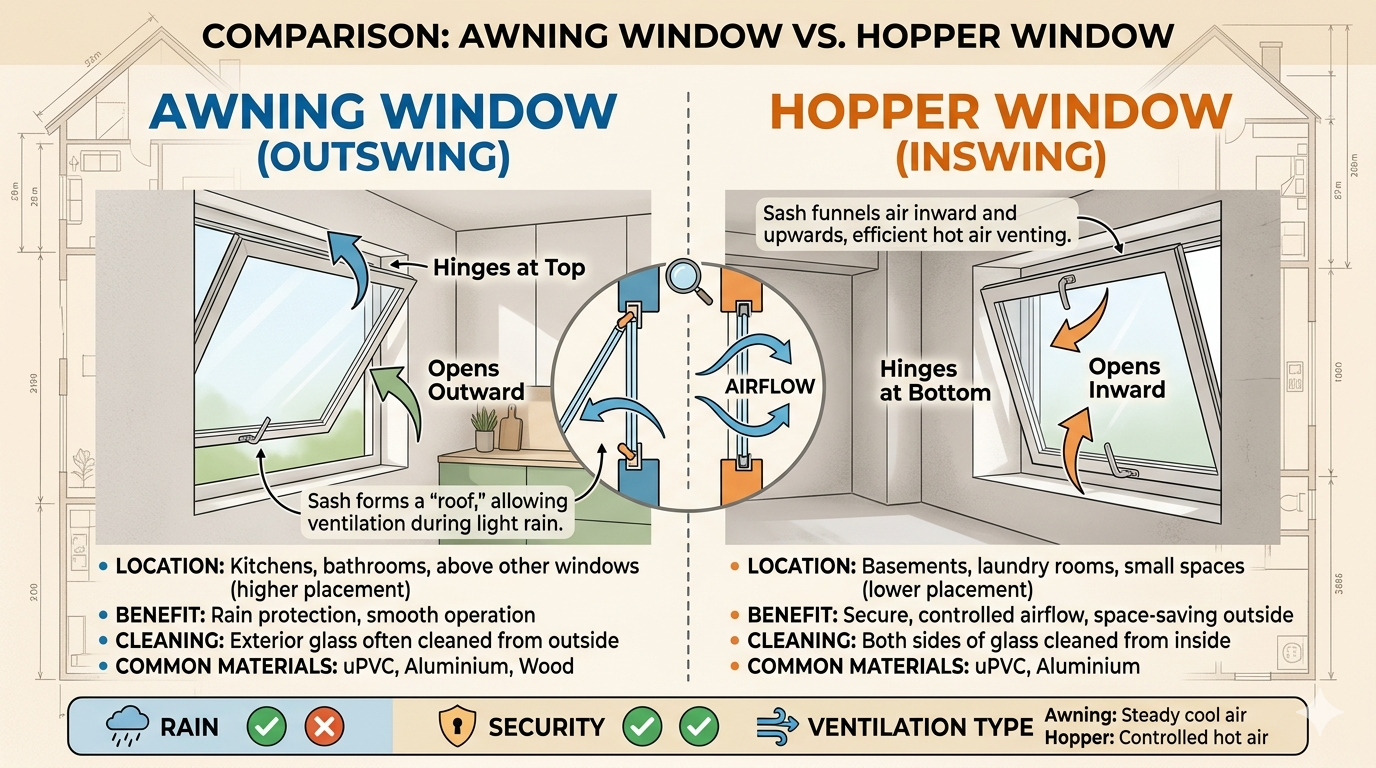
Quick Answer: Awning windows excel in wet climates and upper-floor installations due to their rain-resistant design, whilst hopper windows offer superior security and easier cleaning for ground-level applications. Your choice depends primarily on installation location and local weather patterns.
Window and Doors Replacement Near Me
At-a-glance comparison table
| Feature | Awning Window | Hopper Window |
|---|---|---|
| Opening mechanism | Top-hinged, swings out | Bottom-hinged, tilts in |
| Best use case | Bathrooms, upper floors | Basements, ground level |
| Ventilation level | Excellent airflow ✓ | Moderate airflow |
| Energy efficiency | Good sealing | Superior sealing ✓ |
| Price range | $280-560 | $280-560 |
| Maintenance | Harder to clean | Easy cleaning ✓ |
| Available sizes | Wide range | Limited sizes |
| Common materials | Vinyl, wood, aluminium | Vinyl, aluminium |
Find related services
Awning window overview
An awning window operates on top-mounted hinges, allowing the bottom portion to swing outward whilst the top remains fixed to the frame. This creates a protective canopy effect when open, deflecting rain away from the interior. Most units feature crank mechanisms for smooth operation, though some modern designs incorporate push-out hardware for easier access.
- Rain protection during ventilation – you can keep windows open even during light showers
- Enhanced privacy screening when installed above eye level
- Superior ventilation efficiency due to the angled opening directing airflow upward
- Versatile placement options, particularly effective in bathrooms and kitchens
- Excellent for capturing prevailing breezes when positioned strategically
- Exterior cleaning requires ladder access or professional service
- Limited opening angle may restrict emergency egress capabilities
- Hardware exposure to weather elements increases maintenance needs
These windows prove ideal for installations above kitchen sinks, in powder rooms, or as accent windows in living areas where you want light without sacrificing privacy. Casement window installations often incorporate awning units for enhanced functionality.
Explore energy-efficient options
Hopper window overview
A hopper window hinges at the bottom, with the top section tilting inward to create an opening. This inward operation keeps all moving parts protected within the building envelope, reducing weather exposure and extending hardware lifespan. The tilting action typically operates via simple push mechanisms or integrated handles.
- Enhanced security through inward opening – much harder to force from outside
- Easy cleaning access from interior positions
- Protected hardware placement reduces maintenance requirements
- Excellent energy efficiency due to compression sealing when closed
- Cost-effective manufacturing translates to lower purchase prices
- Rain infiltration risk when open during precipitation
- Reduced privacy as interior becomes visible when window tilts inward
- Limited ventilation compared to outward-opening designs
Hopper windows work brilliantly in basement installations, ground-floor applications, and anywhere security takes priority over maximum airflow. They’re particularly popular for basement window replacements where egress requirements don’t apply.
Find the Best Window Styles for your Home
Head-to-head: key decision factors
Comparative performance based on technical specifications and expert analysis (click on buttons to compare)
Energy efficiency
Hopper windows typically achieve superior energy performance due to their compression sealing mechanism. When closed, the window presses firmly against weatherstripping, creating tighter seals than awning designs. Most quality hopper units achieve U-values between 0.25-0.30, whilst awning windows range from 0.28-0.35.
The inward operation of hopper windows also protects seals from weather exposure, maintaining effectiveness longer. However, both styles offer excellent insulation when properly installed with quality weatherstripping and energy-efficient glazing options.
Expert Tip: “In our experience, hopper windows consistently outperform awning units for energy efficiency, particularly in harsh Canadian winters where seal integrity becomes critical,” notes Vitaly Shapiro, Vice President of Sales.
Ventilation and airflow
Awning windows excel in ventilation efficiency, creating natural air circulation patterns that draw fresh air upward and outward. The angled opening captures prevailing winds effectively, generating air changes up to 40% higher than comparable hopper installations.
Hopper windows provide adequate ventilation for most applications but direct airflow downward into living spaces rather than creating the chimney effect awning windows produce. This makes them less effective for cooling but potentially better for controlled air introduction in heating seasons.
Security
Hopper windows offer significantly better security through their inward opening mechanism. Forced entry becomes extremely difficult as intruders cannot access locking hardware or apply leverage from outside. The compression fit also makes it nearly impossible to pry open locked hopper units.
Awning windows present more security vulnerabilities due to exposed hardware and the leverage opportunities their outward swing creates. However, quality locking mechanisms and security-enhanced designs can mitigate these concerns effectively.
Ease of operation and accessibility
Both window styles accommodate users with mobility limitations, though through different mechanisms. Awning windows typically feature crank operators that require minimal force, making them suitable for elderly users or those with limited hand strength.
Hopper windows often use simple push or pull mechanisms that operate at comfortable heights. The inward opening means users don’t need to reach outside the building envelope, improving safety and accessibility.
Price and installation cost
| Window Type | Basic Unit | Mid-Range | Premium |
|---|---|---|---|
| Awning Window | $280 – $440 | $390 – $520 | $420 – $560+ |
| Hopper Window | $280 – $440 | $390 – $520 | $420 – $560+ |
Installation costs remain similar for both styles, typically ranging from $100-250 per window depending on complexity and accessibility. However, professional window installation ensures proper sealing and operation regardless of style choice.
Maintenance and lifespan
Hopper windows require less maintenance due to protected hardware placement and easier cleaning access. Seal replacement and hardware service can be performed from inside the building, reducing service costs significantly.
Awning windows need more attention, particularly for exterior cleaning and hardware maintenance. The exposed mechanisms face weather stress that can shorten component lifespan, though quality units still provide 20-25 years of reliable service with proper care.
Professional Insight: “We see fewer service calls on hopper installations, mainly because homeowners can maintain them easily without professional help,” explains Eugene Siukayev, Project Manager.
Aesthetics and curb appeal
Awning windows complement contemporary and traditional architectural styles equally well, offering clean lines and versatile proportions. They work particularly well in horizontal arrangements and as accent windows in multi-window compositions.
Hopper windows suit modern and minimalist designs but may appear less refined in traditional settings. Their typically smaller sizes make them excellent for specific applications but less versatile for main living area installations.
Which should you choose?
Choose awning windows if:
- You need rain protection whilst maintaining ventilation capabilities
- Installation location is above ground level where security is less critical
- Maximum airflow and natural cooling are priorities
- The window will be positioned above eye level for privacy
- You have access for exterior maintenance or professional cleaning services
Choose hopper windows if:
- Ground-level installation requires enhanced security features
- Easy maintenance and cleaning access are important considerations
- Energy efficiency takes priority over maximum ventilation
- Budget constraints favour the lower initial investment
- The installation is in a basement or utility area
Frequently asked questions
Most awning windows don’t meet egress requirements due to limited opening angles. Check local building codes and consider egress-compliant alternatives for bedroom installations.
Hopper windows can work in bathrooms but may allow moisture infiltration during operation. Awning styles typically perform better in high-humidity environments.
Both accommodate screens effectively, though hopper windows may require interior screen placement that can interfere with operation and cleaning access.
Awning windows are available in larger sizes due to structural support from top hinges. Hopper windows typically max out around 36 inches wide.
Crank operators on awning windows may freeze in extreme cold. Hopper windows with interior mechanisms avoid this issue entirely.
Yes, though motorised systems are more common and cost-effective for awning windows due to the crank mechanism compatibility.
Hopper windows typically need hardware replacement less often due to protected placement and reduced weather exposure of moving parts.
Both styles can integrate with smart window technology for automated operation, though compatibility varies by manufacturer and specific requirements.
Making your final decision
If rain protection and maximum ventilation top your priority list, awning windows deliver superior performance. For ground-level installations where security and easy maintenance matter most, hopper windows provide the practical solution. Consider your specific installation requirements, local climate patterns, and long-term maintenance preferences when making this important choice.
Ready to explore your options? Contact our window specialists for a personalised consultation and free quote tailored to your home’s specific needs.


