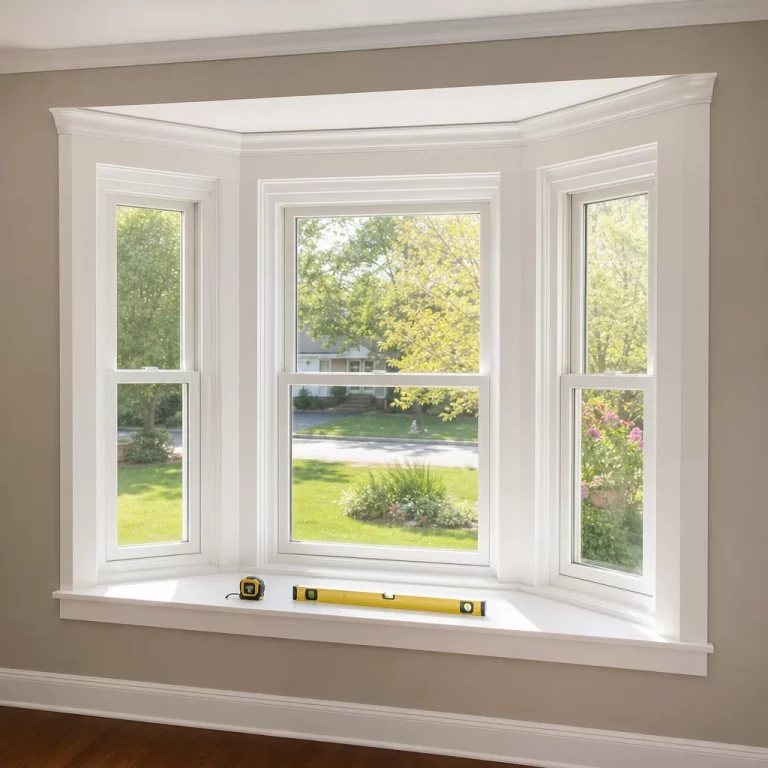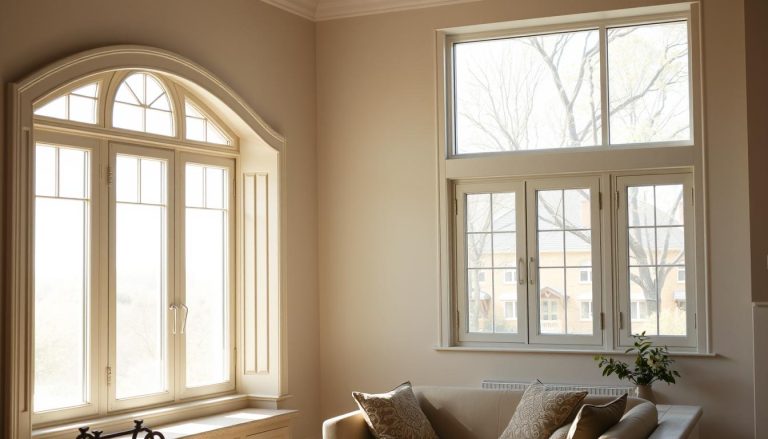
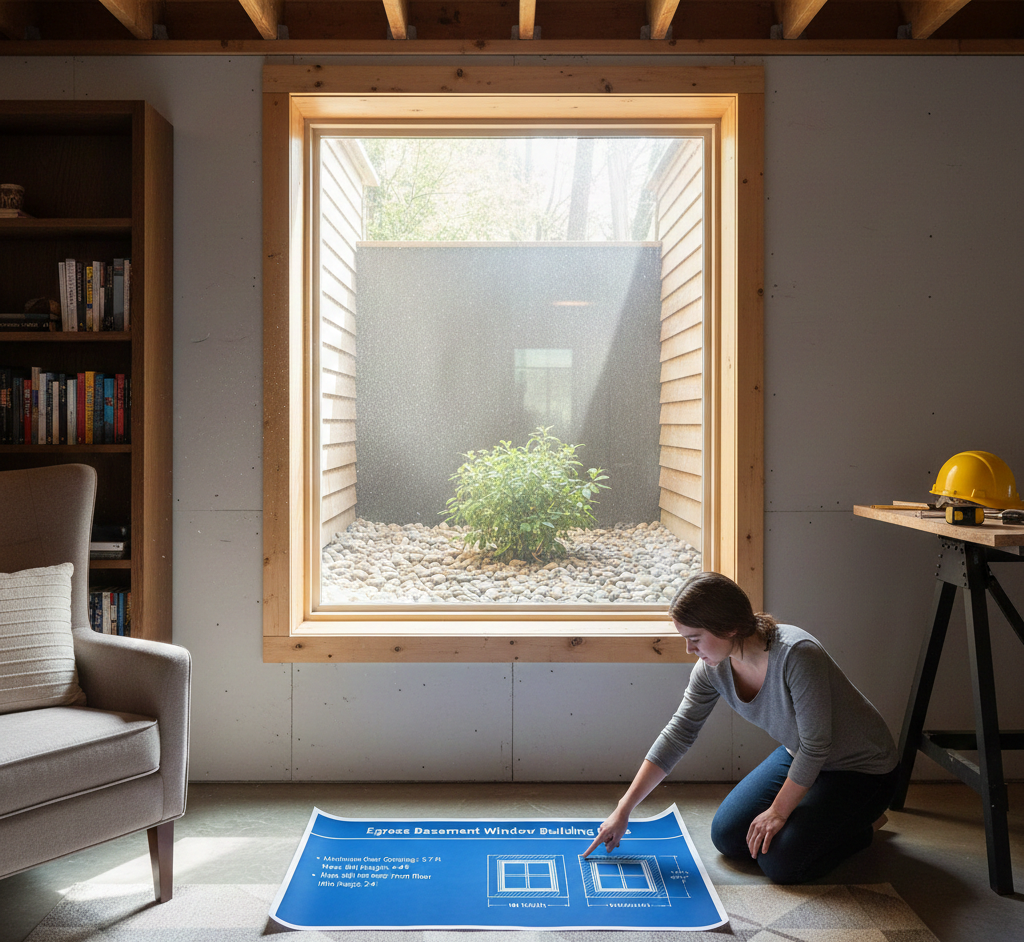
Building code for egress basement windows in Canada focuses on life safety: every habitable basement and every basement bedroom must have at least one window or door large enough and easy enough to use as an emergency escape and firefighter access. While details vary slightly by province, the core rules on clear opening size, ease of operation, and window wells are very similar across the country.
Key Takeaways
- Basement bedrooms need at least one egress window or exterior door
- Clear opening min: 0.35 m², no side under 380 mm
- Window must open easily from inside, without keys or tools
- Window wells must allow full opening and safe escape
- Pros recommend casement or tilt‑and‑turn vinyl egress windows
Window and Doors Replacement Near Me
What is an egress basement window?
An egress basement window is a window specifically sized and installed to serve as an emergency exit from a basement living space or bedroom, as required under the National Building Code of Canada (NBCC) and provincial codes. To qualify, the window must be openable from the inside without keys, tools, or special knowledge and must be large enough for an adult to climb through and for firefighters to enter.
In practice, common egress options in Canadian basements include casement, sliding, and tilt‑and‑turn vinyl windows, as these styles can provide a large, unobstructed opening while maintaining energy efficiency. For Toronto and the wider GTA, homeowners typically choose high‑performance vinyl egress units that integrate well with insulated walls and modern window wells while meeting Ontario Building Code requirements.
Find related services
Core code requirements (Canada‑wide principles)
Across Canada, building codes require that every basement bedroom (and most other sleeping rooms) have at least one egress window unless there is a door from that room that opens directly to the outside. Finished basements used as living space without a bedroom generally must still have at least one egress opening (window or exterior door) for escape and rescue.
Key functional requirements are broadly consistent:
The window must open without tools, keys, or complicated hardware.
Security bars, grilles, or shutters must be removable or openable from the inside without special tools.
Occupants must not need to climb over glass or squeeze through secondary panes to exit.
These principles are emphasised both in NBCC guidance and in manufacturer and municipal advisories across Canada.
Explore energy-efficient options
Minimum size and opening rules
Most Canadian jurisdictions that follow the NBCC specify a minimum clear opening area of at least 0.35 square metres (about 3.77 square feet) for an egress window. In addition, no single dimension of that unobstructed opening (height or width) may be less than 380 millimetres (about 15 inches), which prevents very narrow or very low openings that are hard to use in an emergency.
A critical point for homeowners is that these measurements apply to the usable opening after the sash is fully open, not to the overall frame size. For example, a sliding or casement window that meets the code on paper may fall short if a thick frame, grille, or hardware reduces the actual clear space people can pass through. Professional window suppliers and installers familiar with Canadian codes will typically select and size vinyl egress units to deliver a compliant clear opening, not just a compliant rough opening.
Find the Best Window Styles for your Home
Special rules for Ontario and the GTA
Ontario uses its own Building Code, but the principles mirror the NBCC: every floor level containing a bedroom must have at least one window or door suitable for egress, and that rule is especially important for basement bedrooms. The Ontario Building Code requires an unobstructed opening of at least 0.35 square metres, with no clear opening dimension less than 380 millimetres, and limits how high the sill can be above the floor so that escape remains practical.
Where the egress window opens into a window well, the well must provide at least 550 millimetres (about 22 inches) of clear space in front of the opening so that the sash can open fully and a person can climb out. Deeper window wells may require steps, ladders, or other means of climbing, and Ontario municipal guidance also stresses the need to keep wells free of obstructions such as snow, plantings, or storage. For Toronto and the GTA, homeowners should also be aware of local planning and drainage rules when cutting down foundations for new wells, which is another reason to work with experienced installers.
Best window companies reviews
Window wells, safety bars, and obstructions
In Canadian basements, egress windows are often below ground level, which makes the design of the window well a critical safety detail. The well must not only provide the minimum clearance in front of the sash but also allow the window to open fully without the frame, soil, or well structure blocking the swing or slide. Many municipalities require wells to be drained properly, to prevent standing water and ice, and to have covers that are easy to lift from the inside while still preventing falls from above.
Where security bars or grilles are installed over a basement egress window, they must be operable from the inside without keys or tools and must not reduce the clear opening below the required 0.35 square metres and 380‑millimetre minimum dimensions. Furniture, built‑in cabinetry, and mechanical equipment must not block access to the egress window; Canadian advisories specifically warn that built‑ins around basement windows must be designed so that occupants can still reach and operate the opening quickly.
Code‑compliant window styles
Several common vinyl window types can satisfy Canadian egress rules when sized correctly:
Casement windows are widely recommended because the sash swings completely clear of the opening, making it easier to achieve the required area in a relatively modest frame size.
Horizontal sliders and single‑ or double‑hung windows can also be acceptable, but only the operable sash counts towards the clear opening; this means units usually need to be larger to reach 0.35 square metres.
Tilt‑and‑turn designs, popular in modern renovations, can offer large, unobstructed openings while also providing excellent ventilation and insulation in everyday use.
Hopper windows, which hinge at the bottom and tilt inwards, are generally not recommended or may be restricted as egress windows in some Canadian jurisdictions, as the inward‑tilting sash can obstruct the opening during escape. For homeowners in Toronto and the GTA, choosing a high‑quality vinyl casement or tilt‑and‑turn unit from a specialist manufacturer helps balance strict egress requirements with energy efficiency, low maintenance, and a good match to existing window styles.
Energy efficiency, comfort, and value
Meeting egress code does not mean compromising on comfort or energy savings. Modern Canadian vinyl windows designed for basements can combine large, code‑compliant openings with multi‑chamber frames, advanced spacer systems, and optional triple glazing to minimise heat loss and condensation. ENERGY STAR certified windows in basements can reduce energy bills by up to around 13 per cent compared with older units, which is particularly valuable in Canada’s long heating season.
For GTA homeowners, egress upgrades are often timed with broader window replacement projects, making it easier to coordinate insulation, framing, and finishing work while keeping the project on schedule and within budget. Programmes such as the Canada Greener Homes initiatives and provincial or municipal rebates can sometimes help offset the cost of high‑performance basement egress windows when they improve a home’s energy efficiency and safety.
Permits, inspections, and when to call a professional
In most Canadian municipalities, cutting a larger opening in a basement wall or adding a new egress window requires a building permit and an inspection to confirm compliance with structural, fire, and drainage rules. Work that alters concrete foundations, window wells, or basement bedrooms can also trigger zoning and setback reviews, so homeowners are encouraged to check local requirements early in the planning process, especially in cities like Toronto with dense neighbourhoods.
Because egress rules involve precise measurements, structural changes, and strict safety standards, many Canadian homeowners choose to work with specialist window companies that understand both the National Building Code and provincial regulations. Experienced GTA installers can help you:
Confirm whether your current basement windows are legal for a bedroom.
Recommend suitable vinyl egress styles and sizes for your opening.
Design compliant window wells, drainage, and interior finishes.
Prepare documentation that satisfies inspectors and insurers.
For homeowners in Toronto and the surrounding area, arranging a professional consultation is usually the most straightforward way to ensure that new or renovated basement windows meet all egress and energy‑efficiency requirements without costly rework later.