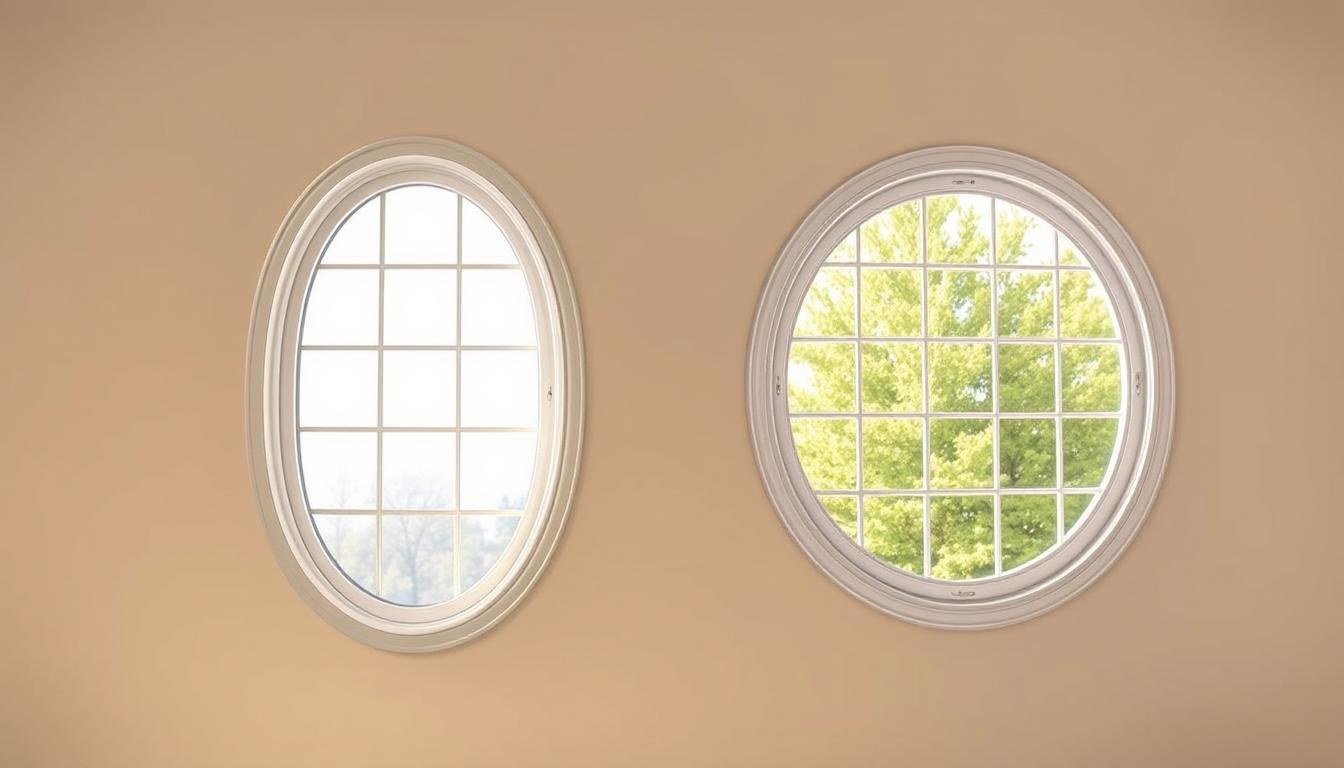
Nearly 40% of Canadian heritage homes have specialty-shaped windows. Many wonder if an oval or round window is better for their home. This shows how unique shapes can make a home special.
In this article, we compare window shapes for Canadian homeowners. We look at style, looks, and how well they work in different climates. We aim to help you choose between oval and round windows for your home.
Key Takeaways
- Oval vs round window: both add character, but shapes suit different architectural styles.
- Window shape comparison should include aesthetics, function and local climate performance.
- Round window design often reads as nautical or porthole-like; oval windows feel elongated and formal.
- Local manufacturers like Total Home Windows & Doors offer vinyl specialty options for faster sourcing.
- We’ll compare energy efficiency and cost to help you choose the right option for your Canadian home.
Window and Doors Replacement Near Me
What is an Oval Window?
An oval window is a long, curved shape. It can be horizontal or vertical. Sizes range from 18–48 inches wide and 24–72 inches tall.
This shape is softer than sharp corners. It makes buildings look more elegant.
Oval windows can be fixed or open. Fixed ones are better for views and save energy. But, open ones need special hinges, making them harder to install.
Designers love oval frames for their classic look. The curves add warmth without taking over a room. They can make rooms look taller or wider.
For privacy, use double-glazed or frosted ovals in bathrooms and entryways. Fixed ovals let light into stairwells and hallways while keeping things private. In cold places, they help save energy.
The curves of an oval spread stress evenly. This is good for buildings, like in aerospace and engineering.
Customizing oval windows is common. Companies like Total Home Windows & Doors in Toronto make special vinyl options. They match frames to your home’s look. But, expect longer wait times and higher costs.
There are downsides. Custom ovals cost more to make and install. Finding replacement parts for operable ones can be tough. Cleaning high ovals and finding the right blinds or curtains can be a challenge.
Use ovals above doors and in gables for a nice look. Frosted ones are great for bathrooms. They’re also good for stairwells, hallways, and corners. Oval windows are perfect as accents or with rectangular ones in tall rooms for a classic feel.
What is a Round Window?
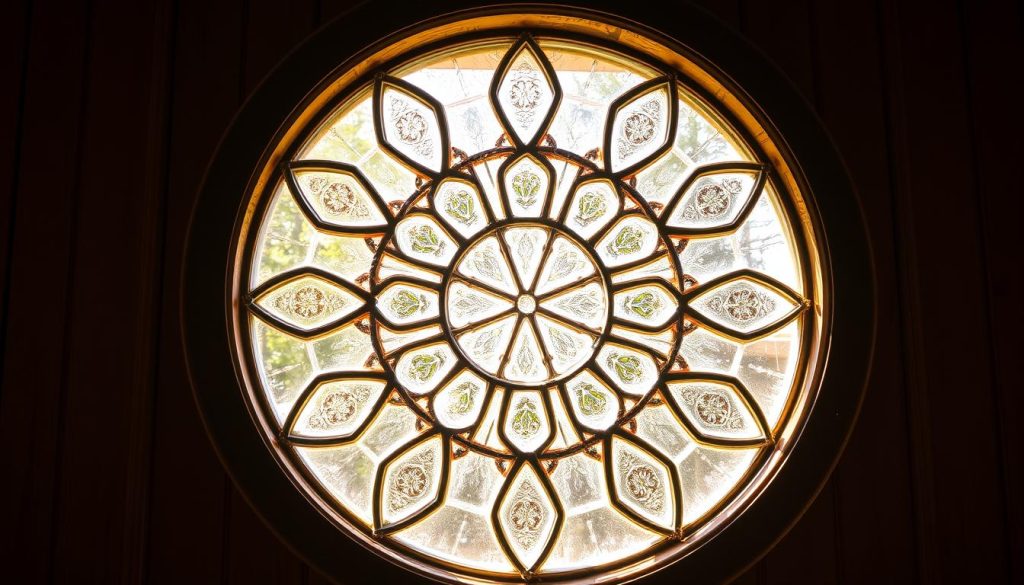
A round window is a perfect circle in plan view. It’s also called a circular window or porthole window. Custom installations usually have diameters from 18 to 36 inches.
These windows are often symmetric. They make clear, balanced visual statements in a façade.
Construction varies. Many round windows come as fixed units. This is to maximize uninterrupted views and light. Some models open for ventilation, but operable options are less common.
Quality double-glazing and low-E coatings reduce heat loss. This is when they are installed correctly.
Round window design has distinct advantages. The shape creates symmetry. It can look whimsical or modern, depending on trim and context.
In small spaces, a circular window casts even, centred light. This brightens attics, bathrooms, and niches.
Round windows work well in gables, above doors, and in stairwells. They pair well with rectangular glazing for contrast. Nautical or cottage-style homes benefit from a porthole aesthetic.
Modern projects use the round form as a minimalist accent.
There are trade-offs. The irregular perimeter presents extra demands for insulation and sealing. Custom framing and coverings add cost.
High-placed circular windows can be hard to clean. This is without scaffolding or extendable tools.
We assess energy performance by the whole assembly. In cold Canadian climates, double-glazed circular window units with tight seals and durable vinyl frames deliver reliable insulation. Manufacturers in the Greater Toronto Area, such as Total Home Windows & Doors, offer suitable products that meet these needs.
Practical sizing matters when weighing oval vs round window choices. The oval vs circular window size debate affects proportions and daylighting. An oval may better fit narrow vertical spaces, while a circular window design gives a centred, balanced aperture.
When selecting a round unit, check installation details, glazing specs, and available trim options. This ensures the circular window performs well, matches the desired round window design, and integrates with the project’s overall aesthetic.
Explore energy-efficient options
Compare Energy Efficiency Between Oval and Round Windows: Comparison Table
We compare energy performance across key factors to guide Canadian homeowners. Our window shape comparison focuses on glazing, frame material, operability, sealing and the effect of size and orientation on heat transfer. Shape matters less than materials and installation, but odd perimeters can change sealing complexity.
We list practical energy factors and how they affect oval vs round window styles. Double- and triple-glazed units with low-E coatings and argon or krypton fills reduce heat loss in cold climates. Vinyl frames offer strong thermal break and low upkeep. Fixed specialty windows avoid sash penetrations, which improves energy efficiency.
| Factor | Oval Windows | Round Windows |
|---|---|---|
| Glazing options | Available in single, double, triple glazing; low-E coatings common in custom builds. | Same glazing spectrum; curvature may increase custom glazing costs for high-performance units. |
| Frame material | Vinyl frames from brands like Total Home Windows & Doors provide good insulation and low maintenance. | Vinyl and fiberglass frames work well; symmetric shape eases uniform thermal performance. |
| Fixed vs operable | Fixed ovals are typically very efficient; operable ovals need careful hardware sealing. | Fixed rounds perform well; operable rounds require precise gaskets for curvatures. |
| Perimeter sealing | Longer, elongated perimeter may need more custom sealing and flashing attention. | Uniform perimeter simplifies consistent sealing but demands exact curving of gaskets. |
| Orientation and size | Vertical ovals can admit more direct sun; check oval vs circular window size when estimating gains. | Round openings give predictable solar exposure; diameter affects glazing area and heat transfer. |
| Installation risk | Custom-shaped openings require skilled installers to prevent air leakage and thermal bridging. | Curved geometry requires precise fit; experienced installers reduce drafts and moisture risk. |
We recommend prioritising double- or triple-glazed units with low-E coatings for Canadian winters. Choose vinyl frames, for example from Total Home Windows & Doors, when you want insulation with low maintenance. Use fixed units where ventilation is not needed to improve thermal performance.
Measure sizes before quoting. Typical oval vs circular window size ranges help estimate glazing area: ovals often span widths of 18–48 in and heights of 24–72 in. Round windows commonly range from 18–36 in in diameter. These dimensions influence heat transfer and glazing performance levels.
Work with an experienced installer to ensure tight perimeter sealing and correct flashing at gables and above doors. Proper installation reduces drafts, limits moisture intrusion and preserves designed energy efficiency regardless of whether you choose oval vs round window styles.
Find the Best Window Styles for your Home
Cost Analysis: Comparison Table
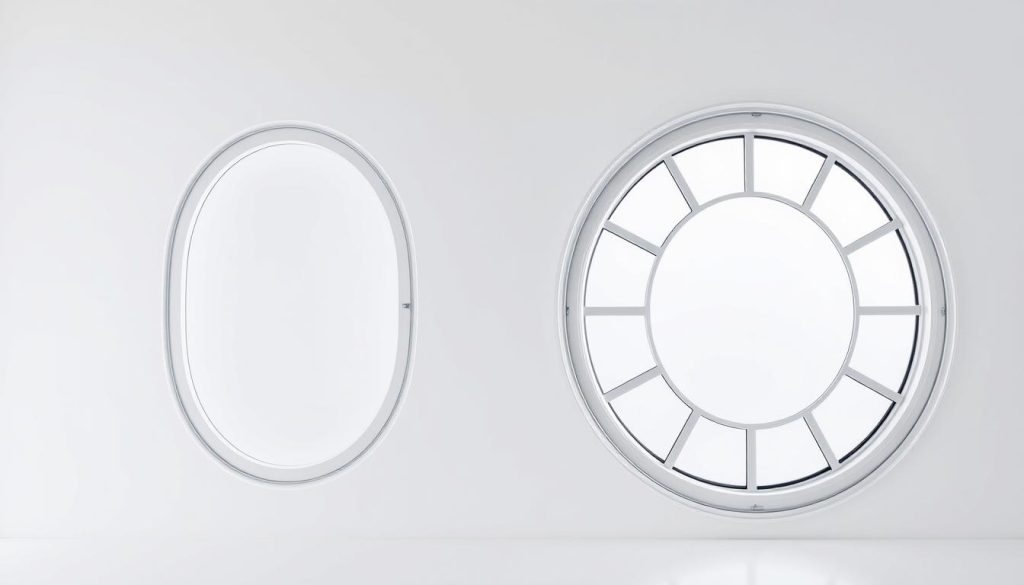
We break down the main costs for homeowners in the Greater Toronto Area. This helps them see the difference between oval and round windows. Key factors include custom shape, size, material, glazing type, and more.
Fixed oval and round windows are cheaper than operable ones. They cost more than regular windows because they’re custom-made. Oval frames can be pricier if they’re big or need special hardware.
Round windows need special glazing and gaskets, which can increase their cost. If a round window is fixed, it might avoid the extra cost of special hardware.
| Item | Small (low–mid) | Medium (mid) | Large / Operable (high) |
|---|---|---|---|
| Typical example | Small fixed round, 18–24 in dia, double-glazed, vinyl | Medium oval, 24–36 in width, 36–48 in height, double-glazed, vinyl | Large specialty shapes or operable units with custom hardware |
| Material impact | Vinyl lower-cost; wood or aluminium raises price | Wood or clad-wood increases labour and finish costs | High-grade wood, aluminium or composite adds significantly |
| Fabrication complexity | Moderate for circular glazing; lower for fixed | Higher for oval due to sash profiles and longer perimeter | Very high for operable specialty shapes and custom hardware |
| Installation & structural work | Standard opening or simple retrofit | May need opening modification and extra flashing | Structural framing, gable or high-wall access required |
| Trim, finishing & treatments | Basic interior trim; standard screens may not fit | Custom interior/exterior trim and screens common | Custom millwork, blinds and specialised screens needed |
| Long-term costs | Low maintenance for fixed vinyl circular windows | Moderate for operable oval window frames with hardware | Higher due to replacement hardware and servicing |
| Value considerations | Adds curb appeal at modest cost if well placed | Raises perceived value; mid-range ROI with quality work | Highest curb appeal but needs precise installation to add value |
| GTA guidance | Buy from local manufacturers like Total Home Windows & Doors for better pricing | Obtain itemised quotes for glazing, fabrication and installation | Compare same-spec double-glazed, low-E units to isolate shape cost |
Get detailed quotes that list each part of the cost. This makes it easier to compare oval and round windows.
Think about the cost of both oval and round windows when planning your budget. Remember to include any extra work needed for structure and trim, and maintenance costs over time.
Oval vs Round Windows: What’s Best for Your Home?
When choosing between oval and round windows, start with your goals. Think about what you want the window to do and where it will go. Oval windows can be vertical or horizontal, while round windows are perfect for a central look.
Vertical ovals add elegance and make ceilings look taller. Horizontal ovals are great for width and a softer look. Round windows are best for symmetry and a strong look.
Both oval and round windows work well with energy efficiency. They do best when fixed, double- or triple-glazed, and have low-E coatings. Choose vinyl frames or thermally broken materials to handle Canada’s weather and save on upkeep.
If you need to open the window, consider specialty units. But, they might cost more and need occasional part replacement. Get your space measured and talk to a trusted local supplier or installer.
Total Home Windows & Doors in the Greater Toronto Area offers custom oval and round vinyl frames. They also have glazing options and installation. Ask for samples, U-factor and SHGC ratings, and warranty details before you decide.
There’s no one-size-fits-all choice between oval and round windows. Pick the shape that fits your design best. Remember, the right glazing, frame, and installation are key for lasting performance in Canada.
FAQ
What are the main differences between an oval window and a round (circular) window?
Oval windows are longer and have smooth edges. They can be placed vertically or horizontally. They are usually 18–48 in wide and 24–72 in tall. Round windows are true circles. They are 18–36 in diameter. Both types are often fixed for better views and energy saving. Shape affects how they look and how they’re sealed. But, energy performance depends more on glazing and frame quality.
How do oval and round windows perform in cold Canadian climates?
Performance depends on glazing, frame, and how well they’re installed. Vinyl frames, like those from Total Home Windows & Doors, are good for cold weather. Fixed oval and round windows work better than operable ones. This is because they have fewer seams. Good sealing and installation are key to keeping warm in Canada.
Which shape is better for privacy in bathrooms or entryways?
Both shapes work well with frosted or obscured glass. Oval windows can fit above doors or in narrow spaces. Round windows create a spa-like focal point. Choose frosted double-glazed units for privacy and insulation. Where you place them affects visibility more than their shape.
Are specialty-shaped windows more expensive than standard rectangular windows?
Yes, custom shapes like ovals and rounds cost more. This is because of the bespoke fabrication and installation. Fixed specialty windows are less expensive than operable ones. Buying from a local manufacturer like Total Home Windows & Doors can help control costs.
How do maintenance and cleaning compare between oval and round windows?
Both shapes can be hard to clean if they’re high up. Fixed units need less maintenance because they have fewer moving parts. Operable units require special hardware that can be hard to replace. Custom trim and tools may be needed for cleaning high or awkwardly placed units.
Can oval or round windows provide ventilation?
Fixed oval and round windows do not provide ventilation. Operable versions can be made but are less common and more complex. This increases cost and maintenance needs. If you need ventilation, plan for operable specialty windows or pair a fixed feature window with operable rectangular units.
Which shape is better for adding architectural character or curb appeal?
Both shapes add character but differently. Oval windows are classic and elegant. Round windows are symmetrical and can be styled in many ways. The best choice depends on your home’s style and the look you want.
How should I choose between oval and round windows for energy efficiency?
Focus on glazing, frame material, and installation quality. Fixed units are generally more efficient. Compare U-factor, R-value, and SHGC to see shape differences. The installer’s skill in sealing and flashing is key for performance in Canadian weather.
What size ranges should I consider when comparing oval vs circular window size?
Oval windows are 18–48 in wide and 24–72 in tall. Round windows are 18–36 in diameter. Use these ranges to estimate heat transfer and fit with your space. Will standard window treatments fit oval or round windows? Most off-the-shelf treatments don’t fit specialty shapes. You’ll need custom solutions like curved blinds or bespoke shades. Frosted glass or internal blinds are common options for privacy and light control.
Are there differences in sealing and insulation challenges between oval and round windows?
Both shapes need precise sealing. Oval windows may need more custom flashing. Round windows require accurate circular gaskets. Quality double-glazing and proper gaskets, along with experienced installers, solve these issues. The installer’s technique is more important than the shape.
How do I estimate cost differences between oval and round windows?
Compare specs like glazing type, frame material, size, and operability. Small round windows with double glazing and vinyl frames are less expensive. Medium ovals are mid-range priced. Larger or operable shapes are more expensive. Ask manufacturers like Total Home Windows & Doors for detailed quotes including fabrication, glazing, and installation.
Will specialty windows add resale value?
Well-done specialty windows can enhance curb appeal and perceived value. Value depends on style, installation quality, and how well they fit with the home. Work with reputable local manufacturers and installers to ensure the investment is seen as valuable by buyers.
What practical steps should Canadian homeowners take before choosing oval or round windows?
Measure the intended opening and consider sun exposure, privacy, and ventilation needs. Request samples, energy ratings, and warranty details from local manufacturers and installers. Total Home Windows & Doors offers vinyl specialty windows and custom frames. Get detailed, itemised quotes and compare glazing and frame options between shapes. This helps isolate differences due to shape, not materials or workmanship.