Nearly 70% of Canadian homeowners say window performance matters more than style when replacing windows. This surprising stat sheds light on the sash window vs double hung debate.
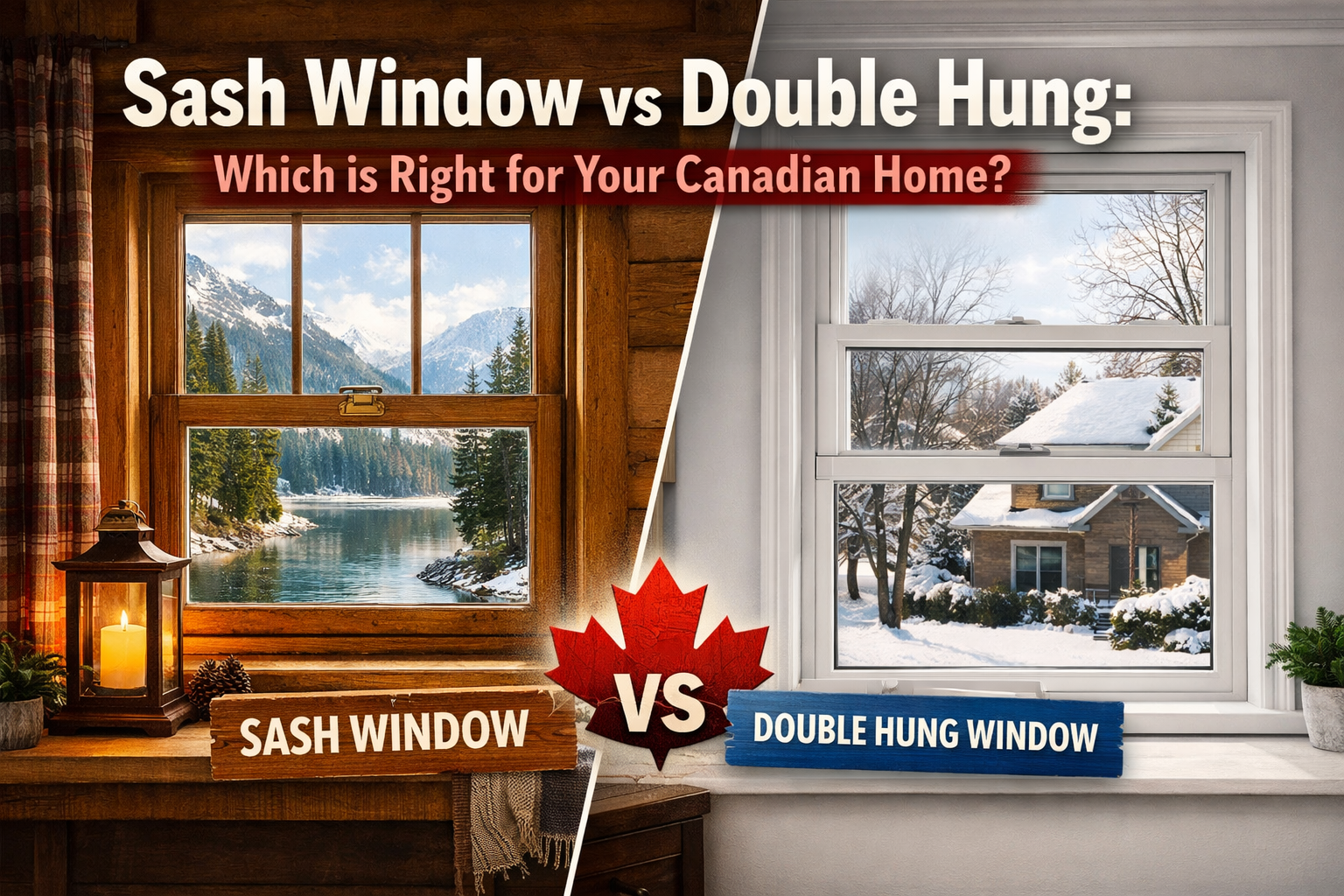
We’ll make the sash window and double hung window comparison clear. Sash windows have one movable sash. Double hung windows have both top and bottom sashes that move. This difference affects ventilation, cleaning, and maintenance.
In Canada’s cold winters and variable climates, energy metrics like U-factor and ER are key. Yet, sash vs double hung differences also impact installation cost, draft risk, and architectural fit.
Later, we’ll compare energy efficiency and costs. We’ll also look at how materials and installation affect the outcome. For now, imagine a classic Victorian in Toronto or a bungalow in Calgary. The right choice often balances performance with style.
Key Takeaways
- Sash window vs double hung mainly differ by how many sashes move: one versus two.
- Double hung offers better ventilation and easier interior cleaning with tilt-in sashes.
- Single-hung (sash) can be more airtight and slightly cheaper due to fewer moving parts.
- Energy performance depends more on materials and installation than sash type.
- Consider climate, style and budget when choosing between sash window vs double hung.
Window and Doors Replacement Near Me
What is a Sash Window?
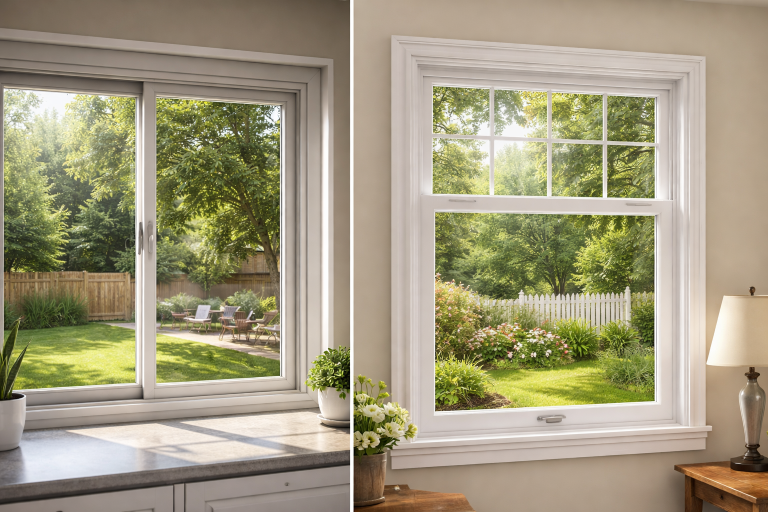
A sash window in North America is like a single-hung window. It has two sashes inside a frame, but only the bottom one moves. The top sash stays in place, letting you open the bottom one for air.
Sash windows can be made from vinyl, fiberglass, wood, or aluminium. Vinyl is popular in Canada because it’s easy to care for and saves money over time. They often come with double-pane glass and special coatings to keep the cold out.
There are good points about sash windows. They cost less than double-hung windows because they’re simpler. They also need less fixing because they have fewer parts. This can make them more airtight, which is good for keeping the cold out.
But, there are downsides. You can’t control the air as well because only the bottom sash opens. Cleaning the top sash can be hard, needing special tools or a ladder. Some places might not let you use a sash window because it’s too small.
So, when should you choose a sash window? They’re great for ground-floor rooms and small spaces. If you want something that saves energy and is easy on your wallet, vinyl sash windows are a good pick.
| Feature | Sash Window (single-hung) | Why it matters |
|---|---|---|
| Operation | Lower sash moves; upper sash fixed | Simpler mechanism lowers cost and maintenance |
| Materials | Vinyl, fiberglass, wood, aluminium | Vinyl offers best balance of cost and energy performance |
| Ventilation | Limited to lower sash opening | Less effective stack-effect airflow than double-hung |
| Energy performance | Can reach ER ~34+ and U-factor ≤1.22 W/m²·K with quality glazing | Meets common Canadian heating-season targets when well specified |
| Cost | Typically 10–20% lower than comparable double-hung | Attractive for budget projects and value-focused retrofits |
| Maintenance | Fewer moving parts; easier upkeep | Lower long-term repair risk and costs |
| Best use case | Ground-floor rooms, small openings, energy-focused renovations | Good match where sash and double hung window styles are being compared on cost and performance |
Find related services
What is a Double Hung Window?
A double hung window has two sashes that slide up and down. This design lets you control airflow better than single sash windows.
Double hung windows are great for ventilation. Opening the top sash lets warm air out. Lowering the bottom sash brings in cooler air. This creates a flow of air that improves indoor air quality.
Cleaning these windows is easy. Many modern double hung models have tilt-in sashes. This means you can clean the outside glass from inside. This makes maintenance simpler and saves money on professional cleaning services.
Double hung windows are also good for safety and looks. They offer bigger openings for emergency exits. They fit well in both old and new homes. When both sashes are open, they look balanced and appealing.
But, there are downsides. Double hung windows cost 10–20% more than single-hung or traditional sash windows. They have more parts, which means more maintenance. If not installed well, they can let air in.
It’s important to look at the details. With the right weatherstripping and glass, double hung windows can be as good as single-hung ones. In cold places like Canada, choose units with low U-factors to save on heating.
Think about the long-term costs. Installing double hung windows can cost more because of the need for precise alignment and sealing. This affects the cost comparison between sash and double hung windows. Homeowners need to consider the upfront cost versus ongoing maintenance and comfort.
| Feature | Double Hung Advantage | Consideration |
|---|---|---|
| Ventilation | Top and bottom sashes open for stack-effect airflow | Requires balanced operation to maintain efficiency |
| Cleaning | Tilt-in sash options allow safe interior cleaning | Adds complexity and cost to the unit |
| Energy performance | Can equal or exceed single-hung with premium options | Needs quality seals and installation to avoid drafts |
| Cost | Higher initial cost, better long-term comfort | Influences sash window versus double hung window cost decisions |
| Maintenance | Accessible for cleaning and repairs | More moving parts increase maintenance points |
Use double hung windows in upper rooms and big spaces. They’re best for places where you need easy cleaning and control over airflow. When choosing between sash and double hung windows, think about maintenance and energy goals.
Explore energy-efficient options
Compare energy efficiency between Sash Windows and Double Hung Windows: Comparison Table
We compare sash windows and double hung windows based on seals, glazing, and installation. Energy efficiency depends more on glazing and tight installation than window style.
Seals and moving parts affect air leakage. Single-operable sash designs have fewer seals, reducing leaks. Double hung units need good weatherstripping around two sashes to match.
Glazing choices are key for U-factor and ER. Double- or triple-pane glass with Low-E coatings and gas fills improves both. Choosing multi-pane units is key for ENERGY STAR goals.
| Comparison point | Sash window (single-hung) | Double hung window |
|---|---|---|
| Operable seals | One operable sash reduces air leaks. | Two operable sashes need premium weatherstripping. |
| Glazing impact | Double-pane Low-E with argon is cost-effective. | Triple-pane Low-E with krypton is best in cold. |
| Installation sensitivity | Performance depends on airtight fit and professional install. | Same requirement; certified installation needed for rebates. |
| Regional targets (Canada) | Ontario target: ER ≥34, U-factor ≤1.22 W/m²·K is achievable. | Colder provinces: aim for ENERGY STAR Most Efficient, U-factor ≤1.05 W/m²·K. |
| Ventilation & cleaning | Less flexible for ventilation; cleaning may need external access. | Better ventilation control and easier sash cleaning options. |
| Rebate eligibility | Must meet ENERGY STAR and provide professional installation proof. | Same rebate rules; higher-spec glazing improves eligibility. |
When comparing sash and double hung windows, quality of installation and glazing matter most. Both can reach high efficiency with the right seals and glass.
The main differences are in maintenance and ventilation, not thermal limits. Always check local rebate rules and consult certified installers before buying.
Cost Analysis: Comparison Table
We compare costs so homeowners can decide between sash and double hung windows in Canada. Prices depend on frame material, how many sashes open, glass type, hardware quality, and how hard it is to install. Also, rebates can affect the cost.
Material is key. Vinyl is the cheapest, followed by fiberglass and composite, and then solid wood. The cost of materials and labour often makes sash or double hung windows a practical choice.
Labour costs differ. Single-sash windows are 10–20% cheaper than double-hung ones because they have simpler parts. Installing double-hung windows can add 15–25% to the cost for precise alignment and extra sealing.
| Cost Factor | Sash / Single-Hung | Double-Hung |
|---|---|---|
| Typical upfront material cost (per window) | $250–$600 (vinyl to mid-range wood) | $300–$720 (vinyl to premium wood) |
| Average installation labour | $80–$160 | $100–$200 |
| Glazing upgrade (double → triple pane) | $150–$400 extra | $150–$450 extra |
| Hardware & weatherstripping | Standard to mid-grade | Premium options available; higher cost |
| Routine maintenance over 20 years | Lower (fewer moving parts) | Moderate (tilt-in sashes reduce cleaning costs) |
| Estimated lifespan | 20–30 years (frame-dependent) | 20–30 years (frame-dependent) |
| Rebate/tax credit potentially | Eligible when ENERGY STAR certified | Eligible when ENERGY STAR certified |
Energy costs over time can change the decision. Upgrading to Low-E glass with argon can save on heating. Triple-pane windows can cut heating costs by up to 40%.
Maintenance and cleaning costs vary. Single-hung windows need less service because they have fewer parts. Double-hung windows are easier to clean because sashes tilt inward.
Rebates can affect your budget. Check for federal and provincial incentives for ENERGY STAR windows. Make sure the installation is certified to qualify. Ask for U-factor and R-value before buying.
In Canada, vinyl double-pane Low-E windows from Total Home Windows & Doors are budget-friendly. For better projects, choose double-hung with tilt-in sashes, premium weatherstripping, and triple-pane glazing. This is worth the extra cost for better ventilation and cleaning.
Sash Windows vs Double Hung Windows: What’s Best for Your Home?
Choosing between sash and double hung windows depends on what we value most. If cost and tightness are key, a single-hung sash with double-pane glass is a good choice. It fits Ontario’s standards and is easy to clean from outside.
For better ventilation and cleaning, double hung windows are better. They let us clean from inside and control airflow. To match sash energy efficiency, we need premium weatherstripping and multi-pane glazing.
Deciding is easier when we know our climate and what we need. We should look at product ratings and ensure certified installation. Companies like Total Home Windows & Doors offer options that balance cost and energy for Canadian homes.
There’s no single best choice between sash and double hung windows. Sash windows are cheaper and need less upkeep. Double hung windows offer better ventilation and cleaning. Both need proper glazing and professional installation for energy savings and comfort.