

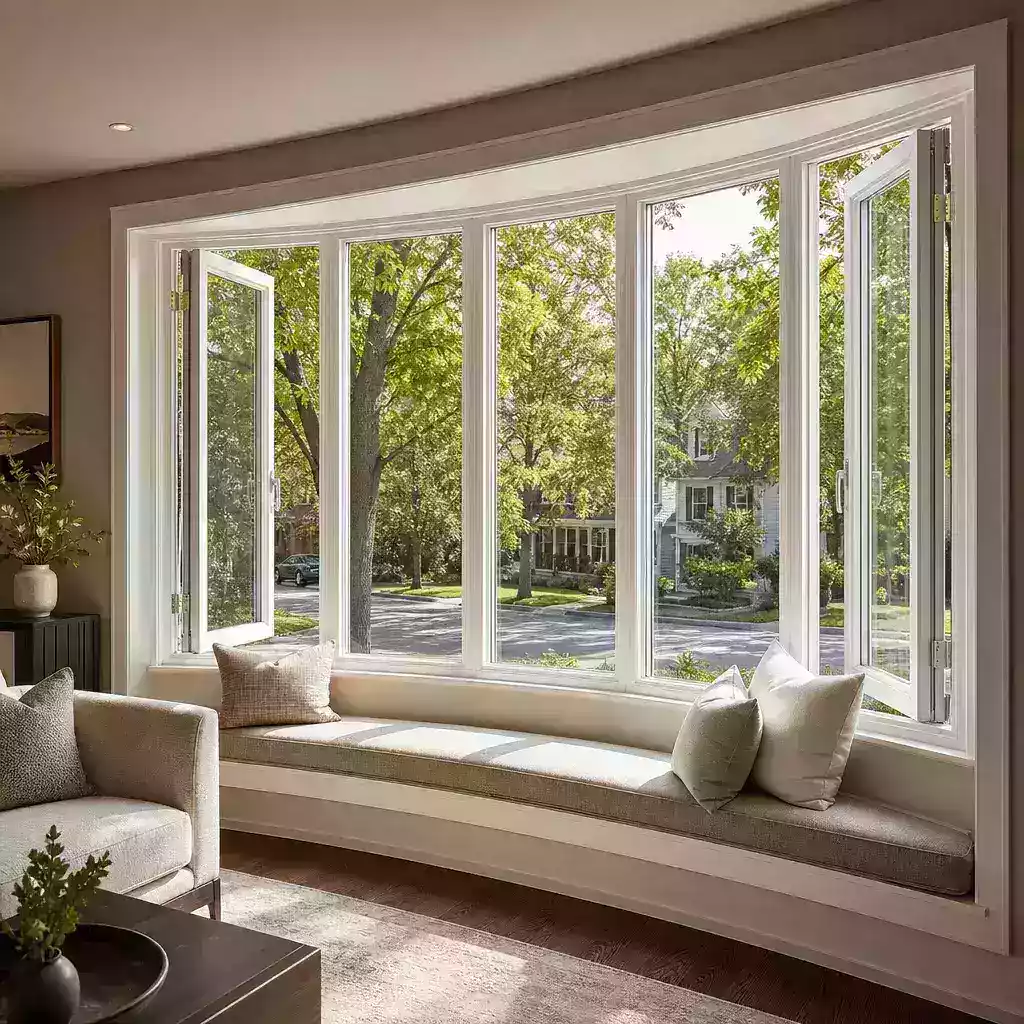
Bow windows can indeed open, but not all sections are operable. Typically, a bow window features four to six individual window panels arranged in a gentle curve, with only some sections designed to open for ventilation. The operable units are usually casement or double-hung windows positioned strategically within the bow structure, while the remaining panels are fixed. This combination provides homeowners with controlled airflow whilst maintaining the elegant curved appearance that makes bow windows so desirable.
Key Takeaways
- Bow windows combine fixed and operable window sections in a curved configuration, with typically 1-3 panels designed to open
- Common operable styles include casement, double-hung, and awning windows positioned at strategic points along the bow
- The curved design limits the number of operable sections compared to flat window installations
- Proper ventilation planning during installation ensures adequate airflow throughout your space
- ENERGY STAR™ certified bow windows can provide both ventilation and superior thermal performance for Canadian homes
Window and Doors Replacement Near Me
How Do Bow Windows Provide Ventilation?
The ventilation capability of bow windows depends entirely on their configuration during manufacturing and installation. Most bow window assemblies incorporate a mix of fixed and operable panels. The fixed sections create the structural integrity and expansive views, whilst the operable units allow fresh air circulation.
Standard bow window configurations typically place operable sections at the ends or centre of the curved assembly. This strategic placement maximises cross-ventilation potential. When you order bow windows, you can specify which panels should open based on your room layout and ventilation needs.
“Homeowners often assume all bow window sections are fixed, but that’s a misconception. We regularly design bow windows with two or three operable casement units positioned to create excellent airflow patterns. The key is planning ventilation needs during the initial consultation.” – Vitaly Shapiro, Vice President of Sales
Find related services
What Types of Operable Windows Work in Bow Configurations?
Several window styles function well as operable sections within bow window assemblies. The choice depends on your ventilation preferences, architectural style, and practical considerations like furniture placement.
Casement Windows in Bow Assemblies
Casement windows are the most popular operable choice for bow window configurations. They swing outward on hinges, providing unobstructed airflow and easy operation with crank mechanisms. Casement units fit naturally into the angled sections of bow windows, complementing the curved aesthetic whilst delivering maximum ventilation.
Double-Hung Options
Double-hung windows work well in bow configurations, particularly in the centre sections where vertical operation doesn’t interfere with the curved structure. Both sashes slide vertically, allowing you to control airflow from top or bottom. This style suits traditional home designs and provides excellent window ventilation control.
Awning Window Integration
Awning windows hinge at the top and open outward, creating a protective canopy that allows ventilation even during light rain. They’re particularly useful in bow windows installed in kitchens or bathrooms where moisture control matters.
| Window Type | Ventilation Area | Best Position in Bow | Operation Style |
|---|---|---|---|
| Casement | 100% opening | End sections | Outward crank |
| Double-Hung | 50% opening | Centre sections | Vertical slide |
| Awning | 100% opening | Upper sections | Outward tilt |
| Fixed | No ventilation | Any position | Non-operable |
Explore energy-efficient options
How Many Sections Should Open in a Bow Window?
The ideal number of operable sections depends on room size, climate requirements, and the total number of panels in your bow window assembly. A standard four-panel bow window typically includes one or two operable units, whilst larger six-panel configurations might incorporate two or three.
Consider these factors when determining operable sections:
- Room size and air circulation needs – larger spaces benefit from multiple operable panels
- Climate conditions – Canadian winters require excellent sealing, so fewer operable sections might improve energy efficiency
- Furniture placement – ensure operable sections don’t interfere with interior furnishings
- Budget considerations – operable mechanisms increase costs compared to fixed panels
- Maintenance preferences – fewer moving parts mean less upkeep over time
“We recommend at least two operable sections for bow windows spanning more than eight feet. This creates proper cross-ventilation and prevents stale air pockets. For smaller installations, one well-positioned casement unit often provides sufficient airflow.” – Daniel Klein, Project Manager
Find the Best Window Styles for your Home
What Are the Ventilation Benefits Compared to Bay Windows?
Whilst both bow and bay windows create stunning architectural features, their ventilation characteristics differ. Bay windows typically consist of three panels at sharper angles, making it easier to incorporate multiple operable sections. Bow windows curve more gently with additional panels, which can limit operable options.
However, bow windows offer unique ventilation advantages. The curved design creates natural air circulation patterns that can enhance comfort. When operable sections are positioned at opposite ends of the bow, they generate effective cross-ventilation that pulls fresh air through the entire curve.
| Feature | Bow Windows | Bay Windows |
|---|---|---|
| Typical Panel Count | 4-6 panels | 3 panels |
| Common Operable Sections | 1-3 panels | 2 panels |
| Airflow Pattern | Curved circulation | Direct cross-flow |
| Configuration Flexibility | Moderate | High |
Best window companies reviews
Can You Add Ventilation to Existing Bow Windows?
Modifying existing bow windows to add ventilation is technically possible but rarely practical. The structural integrity of bow window assemblies depends on the factory-sealed construction. Attempting to convert fixed panels to operable units risks compromising weatherproofing and structural stability.
If your current bow windows lack adequate ventilation, consider these alternatives:
- Install complementary window types elsewhere in the room to improve overall airflow
- Use mechanical ventilation systems like ceiling fans or air exchangers
- Replace the entire bow window assembly with a properly configured unit featuring operable sections
- Add awning windows above or beside the bow window for supplemental ventilation
Window replacement provides the most reliable solution when ventilation needs aren’t met by your current bow window configuration.
What Energy Efficiency Considerations Apply to Operable Bow Windows?
Operable sections in bow windows require careful attention to energy performance, especially in Canadian climates. Moving parts create potential air leakage points that can compromise thermal efficiency. Quality manufacturers address this through advanced sealing systems and multi-point locking mechanisms.
When selecting bow windows with operable sections, look for ENERGY STAR™ certified products that meet Canadian energy efficiency standards. These windows incorporate Low-E glass coatings, argon gas fills, and insulated frames that minimise heat transfer.
The TotalSeal Multi-Point Locking System featured in quality bow windows creates compression seals at multiple points along operable sashes. This technology ensures tight closure that prevents drafts and maintains thermal performance comparable to fixed sections.
How Does Climate Impact Bow Window Ventilation Choices?
Canadian homeowners face unique climate challenges that influence bow window ventilation decisions. Winter temperatures demand superior insulation, whilst summer heat requires effective natural cooling options.
In colder regions, consider limiting operable sections to reduce potential air leakage points. Two well-sealed casement windows provide adequate ventilation without compromising winter comfort. For milder climates or homes with excellent mechanical ventilation systems, additional operable sections enhance natural airflow during shoulder seasons.
The orientation of your bow window also matters. South-facing installations benefit from solar heat gain in winter but may require more ventilation options for summer cooling. North-facing bow windows experience less temperature fluctuation and might need fewer operable sections.
What Maintenance Do Operable Bow Window Sections Require?
Operable sections in bow windows need regular maintenance to ensure smooth operation and lasting performance. The mechanisms, weatherstripping, and hardware require attention that fixed panels don’t.
Follow this maintenance schedule:
- Clean tracks and hinges twice yearly, removing debris that impedes operation
- Lubricate moving parts annually with silicone-based lubricant
- Inspect weatherstripping for wear and replace damaged sections promptly
- Check and tighten hardware connections during seasonal inspections
- Test locks and cranks to ensure proper engagement and smooth operation
Vinyl windows require minimal maintenance compared to wood alternatives, making them ideal for bow window applications where some sections may be difficult to access.
How Do You Choose the Right Bow Window Configuration?
Selecting the optimal bow window configuration involves balancing aesthetics, ventilation needs, energy efficiency, and budget. Start by assessing your room’s specific requirements and architectural style.
Work with experienced professionals who understand local building codes and climate considerations. A reputable windows and doors manufacturer can guide you through configuration options that meet your needs whilst maintaining structural integrity and thermal performance.
During consultation, discuss room usage patterns, furniture placement, and ventilation preferences. These factors determine ideal placement for operable sections. Professional installers ensure proper integration with your home’s existing structure and weatherproofing systems.
Quality bow windows from established manufacturers like Total Home Windows and Doors come with comprehensive warranties covering both fixed and operable components. This protection provides peace of mind for your investment in enhanced home comfort and value.
Whether you’re building new or upgrading existing windows, bow windows with strategically placed operable sections deliver the perfect combination of panoramic views, natural light, and controlled ventilation. The curved elegance of bow windows transforms any room whilst providing the fresh air circulation that contributes to healthy, comfortable living spaces. By understanding your options and working with qualified professionals, you can design a bow window configuration that serves your home beautifully for decades to come.
Frequently Asked Questions (FAQ)
Can all sections of a bow window open?
No, bow windows combine fixed and operable sections. Typically one to three panels open whilst others remain fixed to maintain structural integrity and the characteristic curved appearance.
Which bow window sections should be operable?
End sections work best for casement windows, whilst centre panels suit double-hung styles. Placement depends on furniture arrangement, ventilation needs, and the total number of panels in your configuration.
Do operable bow windows cost more than fixed ones?
Yes, operable sections increase costs due to hardware, mechanisms, and additional sealing requirements. However, the ventilation benefits and flexibility often justify the investment for most homeowners.
How do I improve ventilation with existing bow windows?
If your bow windows lack operable sections, add complementary windows elsewhere in the room, use mechanical ventilation, or consider complete window replacement with properly configured units.
Are operable bow windows energy efficient in Canadian winters?
Quality operable bow windows with ENERGY STAR™ certification, multi-point locks, and proper sealing perform excellently in Canadian climates. Look for Low-E glass and argon fills for optimal efficiency.