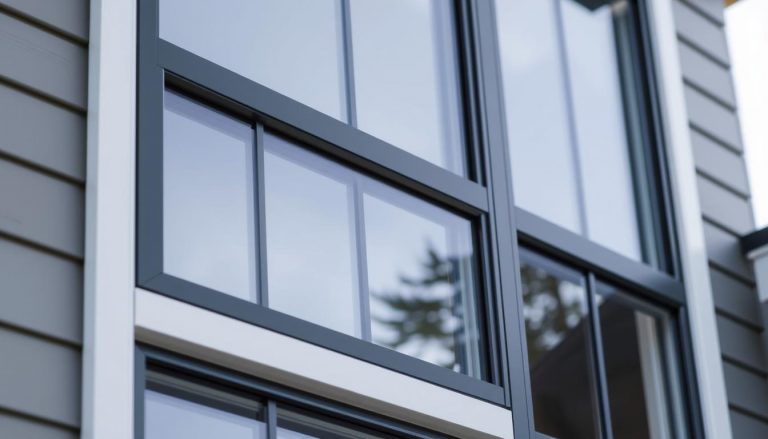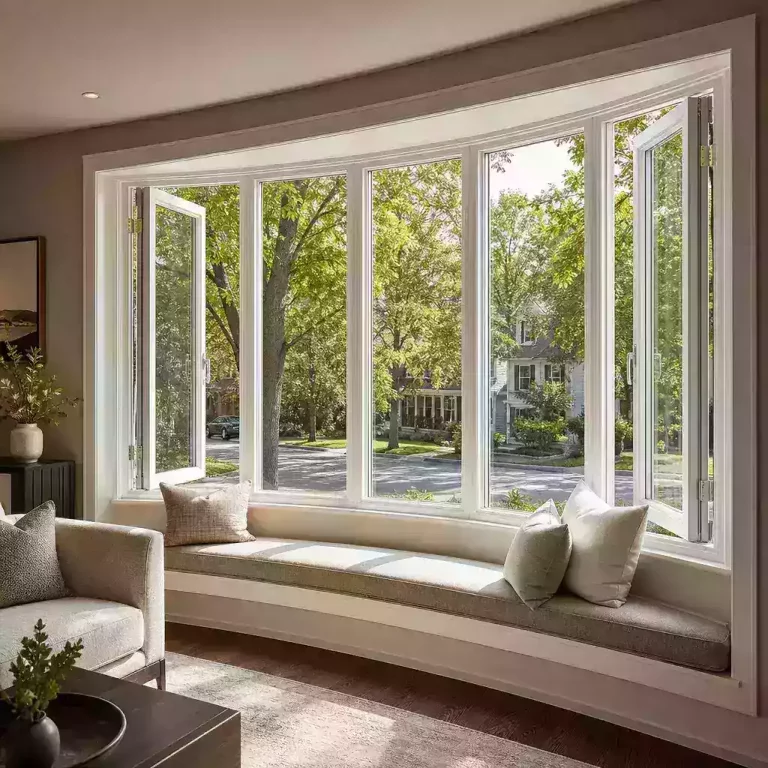


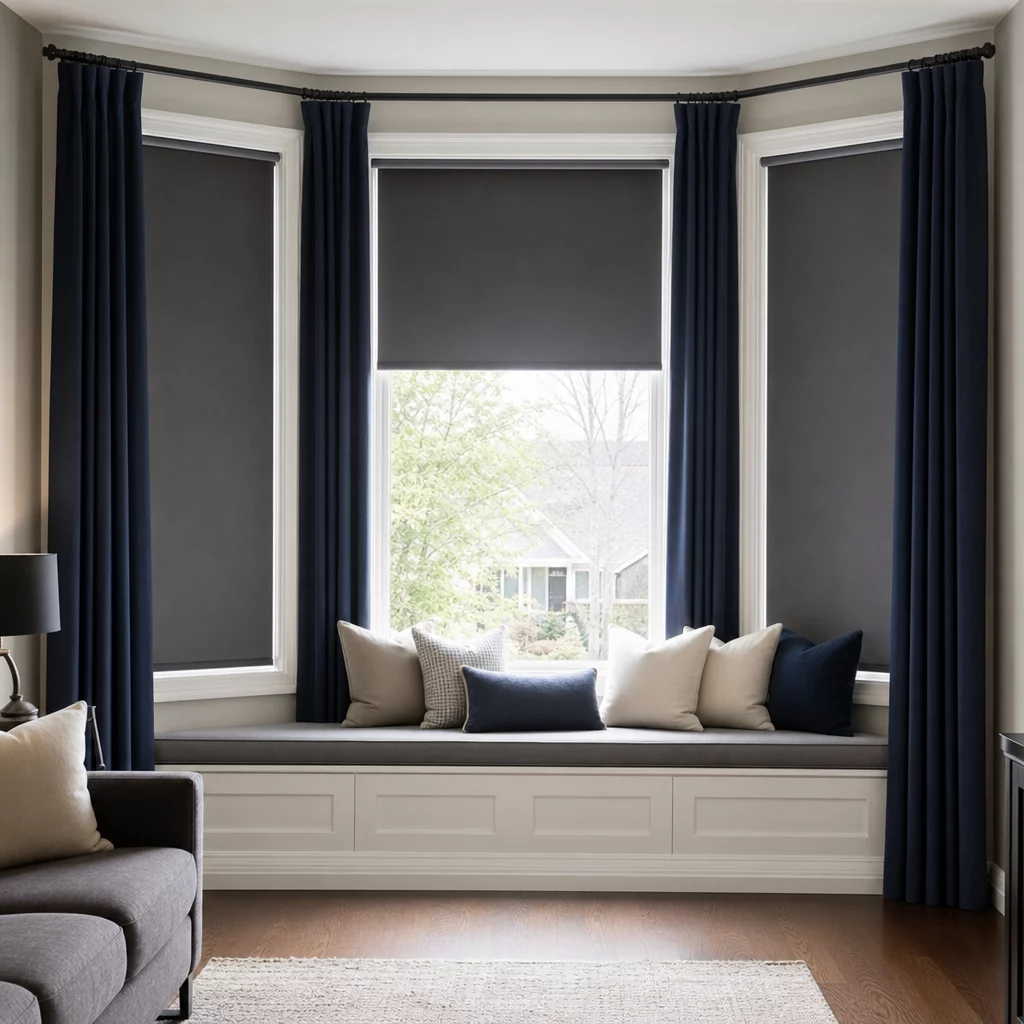
Blocking light from a bay window requires specialised solutions due to its unique angled structure. The most effective methods include custom-fitted blackout blinds, layered curtains with blackout lining, interior shutters, or magnetic blackout panels that conform to each section. Combining window film with traditional treatments provides maximum light control while maintaining the architectural appeal of your bay window installation.
Key takeaways
- Custom blackout solutions work better than standard curtains because bay windows have multiple angles that create light gaps if not properly fitted to each section
- Layering different materials—combining blackout roller blinds with thermal curtains—blocks 99% of incoming light whilst improving insulation by up to 25%
- Magnetic blackout panels offer temporary, damage-free solutions perfect for renters or those wanting flexibility in light control throughout different seasons
- Professional measurement is critical: even 2-3 cm gaps around bay window frames can allow significant light leakage that undermines your blackout efforts
- Interior shutters provide the longest-lasting blackout solution with an average lifespan of 20-30 years compared to 5-7 years for fabric treatments
Window and Doors Replacement Near Me
When should you blackout a bay window?
Several situations make blackout treatments necessary for bay windows. Shift workers who sleep during daylight hours need complete darkness to maintain healthy sleep patterns. Nurseries require controlled lighting to help infants establish proper sleep schedules. Home theatre rooms demand absolute darkness for optimal viewing experiences.
Seasonal considerations matter too. During Canadian summers, early sunrise can disrupt sleep as early as 5:30 AM. Winter months bring reflective snow glare that intensifies incoming light. If you notice sleep disruption, screen glare on televisions, or fading furniture fabrics near your bay windows, it’s time to consider blackout solutions.
Energy costs also factor into the decision. Blackout treatments reduce heat gain in summer and heat loss in winter. When your energy bills spike or rooms feel uncomfortably warm despite air conditioning, proper window treatments can cut cooling costs by 15-20%.
“Bay windows present unique challenges for light control because of their angled design. I always recommend measuring each section independently and treating them as separate windows for the best blackout results,” says Vitaly Shapiro, Vice President of Sales.
Find related services
Tools and materials you’ll need
Gathering the right supplies before starting ensures a smooth installation process. Your requirements will vary based on which blackout method you choose.
Basic tools:
- Tape measure (metal, minimum 5 metres)
- Pencil and notepad for recording measurements
- Level (60 cm or longer)
- Drill with assorted bits
- Screwdriver set (both flathead and Phillips)
- Ladder or step stool
- Stud finder for locating secure mounting points
Optional tools:
- Miter saw for cutting curtain rods
- Staple gun for fabric installations
- Sewing machine for DIY curtain modifications
- Heat gun for applying window film
Materials:
- Blackout fabric (minimum 200 GSM weight)
- Blackout roller blinds or cellular shades
- Curtain rods (curved or flexible for bay angles)
- Mounting brackets rated for window treatment weight
- Blackout window film
- Magnetic strips or Velcro tape
- Weatherstripping foam for gap sealing
- Screws and wall anchors
Explore energy-efficient options
Safety notes
Working with bay windows involves overhead installation and handling heavy materials. Always use a sturdy ladder with non-slip feet, positioned on level ground. Have someone spot you when drilling above shoulder height.
Wear safety glasses when drilling into walls or cutting materials. Bay window installations often require reaching awkward angles, so take breaks to avoid muscle strain. If your bay window is on an upper floor, never lean out of the window during installation.
Check for electrical wiring before drilling into walls, especially near older windows in heritage homes. Use a stud finder with wire detection capabilities. When working with heavy curtain rods or shutters, ensure brackets are anchored into studs, not just drywall.
Find the Best Window Styles for your Home
Step-by-step instructions
Time required: 3-6 hours, depending on method and bay window size
Step 1: Measure each bay window section accurately
Bay windows typically have three to five sections at different angles. Measure each section separately, recording width and height at three points (left, centre, right for width; top, middle, bottom for height). Use the smallest measurement to ensure proper fit.
Measure from the outside edge of the window frame for outside mounts, or inside the frame for inside mounts. Outside mounts provide better light blocking by overlapping the frame. Add 10-15 cm to width and 15-20 cm to height for adequate coverage and overlap.
Note the angle of each bay section. Standard bay windows have 30, 45, or 90-degree angles. This information is crucial when ordering custom bay window treatments or cutting materials.
Step 2: Choose your blackout method
Select the approach that matches your budget, aesthetic preferences, and permanence needs. Custom blackout blinds offer the cleanest look but cost more. Layered curtains provide flexibility and easier DIY installation. Magnetic panels work well for renters.
Consider your bay window’s architecture. Deep window seats benefit from shutters or blinds that don’t interfere with the seating area. Shallow bays work well with curtains. If your bay has unusual dimensions, custom solutions may be necessary.
Step 3: Install mounting hardware
Mark bracket positions using your level to ensure straight installation. For curtain rods, position brackets 5-10 cm above the window frame and 5-8 cm beyond each side. Use a stud finder to locate solid mounting points.
Drill pilot holes before inserting screws to prevent wall damage. For drywall installations without studs, use appropriate anchors rated for the weight of your window treatments. Heavy blackout curtains with rods can weigh 5-10 kg per section.
For bay windows with curved sections, flexible curtain rods or individual rods for each section work best. Ensure all brackets align at the same height for a professional appearance.
Step 4: Prepare blackout materials
If using fabric curtains, hem edges to prevent fraying. Add blackout lining to existing curtains by sewing or using iron-on adhesive. Ensure the lining extends to all edges without gaps.
For roller blinds, follow manufacturer assembly instructions carefully. Most require inserting the fabric tube into mounting brackets and adjusting tension. Test the rolling mechanism before final installation.
Cut magnetic blackout panels to match each window section, leaving 2-3 cm overlap on all sides. Attach magnetic strips to panel edges and corresponding metal strips to window frames.
Step 5: Install blackout treatments
Hang curtains starting from the centre section and working outward. Ensure fabric hangs straight without twisting. For layered window treatments, install sheers or blinds first, then blackout curtains.
Mount roller blinds by clipping the headrail into brackets. Check that the blind rolls smoothly without binding. Adjust side channels if light leaks around edges.
For shutters, attach hinges to the window frame first, then hang shutter panels. Adjust tension screws so shutters stay in position when opened or closed.
Step 6: Seal light gaps
Light leakage typically occurs at the top, sides, and between bay window sections. Apply weatherstripping foam along the window frame where curtains or blinds meet the wall. This creates a light-blocking seal.
Use Velcro strips to attach curtain edges to walls, eliminating side gaps. For the top gap above curtain rods, install a fabric valance or cornice board that extends forward to block light.
Between bay window sections, overlap treatments by at least 5 cm or use connecting clips designed for multi-section bay windows. Test in darkness to identify any remaining light leaks.
Step 7: Test and adjust
Wait until evening or create darkness by closing treatments during daytime. Enter the room and let your eyes adjust for 2-3 minutes. Even small light leaks become obvious in complete darkness.
Mark any problem areas with tape. Common issues include gaps where angled sections meet, space between blind and frame, or light penetrating around mounting brackets.
Make necessary adjustments by adding additional weatherstripping, extending fabric coverage, or repositioning hardware. Repeat the darkness test until satisfied with results.
“The biggest mistake homeowners make is treating a bay window like a single flat window. Each angled section needs individual attention to achieve true blackout conditions,” notes Eugene Siukayev, Project Manager.
Best window companies reviews
Common mistakes to avoid
| Mistake | How to Fix It |
|---|---|
| Using single measurements for entire bay window | Measure each section independently; windows often have slight variations that cause gaps if you assume uniform dimensions |
| Choosing standard straight curtain rods | Install flexible rods designed for bay windows or use individual rods for each section with connecting brackets |
| Ignoring gaps between angled sections | Overlap treatments by minimum 5 cm at section joints or use specially designed bay window connectors |
| Installing inside-mount treatments only | Use outside mounts that extend beyond the frame by 10-15 cm to prevent light leakage around edges |
| Forgetting to seal the top gap | Add a valance, cornice board, or ceiling-mounted track that eliminates the space above curtain rods |
| Using lightweight blackout fabric | Select fabric rated minimum 200 GSM (grams per square metre) or layer multiple treatments for effective light blocking |
Cost breakdown
Blackout solutions for bay windows vary significantly in price based on method, materials, and whether you hire professionals.
DIY costs:
- Blackout curtains with rods: $150-400 for standard bay window (3 sections)
- Roller blackout blinds: $200-500 depending on quality and customisation
- Magnetic blackout panels: $100-250 for DIY materials
- Window film: $50-150 plus $30-80 in application tools
- Combination approach (blinds plus curtains): $350-700
Professional installation costs:
- Custom blackout blinds installed: $600-1,200
- Plantation shutters: $1,200-2,500
- Motorised blackout shades: $1,500-3,000
- Professional curtain design and installation: $500-1,000
Factors affecting price:
- Bay window size (larger windows require more material and labour)
- Number of sections (five-section bays cost more than three-section)
- Fabric quality and brand (designer fabrics add $100-300)
- Automation features (motorised options double or triple costs)
- Custom vs. ready-made solutions
- Geographic location (urban areas typically charge 15-25% more for installation)
Budget-conscious homeowners can start with basic blackout curtains and upgrade later. Quality materials last longer, making them more cost-effective over time. Consider that energy-efficient window treatments can reduce heating and cooling costs by $100-200 annually.
DIY vs professional installation
Deciding between DIY and professional installation depends on your skills, available time, and the complexity of your bay window configuration.
When DIY is realistic:
- You have basic tool skills and own necessary equipment
- Your bay window has standard dimensions and angles
- You’re using ready-made curtains or blinds rather than custom solutions
- The window is on the ground floor with easy access
- You have 4-6 hours available for the project
- Budget constraints make professional installation impractical
Risks of DIY:
- Incorrect measurements leading to gaps and light leakage
- Improper mounting causing hardware failure or wall damage
- Uneven installation affecting appearance and function
- Voiding product warranties that require professional installation
- Time investment if you encounter unexpected complications
Benefits of DIY:
- Save $200-800 on installation labour costs
- Complete flexibility in timing and approach
- Satisfaction of completing the project yourself
- Ability to make adjustments as needed
- Learn skills applicable to future home improvement projects
When to hire professionals:
- Your bay window has unusual angles or custom dimensions
- You’re installing heavy treatments like plantation shutters
- The window is on an upper floor requiring special equipment
- You want motorised or smart home-integrated solutions
- Previous DIY attempts have failed to achieve adequate blackout
- You lack tools, time, or confidence for proper installation
Benefits of professional installation:
- Guaranteed proper fit and function
- Warranty coverage for both products and installation
- Expert advice on best solutions for your specific window
- Faster completion (typically 2-3 hours vs. full day DIY)
- Professional-grade results with clean, even appearance
Risks of hiring professionals:
- Higher upfront costs
- Scheduling constraints and waiting periods
- Varying quality between contractors
- Less control over specific installation details
Many homeowners find success with a hybrid approach: purchasing quality materials themselves and hiring professionals only for installation. This saves money whilst ensuring proper fitting. When selecting contractors, verify they have specific experience with bay window treatments and request photos of previous work.
“For complex bay window configurations, professional measurement alone is worth the investment. A 2 cm measurement error multiplied across five window sections creates significant problems that waste time and materials,” explains Alexandr Naumov, Project Manager.
Take the next step towards better sleep and comfort
Blacking out your bay window transforms your space into a comfortable retreat with controlled lighting suited to your lifestyle. Whether you choose DIY curtains, professional shutters, or a layered approach, proper installation ensures years of improved sleep quality and reduced energy costs. Start by measuring your bay window sections today, then explore our complete range of window solutions to find the perfect complement to your blackout treatments. Our team at Total Home Windows and Doors can help you select energy-efficient windows that work seamlessly with your chosen light control methods.
Can you put blackout blinds on bay windows?
Yes, blackout blinds work excellently on bay windows when properly fitted to each angled section. Custom-fitted roller blinds or cellular shades provide the best results. Mount them inside each window frame or use outside mounts with side channels to eliminate light gaps around edges.
What is the best way to cover a bay window for privacy?
Layered treatments combining sheer curtains for daytime privacy with blackout curtains for complete coverage offer maximum flexibility. Alternatively, top-down bottom-up cellular shades let you lower coverage from the top whilst maintaining light entry above. Interior shutters provide adjustable privacy with lasting durability.
How do you make blackout curtains for bay windows?
Measure each bay section separately and cut blackout fabric 20 cm wider and taller than measurements. Sew side hems and add blackout lining. Install grommets or rod pockets at the top. Use flexible bay window rods or individual rods per section, ensuring fabric overlaps between sections by 5-8 cm.
Do blackout curtains work without side channels?
Blackout curtains reduce light significantly without side channels but allow some leakage around edges. Adding Velcro strips to attach curtain sides to walls or using wrap-around rods improves effectiveness. For complete darkness, side channels or overlapping installation methods are necessary to eliminate all light penetration.
How much does it cost to blackout a bay window in Canada?
DIY blackout solutions for standard three-section bay windows cost $150-400 for curtains or $200-500 for blinds. Professional installation with custom treatments ranges from $600-1,200 for blinds to $1,200-2,500 for shutters. Motorised options increase costs to $1,500-3,000 depending on automation features selected.