


If your brand-new windows are letting in cold air and ants, they were not installed correctly. That is not a window problem; it is a workmanship problem. And it is more common than most homeowners realise.
This article is based on a real project assessed by Cherry Jian and managed by the Total Home Windows and Doors team in the Greater Toronto Area. Technical details about window installation standards reflect current industry practice as of July 2026.
Key Takeaways
- Improper window installation leaves gaps in the building envelope that allow cold air, moisture, and pests to enter regardless of how new the windows are.
- Cold draughts near a window frame after installation are a clear sign of a sealing problem, not a product defect.
- A proper installation includes flashing, insulating foam, and exterior caulk around every opening, not just the window unit itself.
- Total Home Windows and Doors manufactures and installs its own ENERGY STAR™ certified vinyl windows, so the same company that builds the product is accountable for how it goes in.
- Total Home holds a 4.9/5 Google rating and a 5/5 Homestars rating, and is a four-time Homestars Best of the Best winner.
Window and Doors Replacement Near Me
Brand-New Windows That Were Not Keeping the Cold Out
The homeowner had just bought the house. The listing had noted recent window replacements, which seemed like a plus. One less thing to worry about.
Then winter came.
The draught near the living room window was subtle at first, the kind of thing you blame on the thermostat. But it persisted. Standing close to the frame on a cold morning, you could feel it clearly: outside air moving through, steady and cold, in a room with windows that were supposedly less than two years old.
Then the ants appeared.
Not many at first, then more. They were coming in around the window frames, finding their way through gaps that should not have existed. The homeowner called a pest control company. The pest control company treated the problem but was honest about the source: the entry points were structural. The windows needed to be looked at properly.
That was when they called Total Home.
Find related services
What the Inspection Found
Cherry Jian arrived to do the assessment. What she found was not a window quality problem; the units themselves were a standard product. The problem was everything around them.
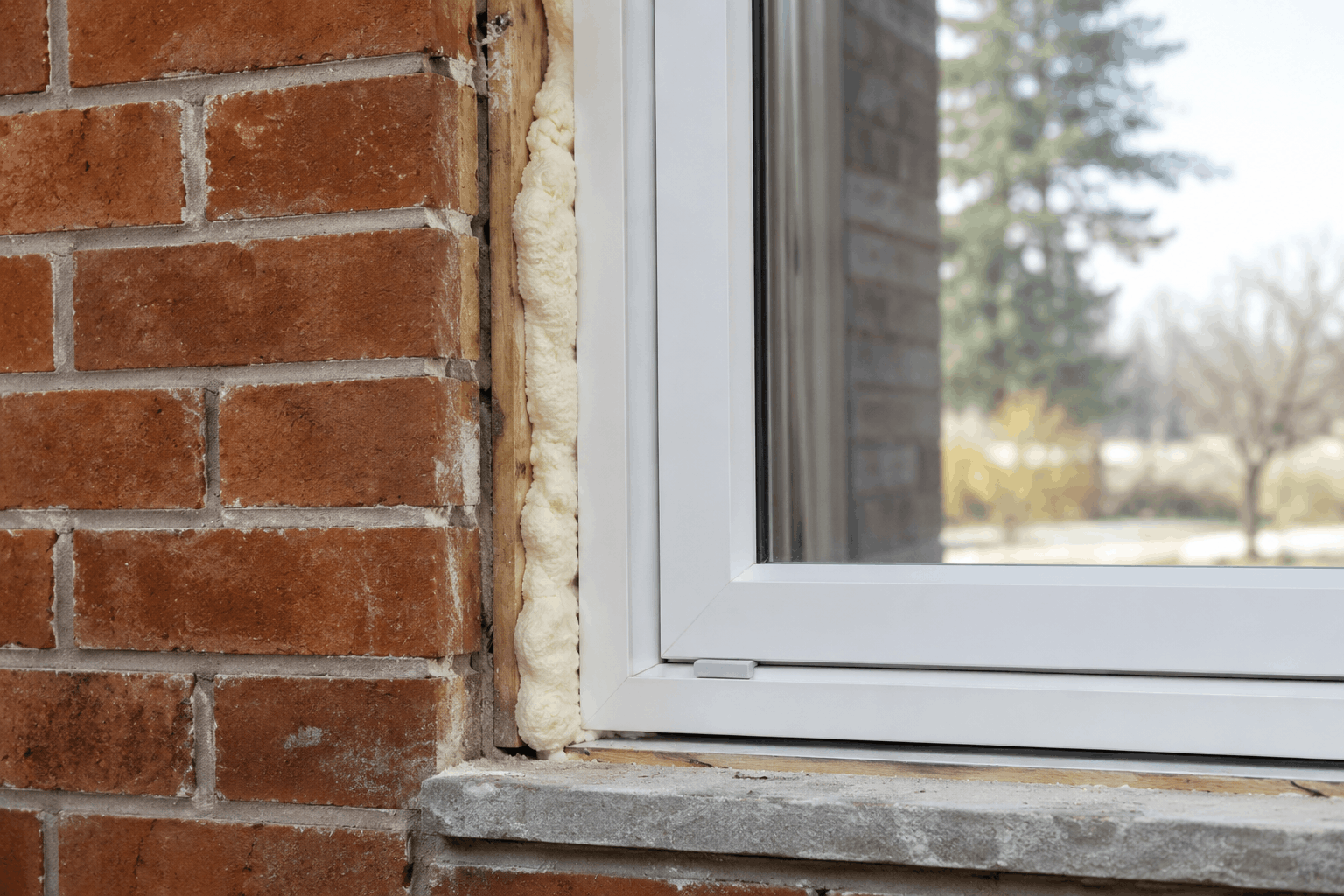
The installation had been done without proper flashing on the exterior, the foam insulation around the frames was incomplete in several spots, and the exterior caulk had been applied too thinly and had already begun to separate in places. These were not subtle errors. They were the kind of gaps that let cold air through in January and give ants a clear path in spring.
“The windows themselves were fine. The problem was that they had been dropped into the openings without properly sealing the rough frame around them. A window is only as good as its installation. You can put a quality product in a poorly prepared opening and it will underperform from day one.”Cherry Jian, Sales Consultant
Cherry explained the situation clearly: the existing units could not simply be re-sealed from the outside. The installation needed to be redone correctly. That meant removing the windows, preparing the rough openings properly, and reinstalling with full flashing, correct foam fill, and a proper exterior seal.
The homeowner had eight windows affected. They agreed to proceed.
Explore energy-efficient options
The Fix
Total Home’s crew removed all eight windows, assessed each rough opening, and corrected the preparation work that had been skipped the first time. New ENERGY STAR™ certified double-hung vinyl windows went in with flashing at the sill and head, foam insulation that filled the cavity properly, and exterior caulk applied in conditions that allowed it to cure correctly.
The pest control company came back after installation to treat any remaining colony activity and confirmed the entry points were now sealed.
The homeowner noticed the difference the first cold week after the job was done. No draught. No movement of air near the frames. The rooms held temperature in a way they simply had not before, even with the previous “new” windows in place.
They left a five-star review. Shortly after, a neighbour on the same street reached out: they had heard about the project and had questions about their own windows.
“We see this more often than people expect. A homeowner inherits windows that look fine on the surface, and it takes a winter to realise something was done wrong. The product is not always the issue. How it was put in is.”Alexandr Naumov, Project Manager
Find the Best Window Styles for your Home
How to Tell If Your Windows Were Installed Correctly
You do not need to pull a window out to spot installation problems. These are the signs worth paying attention to:
- Cold air near the frame, not the glass. If the draught is coming from around the edge of the window rather than through the glass, the seal between the unit and the rough opening has failed.
- Condensation on the interior frame. Surface condensation on the frame (not the glass) can indicate that cold air is bypassing the insulation inside the wall cavity.
- Insects finding their way in near window corners. Ants, earwigs, and similar pests follow temperature gradients. A gap that admits cold air will admit insects too.
- Visible daylight around the frame interior. In a dark room, look at the perimeter of the frame from inside. Any light coming through the wall means there is a gap.
- Caulk that is already cracking or separating. Exterior caulk applied in poor conditions or too thinly will fail within a year or two. Check the exterior perimeter of every window.
If you are seeing any of these on windows that are supposed to be new or recently replaced, the issue is almost certainly installation, not the product itself. An inspection will confirm it quickly.
Best window companies reviews
Why It Matters Who Installs Your Windows
Total Home manufactures its own ENERGY STAR™ certified vinyl windows and installs them using its own crews. That means the company that builds the product is the same company that puts it in. There is no contractor handoff, no subcontractor working to a different standard, and no split accountability when something needs to be addressed.
A window that is ENERGY STAR™ certified will perform to its rating only when the installation meets the same standard. Correct installation is not a bonus; it is the prerequisite for everything the product promises.
If you have windows that are underperforming and you are not sure why, a site visit is the fastest way to find out. Get a Free Quote and a Total Home consultant will inspect what you have, explain what they find, and give you a clear picture of what it would take to fix it properly.
Frequently Asked Questions
Yes. The window unit itself can be perfectly good while the installation leaves gaps between the frame and the rough opening. These gaps allow cold air and moisture to bypass the window entirely, which is why installation quality matters as much as product quality.
Ants follow temperature differentials and find entry points where there are gaps in the building envelope. If they are appearing around window frames, it is almost always a sign that the seal between the window and the rough opening is incomplete. Treating the pest problem without addressing the gap will not solve it permanently.
Sometimes, if the gap is limited to the exterior caulk line. But if the flashing or the foam fill inside the wall cavity was done incorrectly, exterior caulk alone will not solve the problem. An inspection will confirm whether a surface repair is enough or whether the window needs to come out and be reinstalled properly.
Total Home primarily installs its own ENERGY STAR™ certified vinyl windows, which it manufactures at its GTA facility. If you have an inspection concern about existing windows from another manufacturer, contact us and we can discuss the options.
For a typical job like the eight-window project in this story, Total Home’s crew completes the work in one day. The standard lead time from consultation to installation is four to six weeks.


