

Cutting an egress window in your Canadian home typically costs between $3,500 and $7,000, including materials, labour, and installation. This price covers cutting through your foundation or wall, installing the window unit, creating a window well, and ensuring compliance with National Building Code requirements. The final cost depends on your foundation type, window size, accessibility, and whether structural modifications are needed. Homeowners in the GTA can expect prices at the higher end due to labour rates and permit costs, while the investment significantly improves basement safety and home value.
Cost Breakdown for Egress Window Installation
| Component | Average Cost | Installed Cost | Best For |
|---|---|---|---|
| Basic Egress Window Kit | $1,200–$2,000 | $3,500–$5,000 | Simple concrete foundations |
| Mid-Range Installation | $2,000–$3,500 | $5,000–$6,500 | Most basement bedrooms |
| Premium Custom Setup | $3,500–$5,000 | $6,500–$10,000+ | Complex structural work |
The total investment for egress window installation varies based on several factors. Most Canadian homeowners spend around $5,500 for a complete installation that meets code requirements. This includes the window itself, excavation, concrete cutting, window well, gravel drainage, and professional installation.
When you replace old window frames with proper egress units, you’re not just adding an escape route—you’re transforming your basement into legal living space. This upgrade can increase your home’s market value by $10,000 to $20,000, making it a worthwhile investment for many homeowners.
Window and Doors Replacement Near Me
Egress Window Costs by Type and Configuration
Basic Egress Window Setup
Cost: $3,500–$5,000
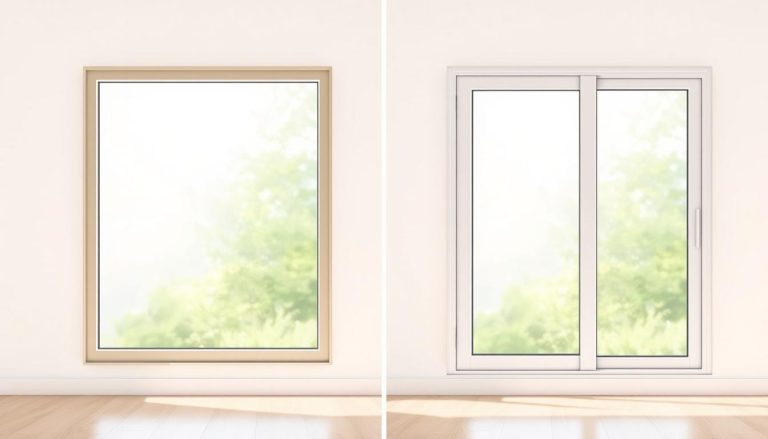
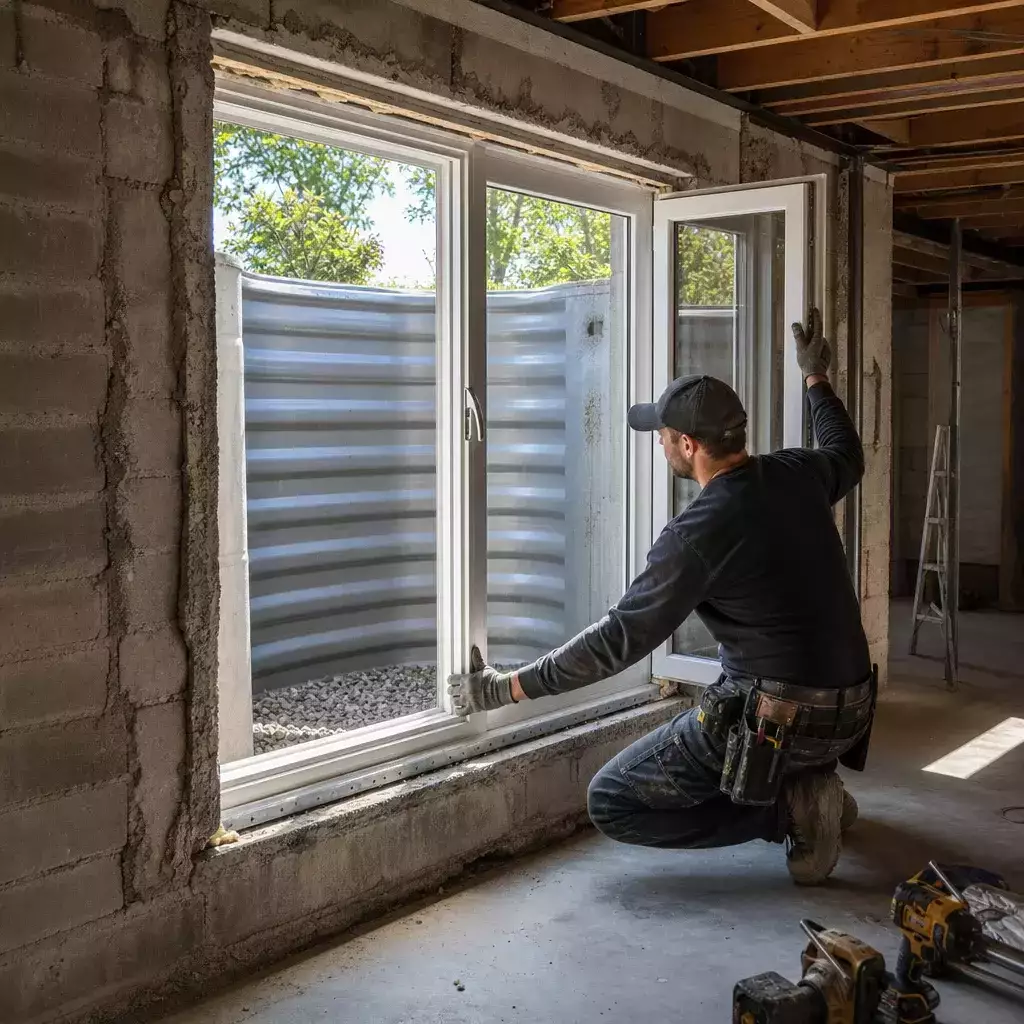
A basic egress window installation includes a standard sliding window or single casement unit measuring approximately 41 inches wide by 38 inches tall. This configuration meets minimum code requirements for basement bedrooms. The package typically includes a steel window well, basic gravel drainage, and straightforward installation in poured concrete foundations.
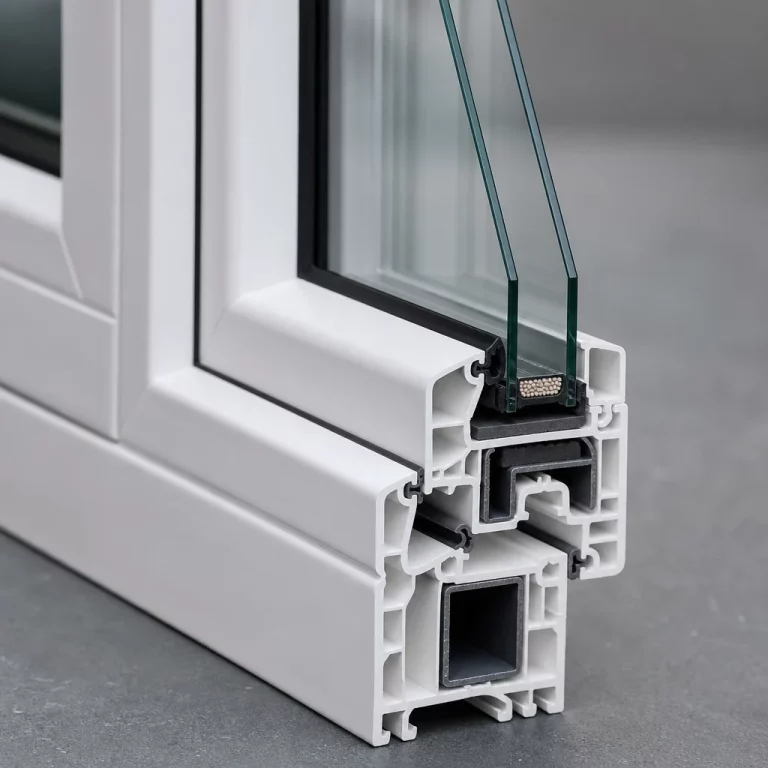
Most contractors recommend vinyl-framed windows for basic setups due to their durability and moisture resistance. These windows feature ENERGY STAR™ certified double-pane glass that helps maintain comfortable basement temperatures year-round.
Mid-Range Egress Window Installation
Cost: $5,000–$6,500
Mid-range installations offer enhanced features and better aesthetics. These typically include larger casement windows with superior energy efficiency ratings, reinforced window wells with built-in steps, and improved drainage systems. The windows often feature Low-E coatings and argon gas fills for maximum insulation.
This price range also covers installations requiring moderate structural work, such as cutting through block foundations or dealing with challenging soil conditions. Many homeowners choose this option when creating basement bedroom egress windows that need to blend with existing home architecture.
Vitaly Shapiro, Vice President of Sales, explains: “We see homeowners getting the best value in the mid-range category. You get quality windows that will last 20-plus years, proper drainage that prevents water issues, and installation that meets all safety codes without unnecessary extras.”
Premium and Custom Egress Window Options
Cost: $6,500–$10,000+
Premium installations involve complex structural modifications, custom window sizes, or high-end materials. This category includes situations where load-bearing walls require steel beam installation, stone foundations need specialized cutting equipment, or homeowners want aluminum windows with architectural glass.
Custom configurations might feature oversized windows that exceed code minimums, multiple window combinations, or installations requiring extensive landscaping restoration. These projects often include decorative window wells with stone finishes, built-in covers, and sophisticated drainage systems connecting to weeping tile.
What Affects Egress Window Installation Costs?
Foundation Type and Material
Your foundation material significantly impacts cutting costs. Poured concrete foundations are easiest to cut, typically adding $800–$1,200 to your project. Block foundations require more careful work to prevent cracking, costing $1,000–$1,500. Stone foundations present the biggest challenge, potentially adding $2,000–$3,500 due to specialized equipment and labour requirements.
Older homes with rubble stone foundations may need additional reinforcement around the opening, increasing both material and labour costs substantially.
Window Size and Dimensions
Code-compliant egress windows must provide a minimum opening of 3.8 square feet, with no dimension less than 15 inches. Most contractors recommend windows measuring 44 inches wide by 42 inches tall for comfortable egress. Larger openings require more extensive cutting and structural support, adding $500–$1,500 to the base price.
The relationship between window size and cost isn’t linear—a window 20% larger doesn’t cost 20% more. However, oversized units do require heavier-duty window wells and more complex installation procedures.
Excavation and Site Accessibility
Excavation costs vary based on soil conditions and site access. Simple excavations in sandy soil with easy equipment access cost $500–$800. Clay soil or tight spaces requiring hand digging can push costs to $1,200–$2,000. Properties with underground utilities, landscaping features, or limited access may incur additional charges of $500–$1,000.
Winter installations in frozen ground can add 15–25% to excavation costs, making spring and summer the most economical seasons for this work.
Window Well Configuration and Drainage
Standard galvanized steel window wells cost $200–$400, while composite or stone-faced wells range from $400–$800. All egress window wells require proper drainage to prevent water infiltration. Basic gravel drainage adds $150–$300, while systems connecting to existing weeping tile or requiring sump pump installation cost $500–$1,200.
Window well covers, which prevent debris accumulation and improve safety, add another $150–$400 depending on material and size.
Alexandr Naumov, Project Manager, notes: “Proper drainage is non-negotiable. We’ve seen too many DIY jobs where homeowners skipped adequate drainage to save $300, then spent $3,000 fixing water damage six months later. It’s always cheaper to do it right the first time.”
Structural Modifications and Permits
Many egress window installations require structural modifications beyond simple cutting. If your window opening intersects with load-bearing elements, you’ll need steel or engineered wood headers, adding $800–$2,500 to your project. Homes with finished basements require drywall removal, insulation work, and refinishing, potentially adding $500–$1,500.
Building permits for egress windows in Ontario typically cost $150–$400, depending on your municipality. Some jurisdictions require separate permits for excavation, electrical work, and structural modifications. Factor in inspection fees of $100–$200 per visit, with most projects requiring two to three inspections.
Energy Efficiency Features
While basic double-pane windows meet code requirements, upgrading to triple-pane windows with advanced Low-E coatings adds $300–$600 per window. These upgrades make sense in Canadian climates, reducing heating costs and improving comfort. Windows with argon gas fills provide superior insulation at a modest premium of $100–$200.
ENERGY STAR™ certified windows qualify for some utility rebates and government programs, potentially offsetting 10–15% of your window costs. Check current window rebate programs in Ontario before finalizing your purchase.
Labour Costs by Region
Labour rates vary significantly across Canada. GTA contractors typically charge $75–$125 per hour, while smaller cities like Kingston or London see rates of $60–$90 per hour. A complete egress window installation requires 16–24 hours of labour, including cutting, installation, and finishing work.
Experienced contractors specializing in cut-out services may charge premium rates but complete work faster with fewer complications. Their expertise often saves money by avoiding costly mistakes and ensuring first-time code compliance.
Explore energy-efficient options
Detailed Cost Components Breakdown
| Cost Component | Low End | Average | High End |
|---|---|---|---|
| Window Unit (vinyl) | $400 | $650 | $1,200 |
| Foundation Cutting | $800 | $1,200 | $2,500 |
| Excavation | $500 | $900 | $1,800 |
| Window Well | $200 | $400 | $800 |
| Drainage System | $150 | $400 | $1,200 |
| Installation Labour | $1,200 | $1,800 | $3,000 |
| Permits & Inspections | $150 | $300 | $600 |
| Finishing Work | $200 | $450 | $900 |
Find the Best Window Styles for your Home
How to Reduce Egress Window Installation Costs
1. Time Your Project Strategically
Schedule your installation during contractor off-seasons, typically late fall or early spring (avoiding frozen ground). Many contractors offer 10–15% discounts during slower periods. Avoid emergency installations, which can cost 25–40% more than planned projects.
Combining your egress window installation with other window replacement projects often yields volume discounts of 5–10% on materials and labour.
2. Choose Standard Sizes and Configurations
Standard egress window sizes cost significantly less than custom units. A 44-inch by 42-inch window is readily available and meets all code requirements. Custom sizes can add $200–$500 to window costs alone, plus additional installation complexity.
Opt for standard window well sizes that match your window dimensions. Pre-fabricated wells are more affordable and easier to install than custom-built alternatives.
3. Handle Preparatory Work Yourself
If you’re handy, you can reduce costs by handling some preparatory tasks. Remove interior finishes, clear the work area, and handle landscaping restoration yourself to save $300–$800. However, leave foundation cutting, structural work, and window installation to licensed professionals.
Never attempt to cut concrete foundations yourself—this requires specialized equipment and expertise to avoid structural damage.
4. Select Cost-Effective Materials
Vinyl windows offer excellent value for egress applications, costing 20–30% less than fiberglass alternatives while providing comparable performance. Galvanized steel window wells perform just as well as decorative options at half the price. You can always upgrade aesthetics later with paint or covers.
Focus your budget on critical elements like proper drainage and ENERGY STAR™ certified glazing, which provide long-term value through energy savings and durability.
5. Get Multiple Detailed Quotes
Obtain at least three written quotes from licensed contractors. Quotes should itemize all costs, including materials, labour, permits, and potential additional charges. Be wary of quotes significantly below market rates—they often indicate inexperienced contractors or hidden costs.
Ask contractors about their experience with egress window requirements for Ontario residents and request references from recent projects. Quality installation prevents costly repairs and ensures code compliance.
Best window companies reviews
Understanding Code Requirements and Their Cost Implications
Ontario Building Code mandates specific egress window requirements for basement bedrooms. Windows must provide a minimum 3.8 square feet of unobstructed opening, with no dimension less than 15 inches. The window sill cannot be more than 60 inches above the floor, and the window must be operable from the inside without tools or special knowledge.
Meeting these requirements affects costs in several ways. Larger openings require more cutting and structural support. Lower sill heights may necessitate additional excavation depth. Operable mechanisms must function smoothly, which impacts window quality and price.
Many homeowners discover their existing basement windows don’t meet current code when finishing basements or adding bedrooms. Upgrading to compliant egress windows is mandatory for legal bedroom designation and affects home insurance and resale value.
Comparing DIY vs. Professional Installation
While DIY egress window installation might seem cost-effective, it’s rarely advisable. Professional installation ensures code compliance, proper waterproofing, and structural integrity. DIY mistakes can cost $2,000–$5,000 to correct, negating any initial savings.
Professional contractors carry liability insurance covering potential damage to your foundation, utilities, or property. They also guarantee their work, typically offering 1–5 year warranties on installation. These protections are invaluable when cutting into your home’s foundation.
Consider the tools required for proper installation: concrete saws, excavation equipment, levels, and safety gear. Renting these tools for a single project costs $400–$800, approaching the labour savings of DIY work.
Long-Term Value and Return on Investment
Egress window installation typically returns 50–75% of its cost in increased home value. Converting non-conforming basement space into legal bedrooms can add $10,000–$25,000 to your home’s market value, depending on your location and housing market.
Beyond resale value, egress windows provide immediate benefits. They dramatically improve basement natural light, making spaces more livable and reducing electricity costs. Proper ventilation reduces moisture and mould risks, protecting your home’s structure and indoor air quality.
Energy-efficient egress windows can reduce heating costs by $150–$300 annually compared to old, leaky basement windows. Over a 20-year lifespan, this adds up to $3,000–$6,000 in savings, offsetting a significant portion of installation costs.
Choosing the Right Contractor for Your Project
Selecting a qualified contractor is crucial for egress window success. Look for contractors with specific experience in foundation cutting and egress installations. Request proof of liability insurance and WSIB coverage to protect yourself from potential claims.
Check contractor credentials through the Better Business Bureau and online review platforms. Total Home Windows and Doors maintains BBB A+ accreditation, Google rating of 4.9, and Homestars rating of 5.0, demonstrating consistent quality and customer satisfaction.
Ask potential contractors these key questions:
- How many egress window installations have you completed in the past year?
- Can you provide references from recent egress window projects?
- What warranty do you offer on installation work?
- How do you handle unexpected issues like hidden utilities or structural complications?
- Will you obtain all necessary permits and arrange inspections?
A reputable contractor provides detailed written estimates, explains the installation process thoroughly, and addresses your concerns professionally. They should also discuss options for energy-efficient windows that suit your climate and budget.
Additional Costs to Consider
Beyond the basic installation, several additional costs may apply to your project. Interior finishing work, including drywall repair, painting, and trim installation, typically adds $300–$800. If your egress window installation reveals mould, water damage, or structural issues, remediation costs can range from $500–$3,000.
Landscaping restoration around the window well costs $200–$600, depending on the complexity of your existing landscape. Some homeowners invest in decorative window well liners or grates, adding $150–$400 to the project.
If your project requires temporary support during cutting, shoring costs add $300–$800. Electrical work to add outlets near the window or improve basement lighting runs $200–$500. Always budget an additional 10–15% contingency for unexpected expenses.
Maintenance and Long-Term Ownership Costs
Properly installed egress windows require minimal maintenance but do need regular attention. Annual window well cleaning takes 30 minutes and prevents drainage issues. Check and clean window well covers quarterly to ensure they function properly during emergencies.
Inspect window seals and weatherstripping annually, replacing worn components every 5–7 years at a cost of $50–$100. Clean window wells of leaves and debris each fall to maintain proper drainage. These simple maintenance tasks prevent costly water damage and ensure your egress window remains functional.
Budget $100–$200 annually for window maintenance, including cleaning, minor repairs, and occasional caulking. This modest investment protects your initial installation cost and maintains your home’s safety features.
Making Your Egress Window Investment Count
When planning your egress window project, prioritize quality over cost savings. A properly installed egress window lasts 25–30 years, making the cost per year quite reasonable. Cutting corners on installation or materials leads to water infiltration, structural issues, and potential safety failures.
Work with experienced professionals who understand local building codes and installation best practices. Total Home Windows and Doors specializes in egress window installations throughout the GTA, offering ENERGY STAR™ certified windows with the TotalSeal Multi-Point Locking System for enhanced security and energy efficiency.
Consider your egress window as both a safety feature and a home improvement investment. It transforms your basement into valuable living space, improves your home’s energy efficiency, and provides peace of mind knowing your family has a safe emergency exit. When you factor in these benefits alongside the financial return, egress window installation represents one of the smartest investments you can make in your Canadian home.
Frequently Asked Questions (FAQ)
Do I need a permit to install an egress window in Ontario?
Yes, egress window installations require building permits in most Ontario municipalities. Permits ensure code compliance and typically cost $150–$400. Professional contractors handle permit applications and arrange mandatory inspections.
How long does egress window installation take?
Most egress window installations take 2–3 days to complete. Day one involves cutting and excavation, day two covers window installation and drainage, and day three handles finishing work. Weather and complications can extend timelines.
Can I install an egress window in a finished basement?
Yes, but it requires removing interior finishes around the installation area. This adds $300–$800 to your project for drywall removal, insulation work, and refinishing. Plan for temporary disruption to your finished space.
What’s the difference between egress window costs in concrete vs. block foundations?
Poured concrete foundations cost $800–$1,200 to cut, while block foundations run $1,000–$1,500. Block requires more careful cutting to prevent cracking. Stone foundations cost significantly more at $2,000–$3,500 due to specialized equipment needs.
Are there government rebates available for egress window installation?
While egress windows themselves don’t typically qualify for rebates, choosing ENERGY STAR™ certified windows may qualify for energy efficiency programs. Check provincial and utility rebate programs, which can offset 10–15% of window costs.