

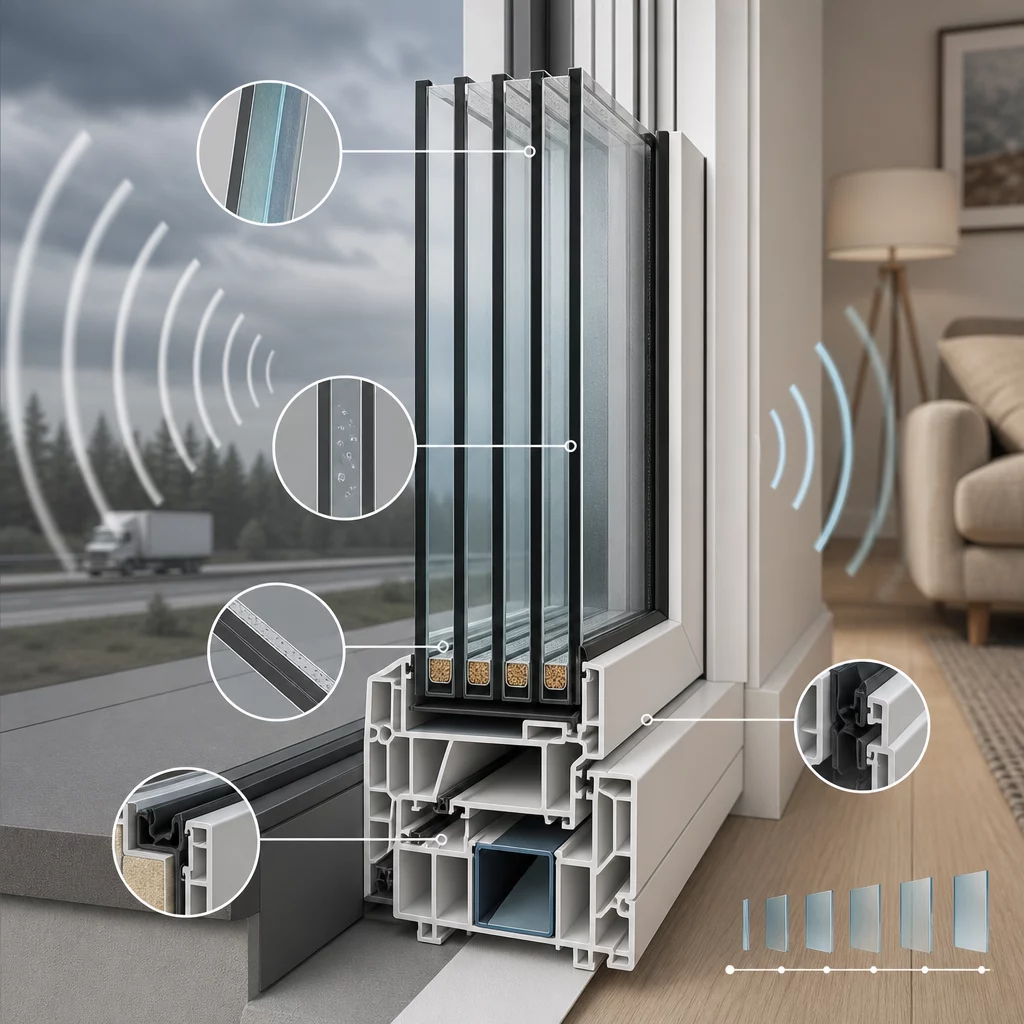
Sound Transmission Class (STC) rating measures how effectively a building element—such as windows, doors, or walls—blocks airborne sound from passing through. The higher the STC rating, the better the sound insulation performance. For Canadian homeowners, understanding STC ratings helps you choose energy-efficient windows and doors that not only reduce energy costs but also create a quieter, more comfortable living environment by minimizing traffic noise, neighbourhood sounds, and outdoor disturbances.
Key takeaways
- STC ratings quantify sound blocking ability, with higher numbers indicating superior noise reduction
- Residential windows typically range from STC 26 to STC 48, depending on glass type and construction
- Multi-pane windows with laminated glass and gas fills achieve the highest STC performance
- Proper installation and weatherstripping significantly impact actual sound transmission levels
- Combining high-STC windows with quality doors creates comprehensive noise control solutions
Window and Doors Replacement Near Me
How does the STC rating system measure sound reduction?
The STC rating system evaluates sound transmission loss across 16 standard frequencies, from 125 Hz to 4000 Hz. Testing occurs in controlled laboratory conditions where sound is generated on one side of a partition and measured on the opposite side. The difference between these measurements determines the transmission loss at each frequency.
A standardized curve-fitting process then produces a single STC number that represents overall acoustic performance. This measurement follows protocols established by the American Society for Testing and Materials (ASTM E413), ensuring consistency across manufacturers and product types. For homeowners selecting vinyl windows, this standardized approach simplifies comparison shopping.
“When clients ask about noise reduction, I always explain that STC ratings provide an objective benchmark. A window rated STC 35 blocks approximately 35 decibels of sound, making normal speech from outside barely audible inside. This matters tremendously for homes near busy streets or airports.” — Vitaly Shapiro, Vice President of Sales
What STC ratings should Canadian homeowners target?
Different living situations demand different acoustic performance levels. Urban homes facing major roads benefit from STC 40+ ratings, while suburban properties may function well with STC 30-35. The table below illustrates what various STC ratings mean for real-world sound perception.
| STC Rating | Sound Reduction Performance | Ideal Application |
|---|---|---|
| 25-27 | Normal speech clearly understood | Quiet rural areas |
| 28-30 | Loud speech audible but not intelligible | Low-traffic residential zones |
| 31-35 | Loud speech heard as murmur | Standard suburban homes |
| 36-40 | Loud speech barely audible | Moderate traffic areas |
| 41-45 | Loud speech not heard | Urban environments |
| 46+ | Very loud sounds barely perceptible | High-noise locations |
Matching your window selection to your specific noise environment ensures you invest appropriately. Overspending on excessive sound reduction wastes money, while underestimating needs leads to ongoing frustration. Consider conducting a simple noise assessment during peak traffic hours before finalizing your window replacement specifications.
Which window features increase STC performance?
Several design elements work together to enhance acoustic insulation. Understanding these components helps you make informed decisions when comparing products from different manufacturers.
Glass thickness and lamination
Thicker glass naturally blocks more sound than thinner alternatives. However, laminated glass—which sandwiches a sound-dampening interlayer between two glass panes—outperforms standard glass of equal thickness. This interlayer absorbs vibrations that would otherwise transmit sound waves. Many double-pane windows incorporate laminated glass in one or both panes for optimal results.
Air space and gas fills
The gap between glass panes significantly affects sound transmission. Wider air spaces generally provide better acoustic separation, though diminishing returns occur beyond certain widths. Filling this space with dense gases like argon or krypton further improves performance. These same features that enhance argon gas window thermal efficiency also contribute to superior sound blocking.
Asymmetric pane construction
Using different glass thicknesses for inner and outer panes disrupts sound wave resonance. This asymmetry prevents the sympathetic vibration that occurs when identical panes face each other. A configuration combining 6mm outer glass with 4mm inner glass typically outperforms symmetrical 5mm/5mm arrangements at the same total thickness.
“I’ve seen homeowners amazed at the difference proper window construction makes. We recently installed triple-pane windows with laminated glass for a client near Pearson Airport. The STC 48 rating reduced jet noise so dramatically that they could finally enjoy their backyard again.” — Daniel Klein, Project Manager
Find the Best Window Styles for your Home
How do different window types compare for sound control?
Window operating style affects acoustic performance independently of glass specifications. Fixed windows generally achieve the highest STC ratings because they lack moving parts and associated air gaps. The comparison below shows typical STC ranges for common window configurations.
| Window Type | Typical STC Range | Sound Control Notes |
|---|---|---|
| Fixed Windows | 38-48 | Best performance due to sealed construction |
| Casement Windows | 34-42 | Compression seals provide excellent closure |
| Double-Hung Windows | 28-36 | Meeting rails create potential air gaps |
| Slider Windows | 26-34 | Track systems allow some sound infiltration |
| Awning Windows | 32-40 | Good sealing when properly installed |
When noise reduction ranks as a top priority, combining picture windows for large viewing areas with strategically placed operable units for ventilation delivers optimal results. This approach maximizes acoustic performance while maintaining functionality.
Best window companies reviews
Why does installation quality matter for STC performance?
Even premium windows with excellent laboratory STC ratings underperform when poorly installed. Gaps around the frame, inadequate weatherstripping, and improper sealing create sound flanking paths that bypass the window’s acoustic barriers entirely.
Professional door installation and window fitting techniques include these critical steps:
- Precise rough opening measurements ensuring proper frame fit without excessive gaps
- Continuous bead of low-expansion foam insulation around the entire perimeter
- Interior and exterior caulking at all frame-to-wall junctions
- Proper compression adjustment of weatherstripping and gaskets
- Verification of square, level, and plumb alignment before final securing
These installation fundamentals apply equally whether you’re upgrading to aluminum windows or installing fiberglass doors. Skilled installers understand that the entire assembly—not just the window unit itself—determines final acoustic performance.
Can entry doors contribute to overall noise reduction?
Absolutely. Doors represent significant sound transmission points, particularly exterior doors facing streets or other noise sources. Quality entry doors with proper cores, weatherstripping, and threshold seals achieve STC ratings comparable to good windows.
Modern steel doors with polyurethane foam cores typically rate STC 30-35, while premium models reach STC 40+. The TotalSeal Multi-Point Locking System not only enhances security but also improves acoustic sealing by applying compression force at multiple points around the door perimeter. This creates a tighter seal than traditional single-point locks.
For maximum noise control, coordinate your door and window upgrades. Installing high-STC windows while leaving a poorly sealed door creates an acoustic weak point that undermines your investment. Consider patio doors with multi-pane glass and quality weatherstripping as part of a comprehensive approach.
What acoustic improvements complement high-STC windows?
Windows and doors form only part of your home’s sound envelope. Several complementary strategies enhance overall noise reduction:
- Install substantial window blinds or heavy curtains that absorb sound waves
- Add weatherstripping to attic hatches and other overlooked penetrations
- Ensure proper insulation in exterior walls, particularly around window rough openings
- Seal electrical outlets and switch boxes on exterior walls with acoustic putty pads
- Consider acoustic caulk for gaps where different building materials meet
These measures work synergistically with quality windows. Even modest improvements in secondary areas prevent sound flanking that bypasses your primary acoustic barriers. During home inspection processes, identifying these weak points helps prioritize upgrades.
How do STC ratings relate to energy efficiency?
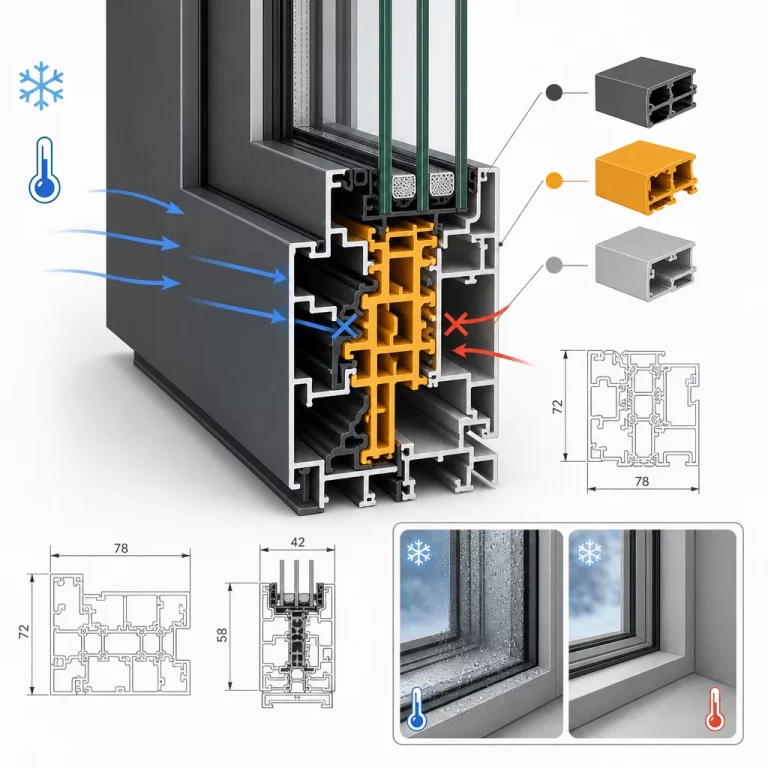
Interesting overlap exists between acoustic and thermal performance. Many features that block sound also prevent heat transfer. Multi-pane construction, gas fills, and quality weatherstripping all contribute to both objectives. However, the relationship isn’t perfectly linear.
ENERGY STAR™ certified windows prioritize thermal metrics like U-factor and Solar Heat Gain Coefficient. While these products generally offer decent sound control, acoustic performance isn’t part of ENERGY STAR™ certification criteria. You can find windows with excellent thermal ratings but mediocre STC values, and vice versa.
For Canadian climates, seeking products that excel in both categories makes sense. Low-E windows with multiple panes, gas fills, and quality frames deliver superior thermal and acoustic performance. The investment pays dividends through reduced heating costs and improved living comfort.
What questions should you ask window suppliers about STC?
When shopping for replacement windows, these specific questions help evaluate acoustic performance:
- What is the tested STC rating for the complete window assembly, not just the glass unit?
- Can you provide ASTM E413 test reports from independent laboratories?
- How does the STC rating change with different glass upgrade options?
- What installation practices does your company follow to preserve rated performance?
- Do you offer warranty coverage that addresses acoustic performance degradation?
Reputable manufacturers provide transparent answers backed by documentation. At Total Home Windows and Doors, our team shares complete specifications and test data, helping you make informed decisions. Our showroom allows you to experience different window configurations firsthand, including acoustic differences between standard and upgraded options.
Does climate affect STC rating importance?
Canadian winters influence how homeowners perceive sound insulation benefits. When windows remain closed for months, exterior noise becomes more noticeable and bothersome. Summer brings the opposite challenge—wanting ventilation while minimizing traffic and neighbourhood sounds.
This seasonal variation makes balanced window selection crucial. High-STC casement windows provide excellent closure for winter months while offering wide ventilation openings when needed. Combining these with fixed units creates flexible solutions that address both thermal and acoustic requirements throughout the year.
Understanding STC ratings empowers you to create quieter, more peaceful living spaces. Whether you’re dealing with urban traffic, nearby construction, or simply seeking enhanced privacy, selecting windows and doors with appropriate acoustic performance makes a measurable difference. Quality products properly installed deliver lasting value through improved comfort and potentially higher resale appeal. The combination of ENERGY STAR™ certified thermal performance and superior sound control represents smart investment in your home’s long-term livability and efficiency.
Frequently Asked Questions (FAQ)
What is a good STC rating for windows in urban areas?
Urban homes benefit from STC ratings of 40 or higher. This level reduces traffic noise, sirens, and street activity to barely audible levels, creating comfortable interior environments despite external disturbances.
Do triple-pane windows always have higher STC ratings than double-pane?
Not necessarily. A well-designed double-pane window with laminated glass and optimal air spacing can outperform a basic triple-pane unit. Glass quality and construction details matter more than pane count alone.
Can I improve STC rating of existing windows without replacement?
Limited improvements come from adding weatherstripping, sealing gaps with acoustic caulk, or installing heavy window treatments. However, these measures typically add only 2-5 STC points compared to complete window replacement benefits.
How much does high-STC glass add to window costs?
Upgrading from standard to laminated acoustic glass typically adds 15-25% to window costs. The exact premium depends on window size, configuration, and manufacturer. Consider this investment against long-term comfort benefits.
Will high-STC windows block all outdoor noise completely?
No window eliminates all sound. Even STC 50+ windows reduce noise by approximately 50 decibels, making very loud sounds audible as faint background noise. Realistic expectations prevent disappointment with otherwise excellent products.